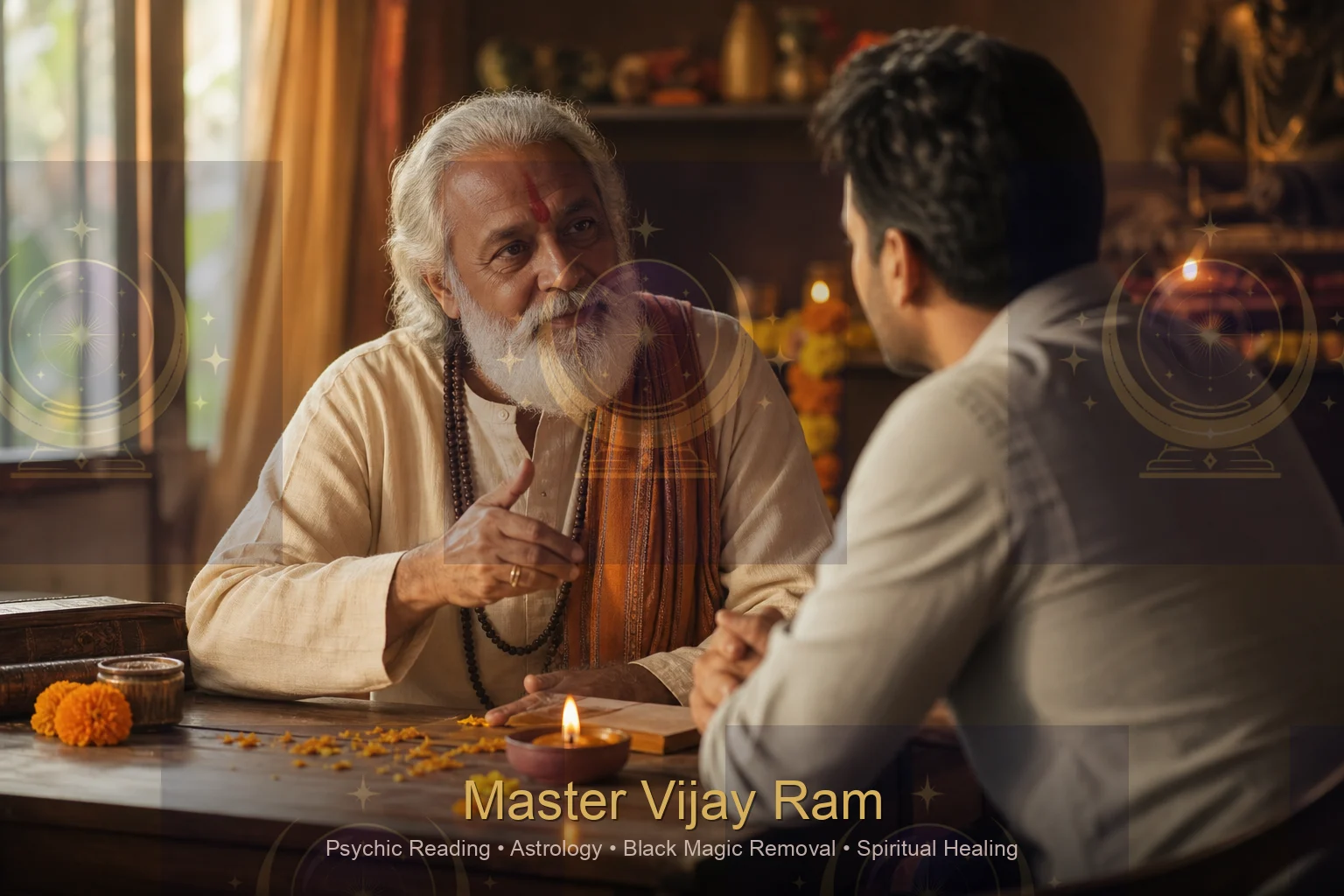
Quick answer. Mantra siddhi sadhana is sustained practice with a single mantra until it becomes established. Master Vijay Ram selects the mantra from your chart, teaches correct pronunciation and method, sets the count and observances, and supports the practice — commonly over 40 to 125 days.
Selection, pronunciation, and staying with one thing
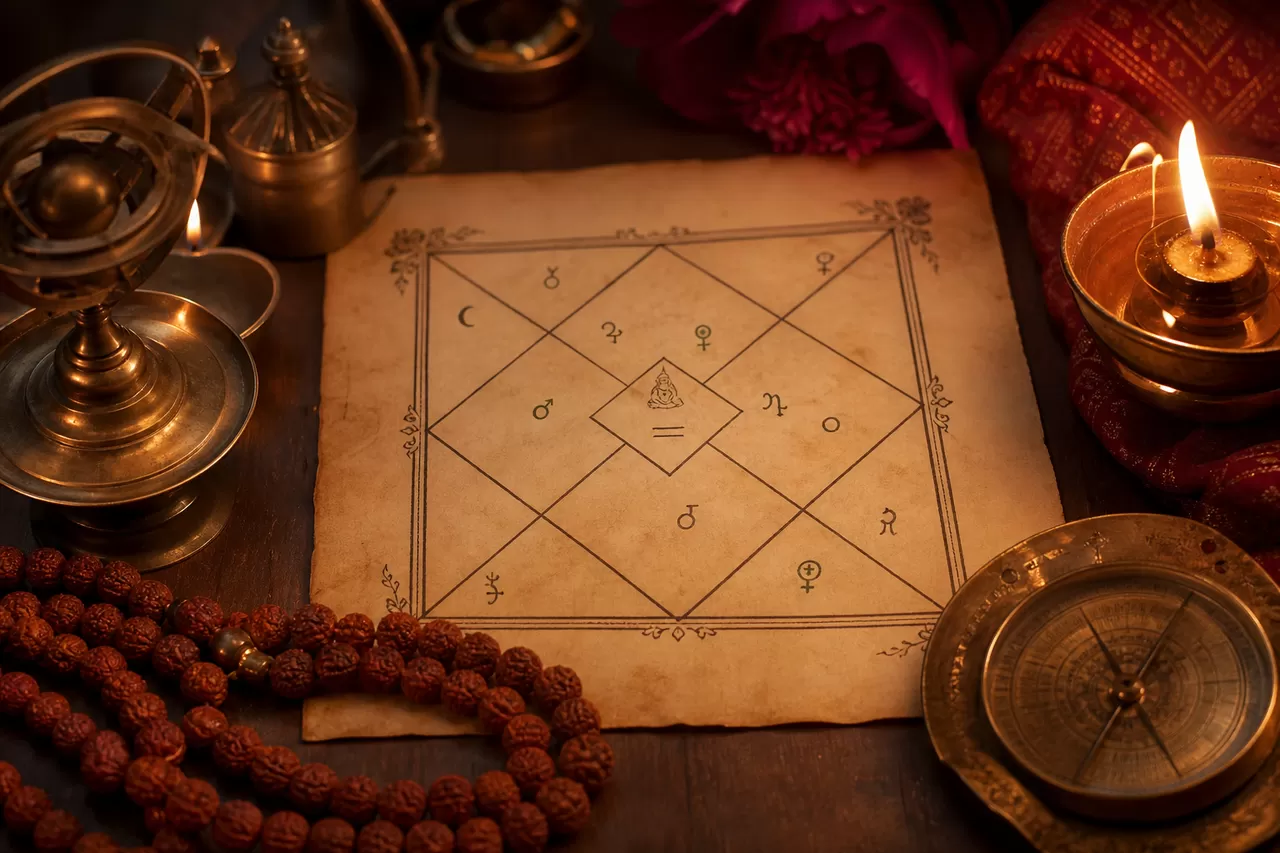
Three things separate a mantra practice that establishes itself from one that quietly stops. The first is selection. A mantra chosen from a book or a video may have no relationship to what your chart needs. Which deity, which form, and which bija are indicated by the planets requiring support and by the practice you can realistically sustain.
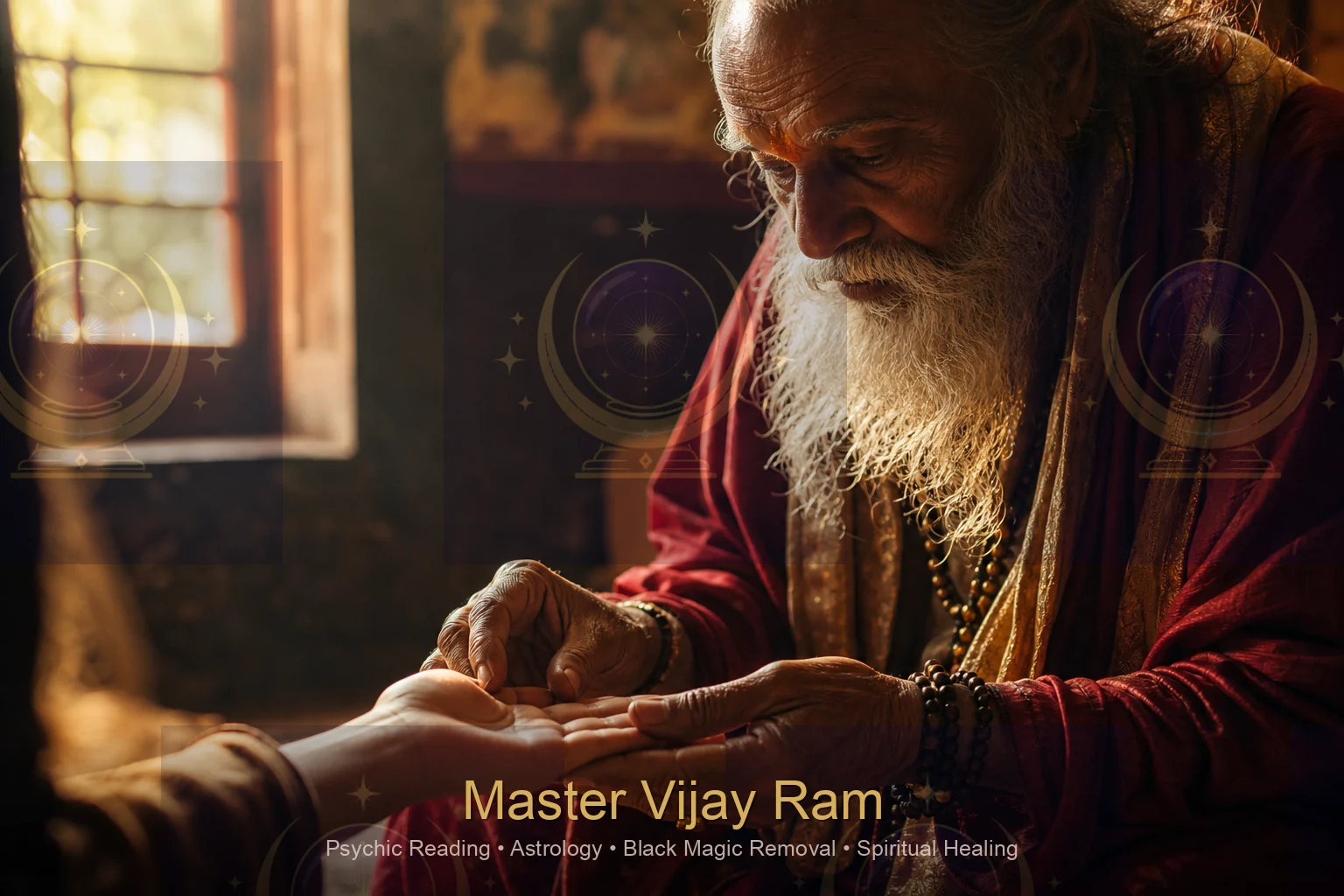
The second is pronunciation. Sanskrit distinguishes sounds that English does not — aspirated and unaspirated consonants, retroflex and dental, long and short vowels — and these distinctions are not decorative. Learning by ear from a recording reliably introduces errors that nobody corrects. Being taught in person, and corrected, is most of what an initiation actually provides.
The third is staying with it. The common pattern is a month with one mantra, then a switch to another that someone recommended, then a third. Siddhi — the sense in which a mantra becomes established — is understood to come from sustained repetition of one practice, commonly a fixed count held over 40 days, or 125 days for the longer sadhanas. Changing mantras restarts the process each time.
You are given the mantra, the count, the hour, the observances and the seat, and Master Vijay Ram remains reachable through the practice. What is not offered is a mantra sold as secret or as guaranteed to produce a particular outcome. Mantras are not currency, and the practice is a discipline rather than a transaction.
A clear, caring path
How the practice is established
The mantra is selected from your chart rather than chosen generically, pronunciation is taught properly before the practice starts, and the count, hour and observances are then set. Correct pronunciation is treated as part of the practice, not a detail.
Select from the chart
The mantra is chosen from what your chart indicates and what your life can sustain, rather than from a general list or a recommendation made to someone else.
Teach pronunciation properly
The mantra is taught in person or over video with pronunciation corrected — the distinctions Sanskrit makes and English does not are where most self-taught practice goes wrong.
Set count, hour and observances
A daily count, a consistent hour, the seat and the accompanying observances are set for a defined period, commonly 40 or 125 days, with support throughout.
Do any of these sound familiar?
When people take up a mantra practice
Most useful when you intend to stay with one practice.
- A chart reading has recommended a specific planetary remedy
- You have been reciting something and are unsure of the pronunciation
- You want a daily practice rather than periodic consultations
- You have switched between mantras and nothing has established
- A difficult period is running and you want a discipline through it
- You want to be taught properly rather than learn from recordings
Your questions, answered
Mantra Sadhana — your questions answered
You can learn the words. What recordings cannot do is correct you, and Sanskrit distinguishes sounds English speakers reliably conflate. Beyond that, selection matters — a mantra suited to someone else's chart is effort spent in the wrong direction.
Traditionally a fixed daily count held over 40 days, or 125 days for the longer sadhanas. What matters most is not switching partway, which is the single most common reason a practice never establishes.
No. Clients of all faiths take up mantra practice, and where a Sanskrit mantra would not sit comfortably with your own tradition, a practice from within it can be structured the same way instead.
Yes, and video is well suited to it because you can be heard and corrected in real time. Recorded instruction alone is not offered, since mispronunciation is exactly what the teaching exists to prevent.
No. People of every faith undertake mantra practice here, and nobody is asked to adopt beliefs that are not theirs. Where another tradition has an equivalent practice, that is discussed instead.
Trusted remedies from Master Vijay Ram