
Quick answer. Nazar utarna is the traditional rite for removing the effect of the evil eye, performed with chillies and lemon, alum, salt or mustard seed depending on the household's custom. It is gentle work, usually effective quickly, and Master Vijay Ram teaches families to perform the routine version themselves.
An old, ordinary and gentle remedy
Belief in the evil eye is one of the most widely distributed ideas humanity has. It appears in South Asia as nazar, in the Middle East as ayn, around the Mediterranean as malocchio and mati, and in each place it comes with a removal rite. The near-universality is part of what makes it feel unremarkable to the families who practise it — this is grandmother's remedy, not an exotic intervention.
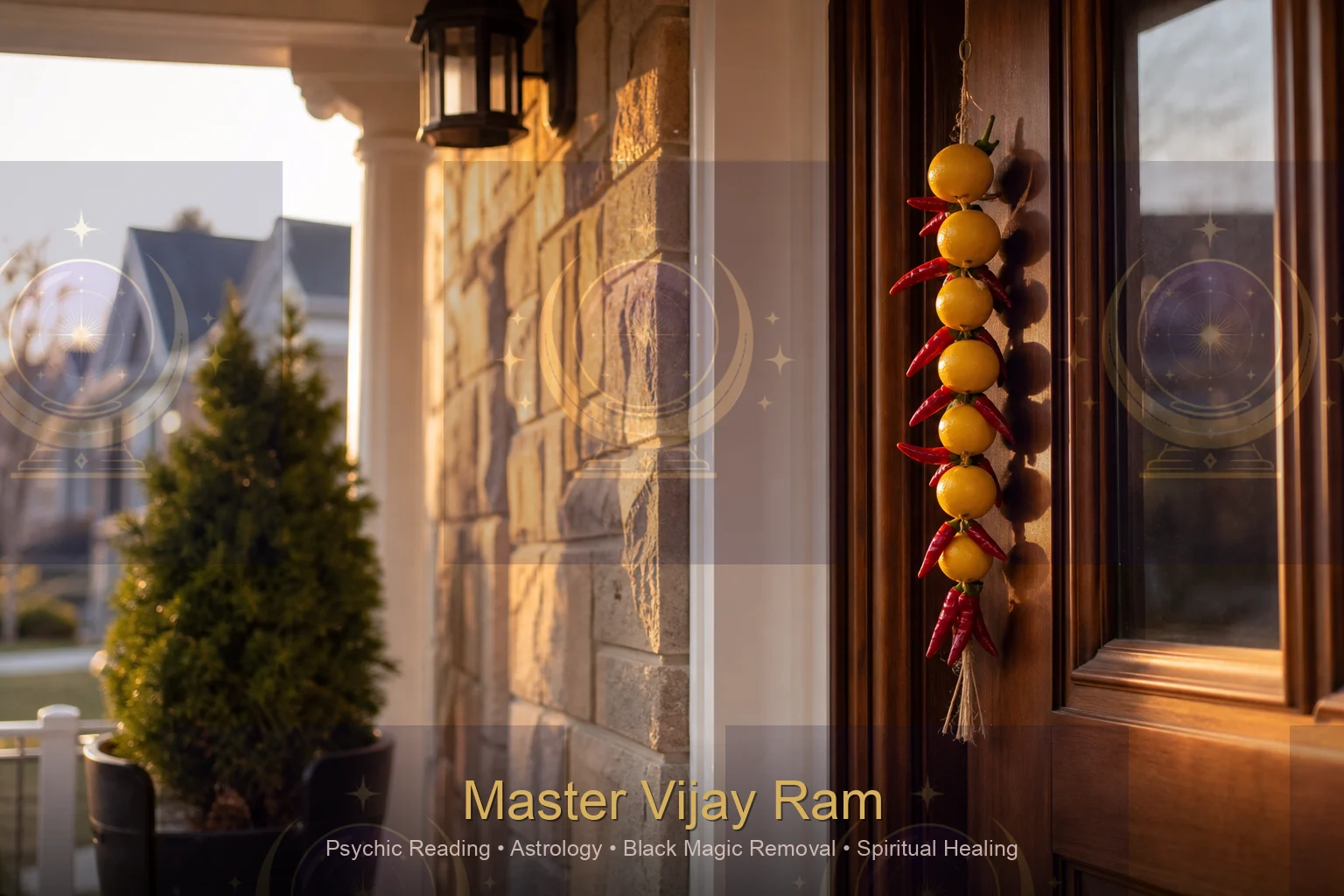
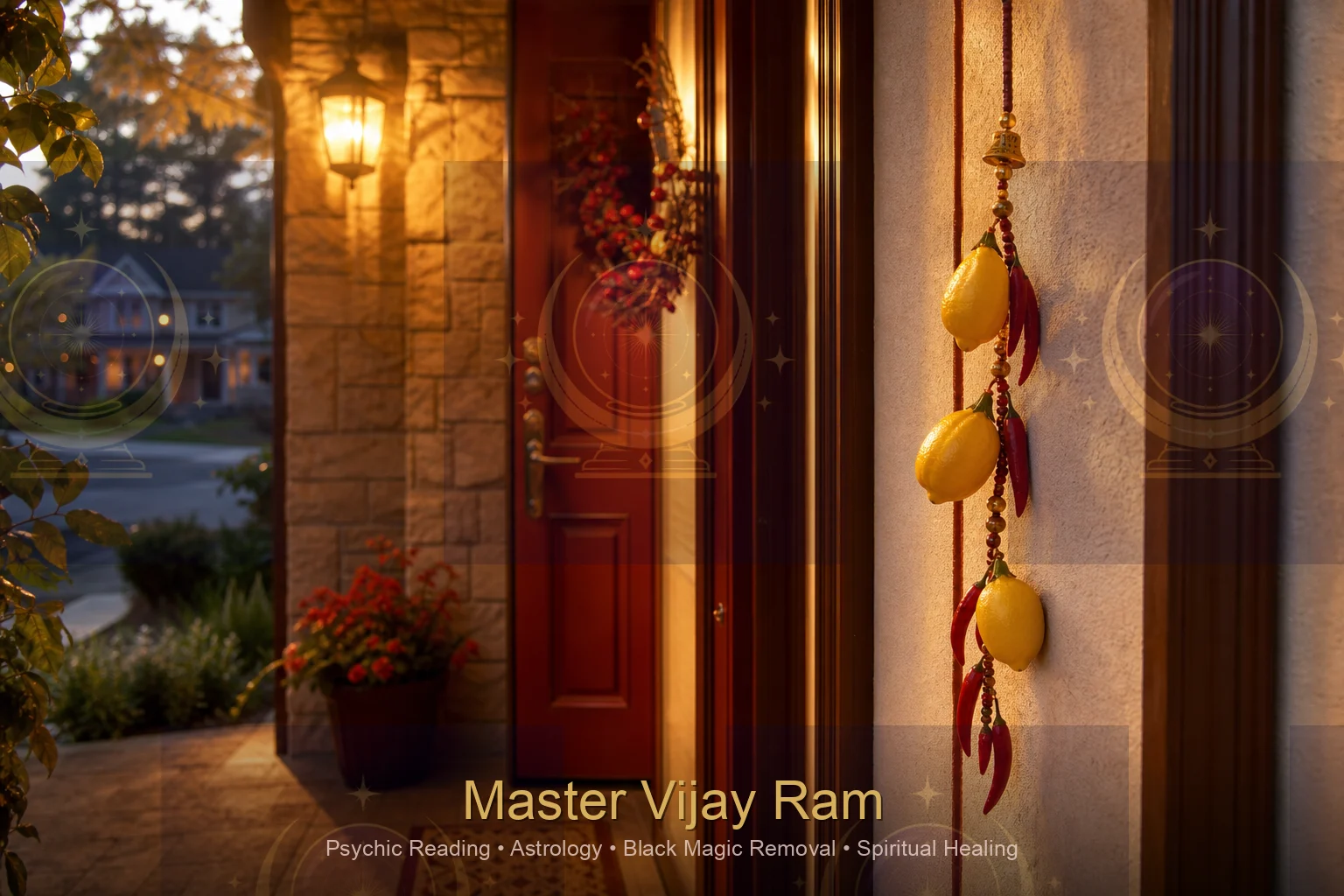
The rite itself varies by region and household. In North India the common form circles chillies and a lemon around the person and then burns or discards them; elsewhere alum, salt, mustard seed, or a knotted thread is used, and in Turkish and Greek practice olive oil in water. Master Vijay Ram performs the version appropriate to your family's tradition, which matters more than people expect — the rite carries weight partly because it is the one you recognise.
It is most often sought for children, who attract the most admiring attention; for a new baby, a new house, a new car or a wedding; and for a business that has just begun doing visibly well. That pattern is consistent across every culture that holds the belief, and it says something about the concept: nazar attaches to visible good fortune.
Because it is gentle and does no harm, the threshold for simply performing it is low. Where symptoms suggest something more — persistent illness, a household disturbance of longer standing — the assessment is broadened, and where a doctor is what is needed, that is said plainly.
A clear, caring path
How nazar utarna is performed
The rite follows the household's own tradition — chillies and lemon, alum, salt or mustard seed — is performed accordingly, and is then taught to you so it can be repeated at home. It is gentle, brief and requires nothing unusual.
Establish the household's tradition
Which form of the rite your family uses — chillies and lemon, alum, salt, mustard seed or oil and water — since the familiar version carries the most weight.
Perform the rite
The rite is performed over the affected person, with the accompanying prayer or mantra, and the materials disposed of in the traditional manner afterwards.
Teach it and set what to keep
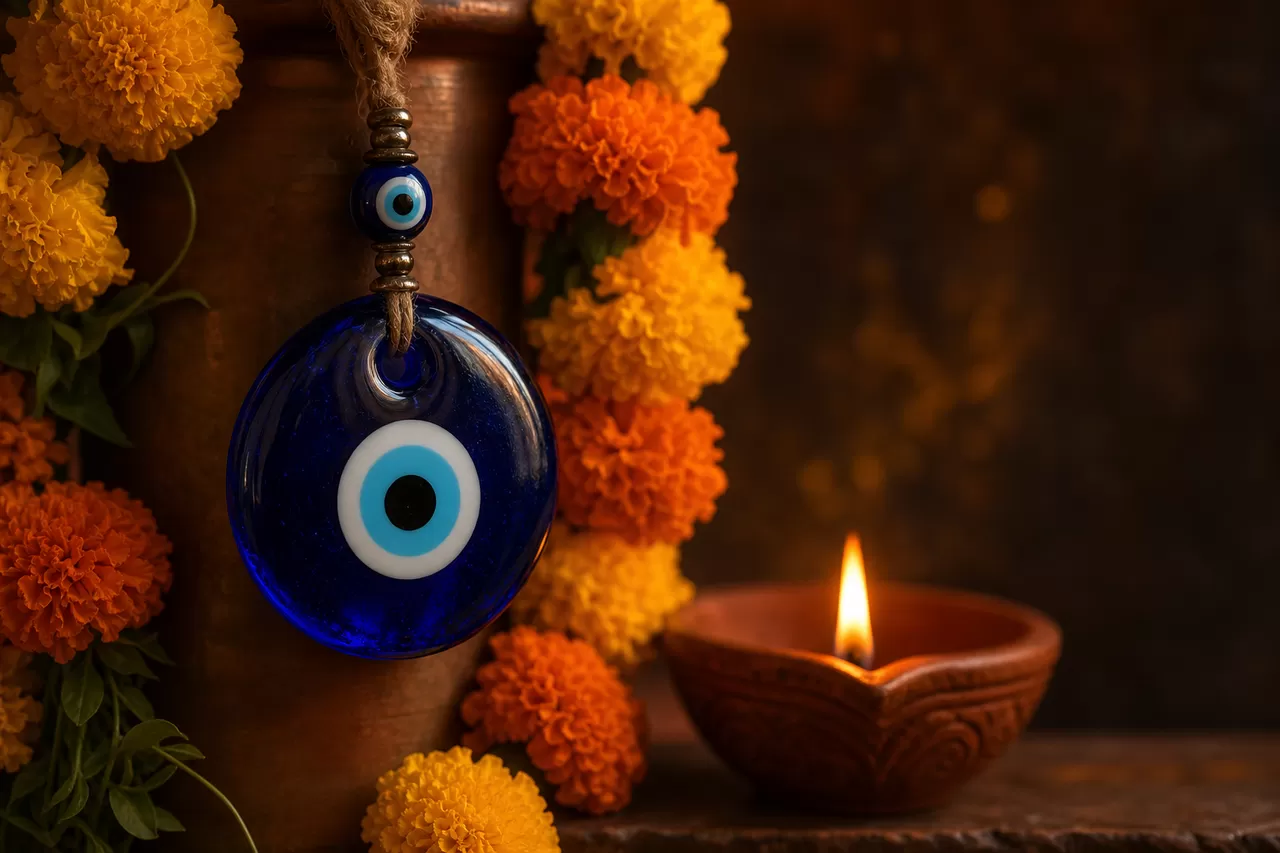
You are shown how to perform the routine version yourself, and given what to keep at home — a nazar amulet, a threshold observance, the lemon and chilli at the door.
Do any of these sound familiar?
When nazar is suspected
Especially common around children, new possessions and visible good fortune.
- A child has become fretful, unsettled or off their food without cause
- Symptoms began after an event where the person was much admired
- A new home, car or business has been followed by a run of problems
- Sudden headaches, yawning or heaviness with no medical explanation
- A wedding or celebration was followed by unexplained difficulty
- Your family has always used this remedy and you want it done properly
Your questions, answered
Nazar Utarna — your questions answered
Yes, and you are encouraged to. The routine version is a household remedy and Master Vijay Ram teaches it during the consultation. Practitioners are worth involving for persistent cases or where the household has no tradition to draw on.
Traditionally the relief is quick — often the same day, particularly with children. Where nothing changes after the rite has been performed properly a couple of times, that is a signal to look further rather than repeat it indefinitely.
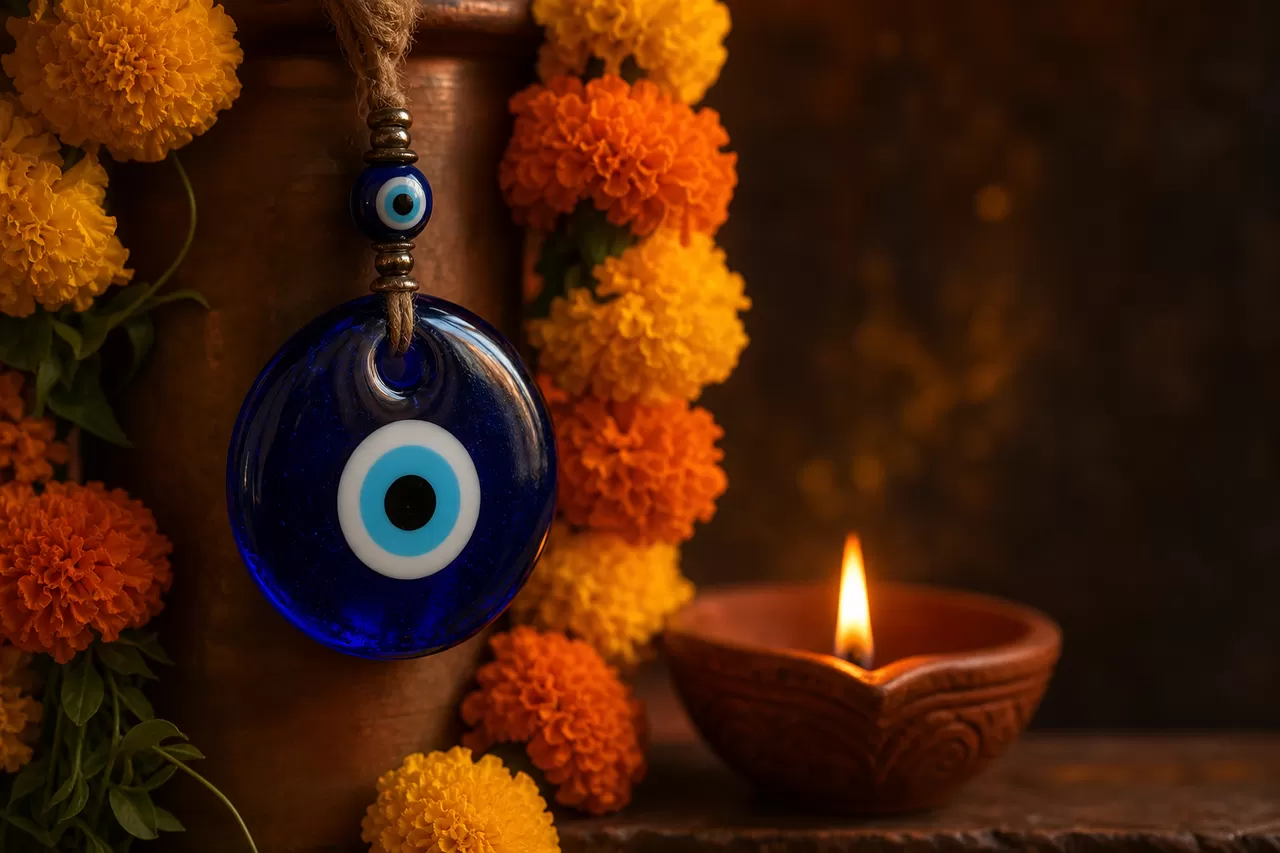
The amulet is protective in traditional understanding — it is meant to prevent rather than remove. Once nazar is believed to have taken effect, the removal rite is what addresses it, and the amulet then helps guard against it recurring.
Ordinary kitchen items: dried red chillies and a lemon, or alum, rock salt or mustard seed depending on your family's custom. Everything used is inexpensive and available locally.
Yes. Nazar utarna is a folk rite practised across many South Asian communities and faiths. Nobody is asked to adopt a religious practice that is not their own.