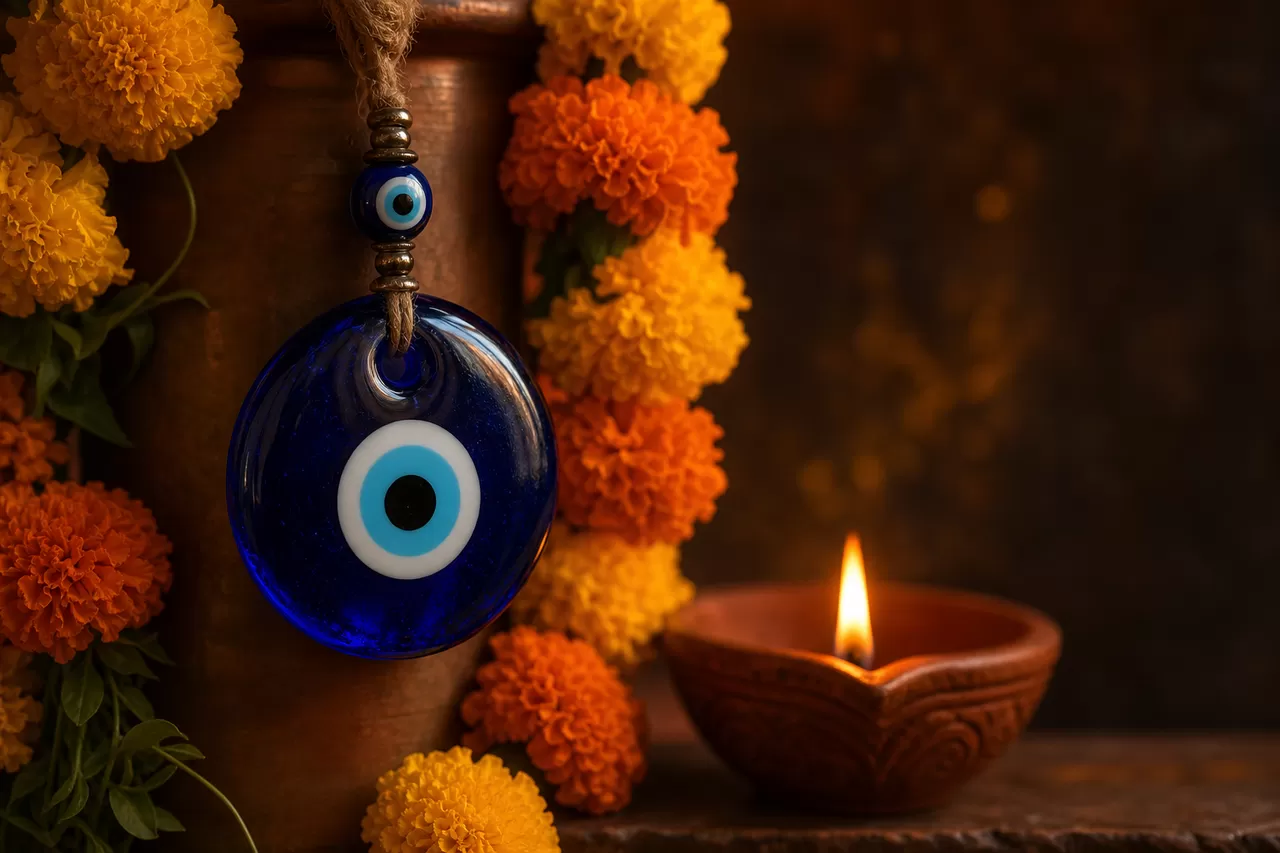

Evil eye is a form of negative energy believed to be cast, often unknowingly, through envious or intense stares, causing sudden ill health, bad luck, or family discord. In many South Asian, Middle Eastern, and Mediterranean households, this concept is called nazar or buri nazar, and it is taken seriously across generations. Families notice a healthy child falling sick without medical cause, a thriving business suddenly struggling, or unexplained tension between loved ones, and they turn to traditional remedies for relief. Master Vijay Ram, a Vedic astrologer and spiritual healer with over 40 years of experience serving Kitchener, Waterloo, Cambridge, Guelph, and Brantford, has guided thousands of families through gentle, respectful evil eye protection practices rooted in ancient wisdom. This article explains what nazar means, how it is recognized, and what traditional steps families use to protect their homes and children, always alongside proper medical and professional care rather than as a replacement for it.
What Does Nazar or Buri Nazar Actually Mean?
Nazar means an unintentional or envious gaze that transfers negative energy onto a person, child, home, or business. Buri nazar specifically refers to the harmful version of this gaze, often given without malice, arising simply from admiration mixed with envy, which many cultures believe can disturb a person's energy field.
The word nazar comes from Sanskrit and Urdu-Persian roots meaning "sight" or "glance." Buri nazar adds the word for "bad," describing a gaze that carries envy, admiration mixed with insecurity, or plain ill will. It is not always deliberate. A relative praising a baby's beauty too much, a neighbour envying a new car, or a colleague quietly resenting a promotion can all, according to tradition, transmit this energy.
Across cultures this idea appears under different names: nazar in South Asia, mati in Greece, ayin ha-ra in Jewish tradition, and mal de ojo in Latin America. The persistence of this belief across unrelated cultures is one reason families continue to honour it as part of their heritage, even while seeking modern explanations for hardship.
- Often linked to sudden, unexplained misfortune
- Believed to enter through admiration, envy, or a fixed stare
- Considered treatable through traditional cleansing remedies
What Are the Common Signs of Evil Eye Effect?
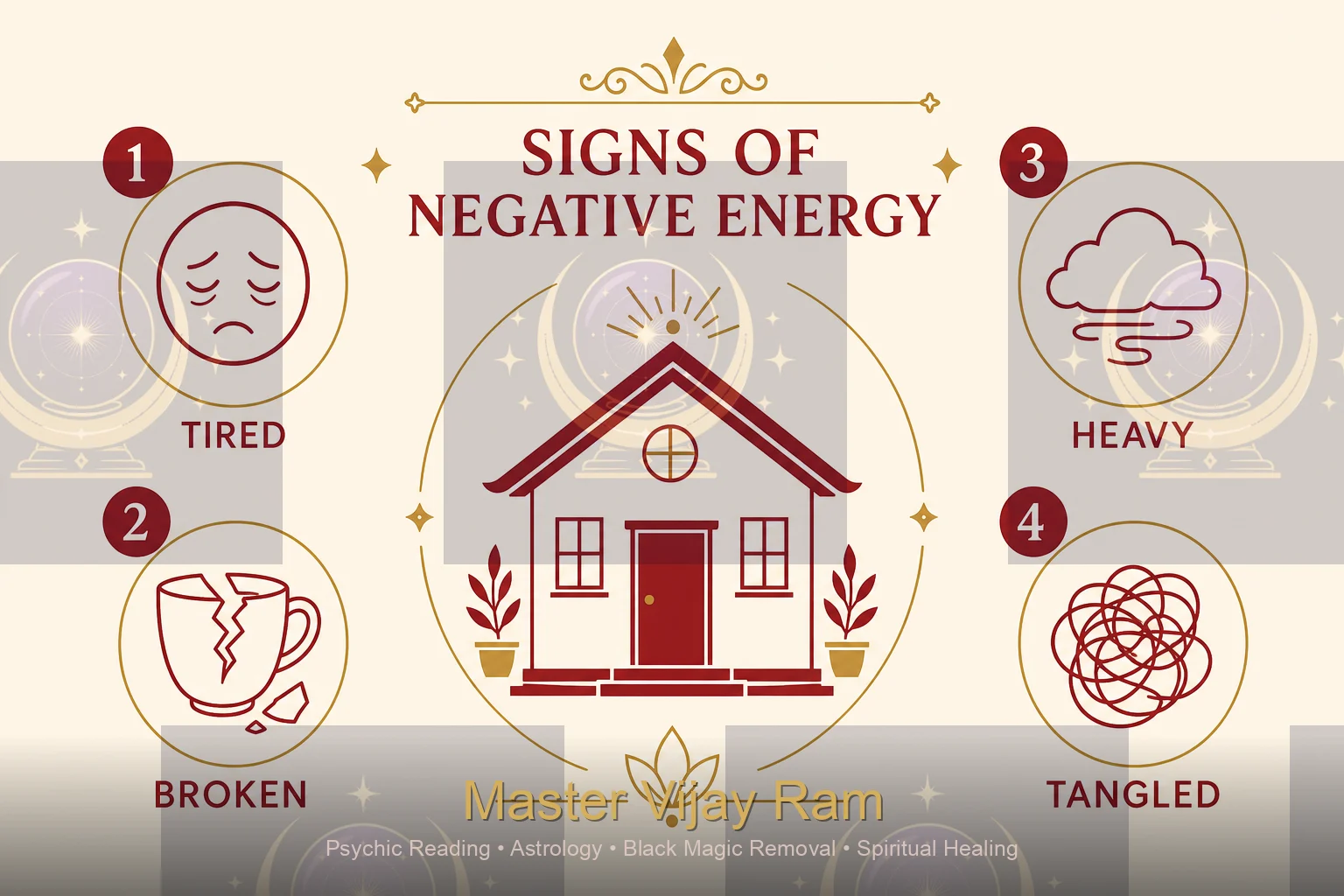
Common signs include sudden fatigue, unexplained crying in babies, frequent headaches, a string of small accidents, loss of appetite, business slowdown, or a persistent feeling of heaviness in the home. These symptoms typically appear abruptly after gatherings, celebrations, or exposure to an envious remark or stare.
Families often first suspect nazar when a normally happy child becomes fussy, refuses food, or cries without medical reason shortly after being admired by visitors. Adults may describe a sudden dip in energy, restless sleep, or a string of bad luck that seems to defy explanation.
Signs Often Reported in Families
- Persistent unexplained illness in children despite clinical check-ups
- Sudden business or financial setbacks after visible success
- Frequent arguments or tension appearing out of nowhere
- A heavy, uneasy feeling in a specific room or the whole home
- Repeated small accidents or breakages
These signs overlap with ordinary stress, illness, or coincidence, which is why Master Vijay Ram always encourages families to consult a doctor first. If medical causes are ruled out and the unease continues, a review through negative energy assessment can offer additional clarity and comfort.
How Can Families Protect Against Evil Eye at Home?
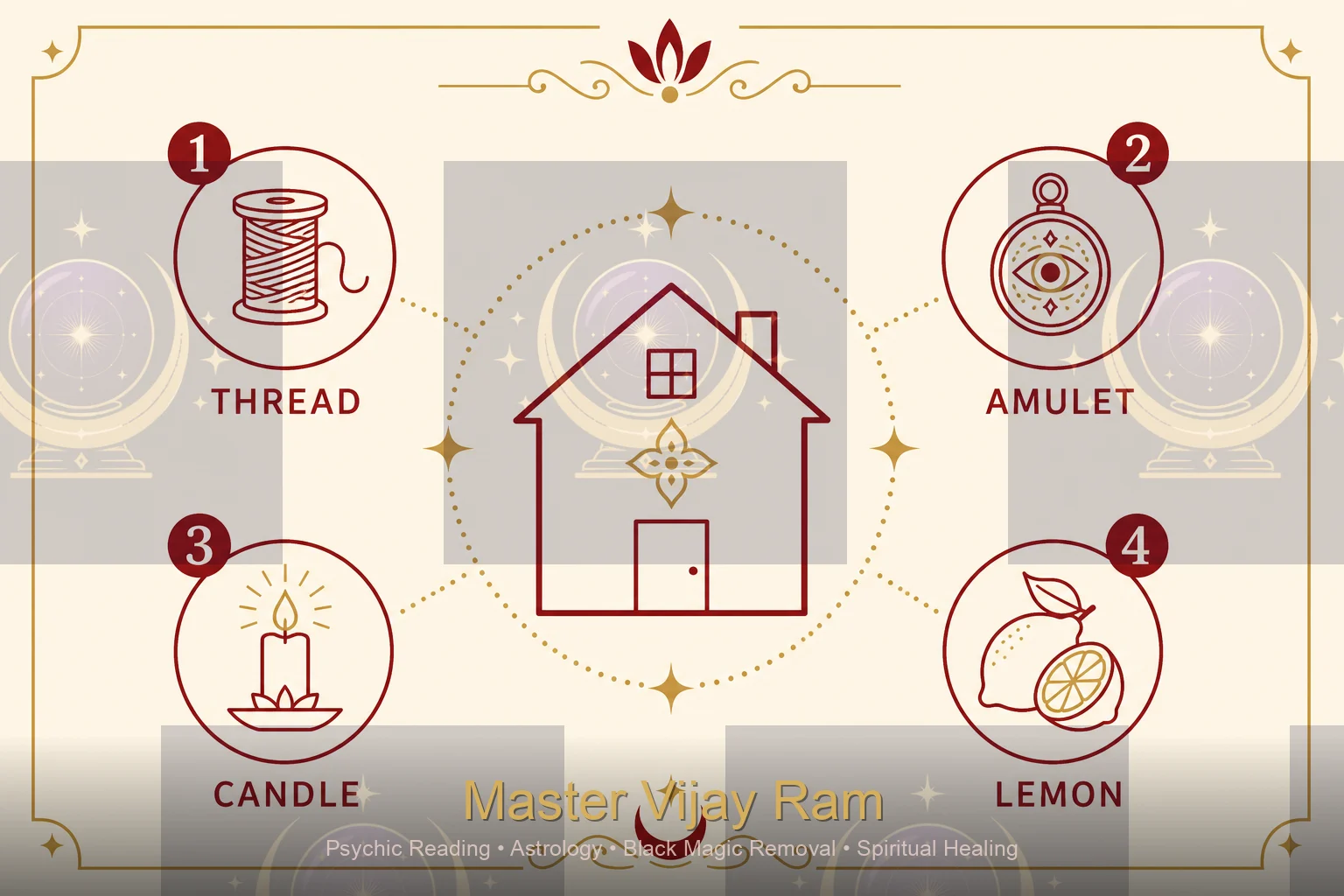
Families protect against evil eye through daily practices such as hanging a lemon-chilli totem at entrances, using black thread (kaala dhaaga) on children, burning camphor or performing simple nazar utarna rituals, and keeping the home's energy clear through regular cleansing and mindful hospitality.
Protection against buri nazar does not require elaborate ceremony. Many families follow small, consistent daily habits passed down through generations:
- Lemon and chilli totems hung near doorways, changed weekly
- Black thread tied gently on a baby's wrist or ankle
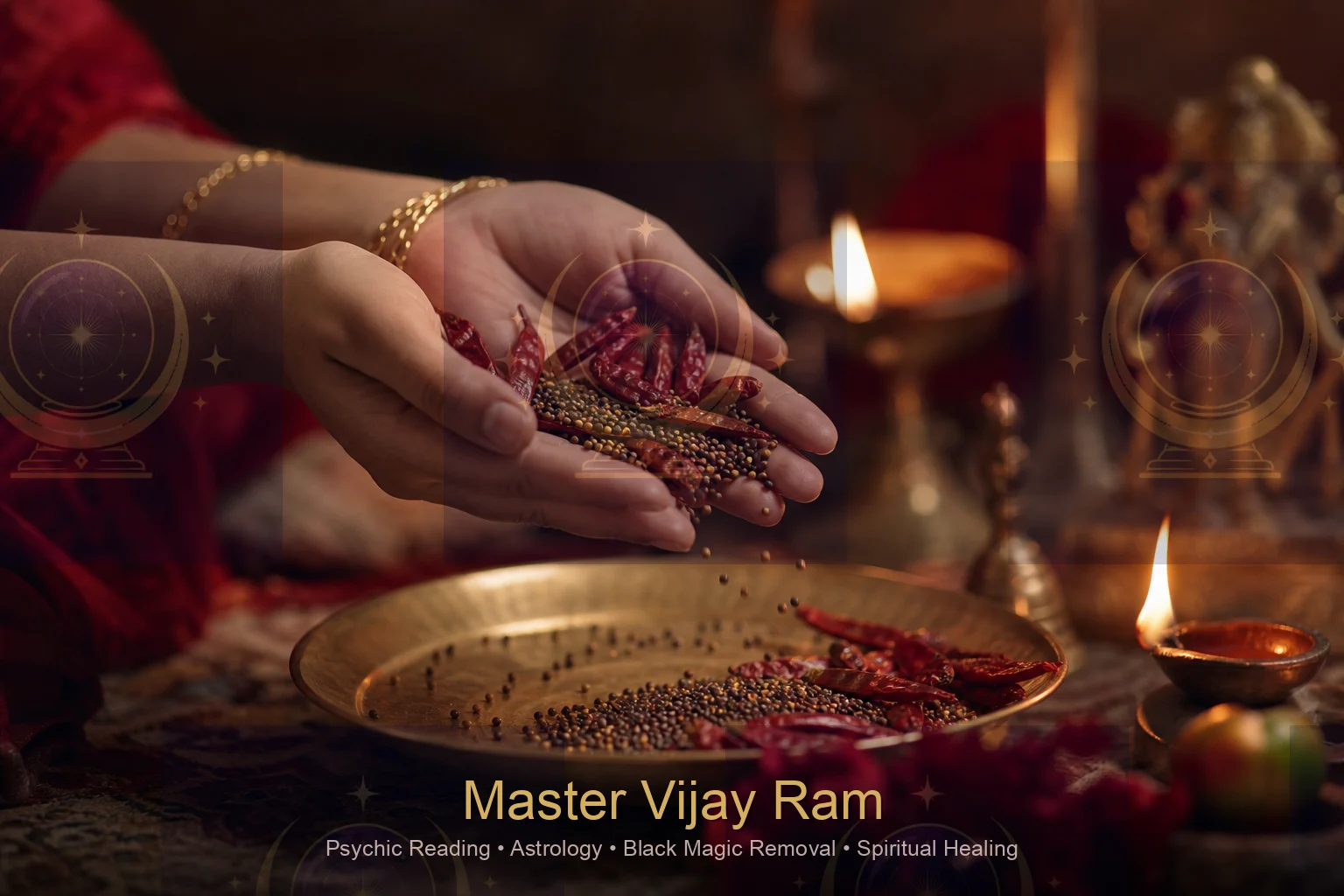
- Camphor or mustard seed waved around a person and burned to release trapped energy
- Kohl dot placed discreetly on a child's forehead or foot to "absorb" an admiring gaze
- Keeping the home tidy, well-lit, and free of clutter, which supports steady energy flow
For deeper or recurring concerns, families sometimes request a guided evil eye nazar removal session, which combines prayer, specific mantras, and traditional tools suited to the person's birth chart and household situation.

Can Astrology Explain Why Some People Attract Nazar More?
Vedic astrology suggests planetary placements, particularly weak or afflicted Moon, Venus, or the sixth house, can make a person more sensitive to external negative energy. Children, pregnant women, and those going through major life success or transition are often considered more susceptible during certain planetary periods.
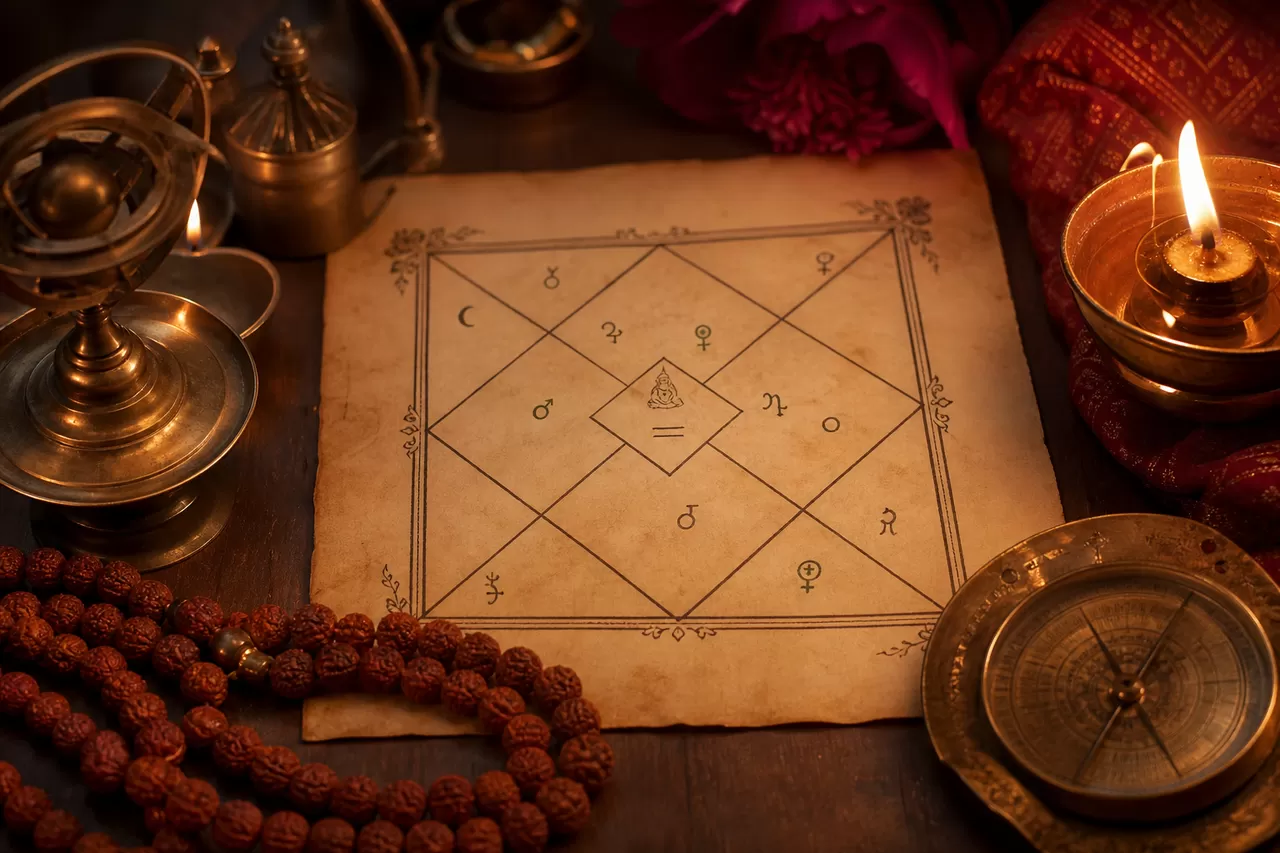
In Vedic thinking, susceptibility to nazar is not random. A person's birth chart may show heightened sensitivity during specific dashas (planetary periods), especially those ruled by the Moon or Saturn, which govern emotional and energetic resilience. Newborns, brides and grooms, and anyone experiencing sudden public attention or success are traditionally seen as more exposed.
Master Vijay Ram reviews the birth chart to understand whether repeated setbacks are linked to planetary timing, an inherited family pattern, or accumulated negative energy from the environment. This distinction matters because the remedy differs: astrological timing may call for patience and specific pujas, while environmental negativity may respond better to aura cleansing or space clearing.
- Weak Moon: emotional sensitivity, disturbed sleep
- Afflicted Venus: relationship or beauty-related envy
- Sixth house afflictions: health vulnerability, rivalry from others

What Role Does a Taweez or Kavach Play in Protection?
A taweez or kavach is a sacred amulet, often containing blessed verses, yantras, or herbs, worn to create a protective energetic barrier. It is prepared according to the wearer's faith and specific need, offering ongoing protection against envy, negative energy, and instability, rather than a one-time fix.
A taweez (often used in Islamic and South Asian traditions) or kavach (a Sanskrit term meaning armour) is a small, blessed amulet worn on the body or kept at home. It is prepared with prayers, specific verses, or yantras suited to the individual's faith, birth details, and the exact concern being addressed, whether that is nazar, career instability, or family conflict.
Master Vijay Ram prepares these respectfully according to each family's own religious background, since all faiths are welcome and no single tradition is imposed. A properly prepared taweez kavach is meant to be worn consistently, treated with care, and occasionally renewed, rather than viewed as a permanent, unchangeable object.
- Chosen based on the wearer's faith and comfort
- Prepared with prayer, not mass-produced
- Meant to complement, not replace, medical or legal solutions

When Should a Family Seek Professional Help for Nazar?
Families should seek professional guidance when symptoms persist despite medical care, when misfortune repeats in patterns, or when the home's atmosphere feels consistently heavy or tense. A confidential consultation helps distinguish ordinary hardship from patterns worth addressing through traditional remedies.
Not every bad day is nazar, and not every illness needs a spiritual explanation. It is worth being honest here: no honest astrologer can guarantee results, and evil eye remedies work alongside, never instead of, proper medical, legal, or financial advice. However, when a family has already ruled out medical causes and still faces a repeating, unexplained pattern, a consultation can offer clarity and peace of mind.
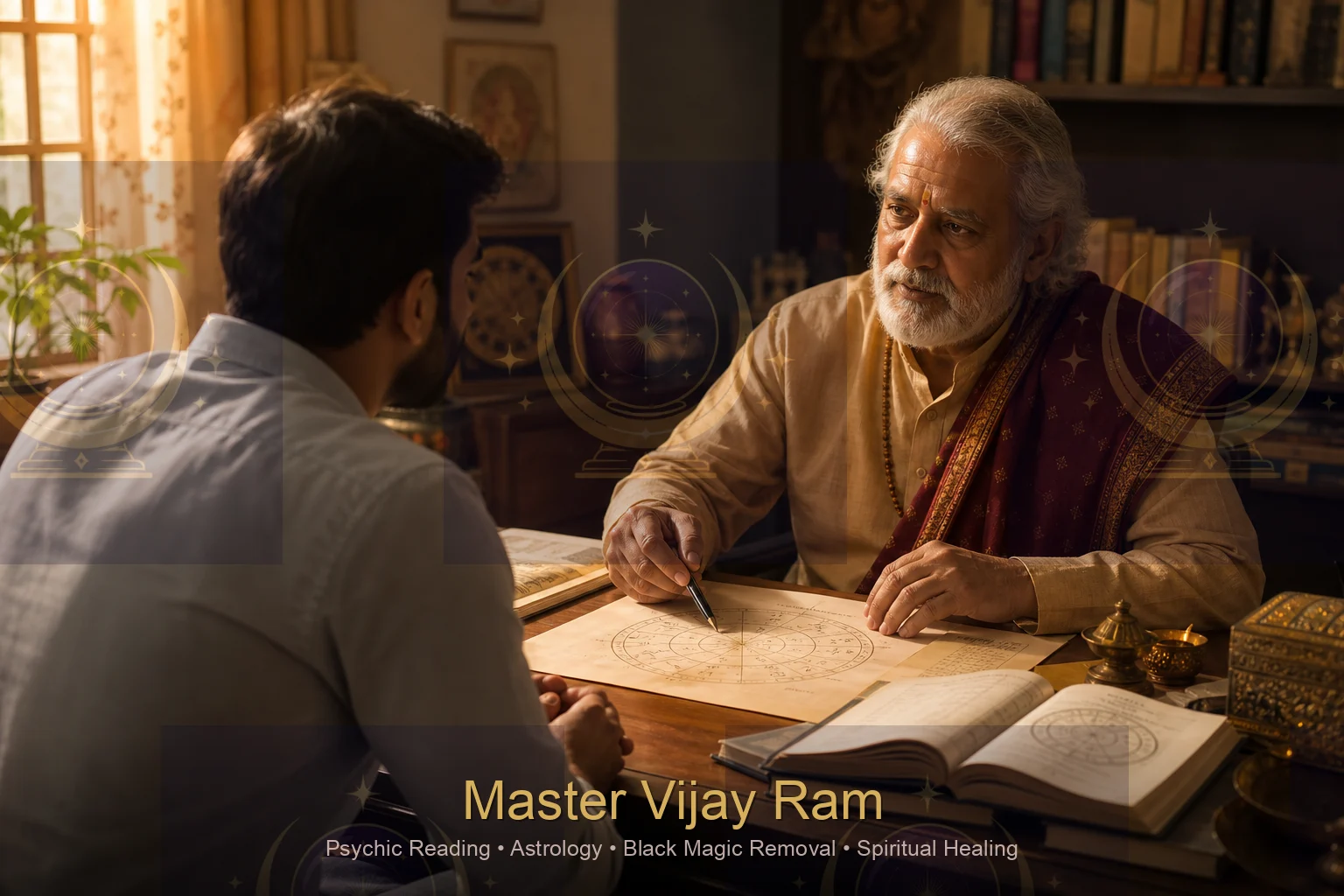
Master Vijay Ram listens carefully to each family's story, reviews the birth chart where relevant, and suggests remedies suited to their specific situation and faith. Every session is completely confidential, and clients from all backgrounds, Hindu, Muslim, Christian, Sikh, and beyond, are welcomed without judgment.
Serving nearby: Kitchener · Waterloo · Cambridge · Guelph · Brantford · London · Hamilton
Key takeaways
- Nazar (evil eye) is a widely held belief that envious or intense gazes can transmit negative energy causing illness or misfortune
- Common signs include unexplained fatigue, restlessness in children, sudden setbacks, and a heavy feeling at home
- Traditional protections include black thread, lemon-chilli totems, camphor rituals, and blessed taweez or kavach
- Vedic astrology can reveal why some individuals are more sensitive to nazar during certain planetary periods
- Evil eye remedies should complement, never replace, medical, legal, or professional advice
In closing
Nazar and buri nazar are old, widely shared beliefs that many families still find comfort in addressing through gentle, traditional means. Whether it is a lemon-chilli totem at the door, a black thread on a child's wrist, or a deeper consultation about a repeating pattern of misfortune, these practices are meant to bring reassurance and steadiness, not fear. If your family has been feeling unsettled and would like an honest, unhurried conversation about what might be happening, Master Vijay Ram welcomes you for a private and completely confidential consultation, in person in the Kitchener-Waterloo area or by phone, whenever you are ready.