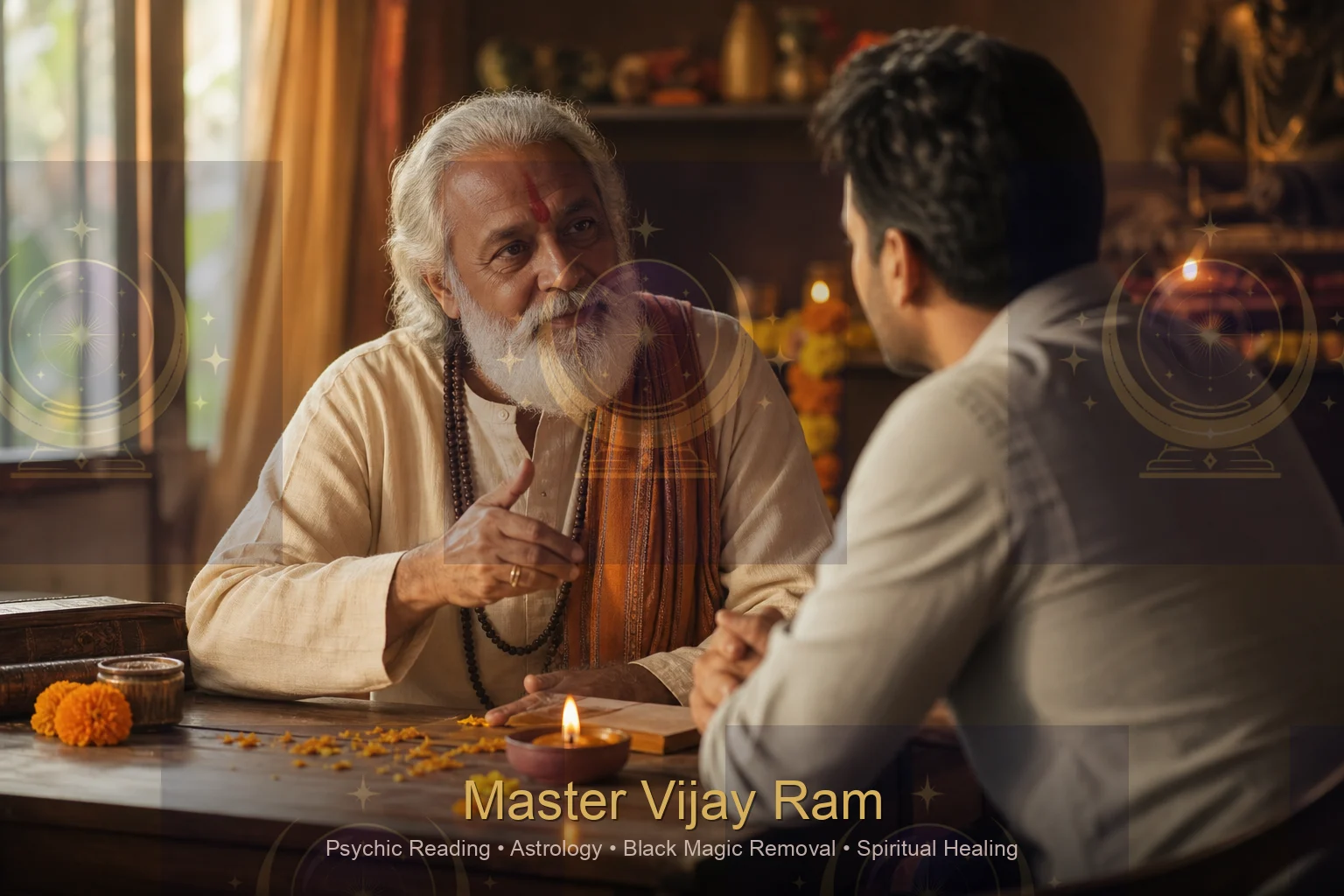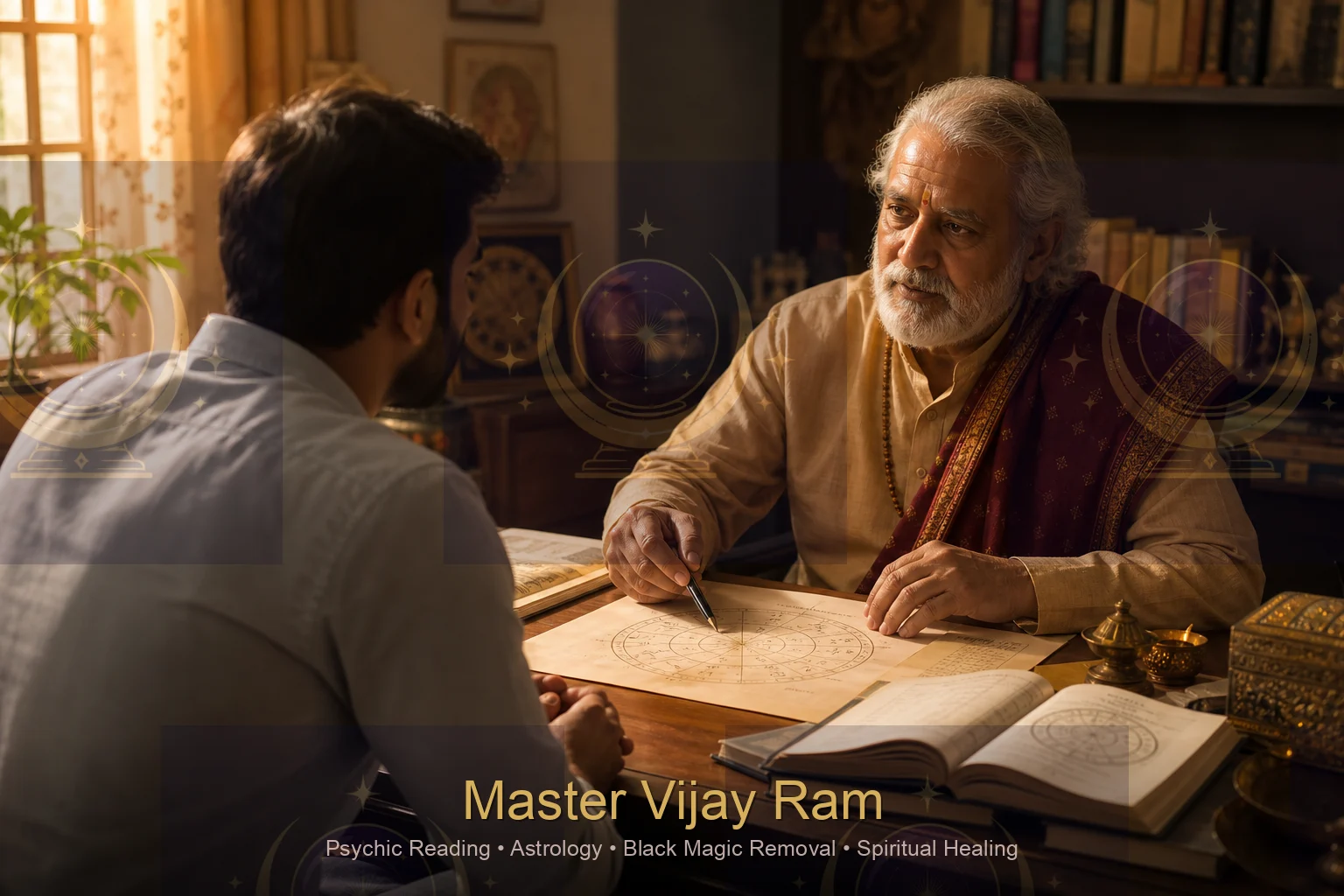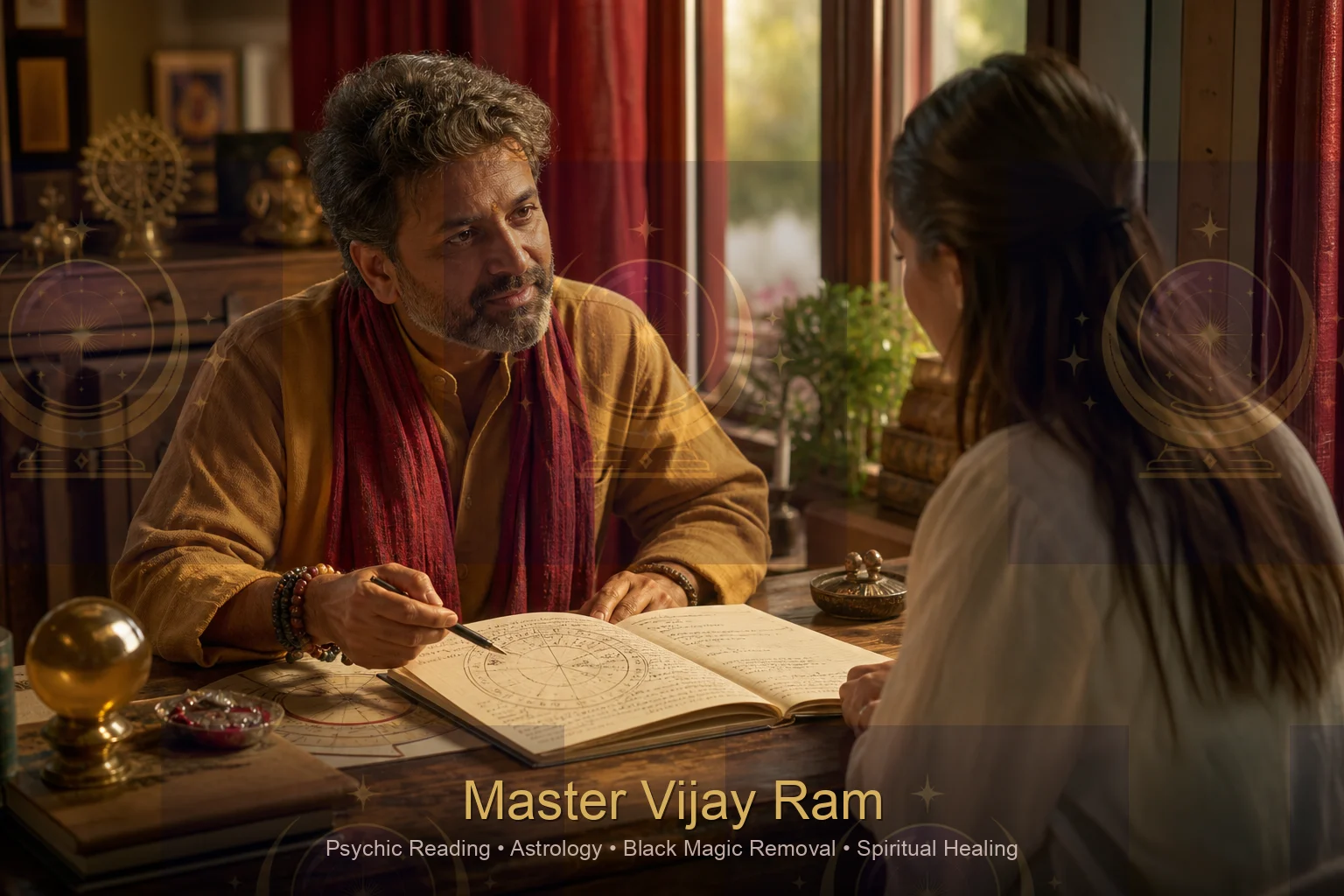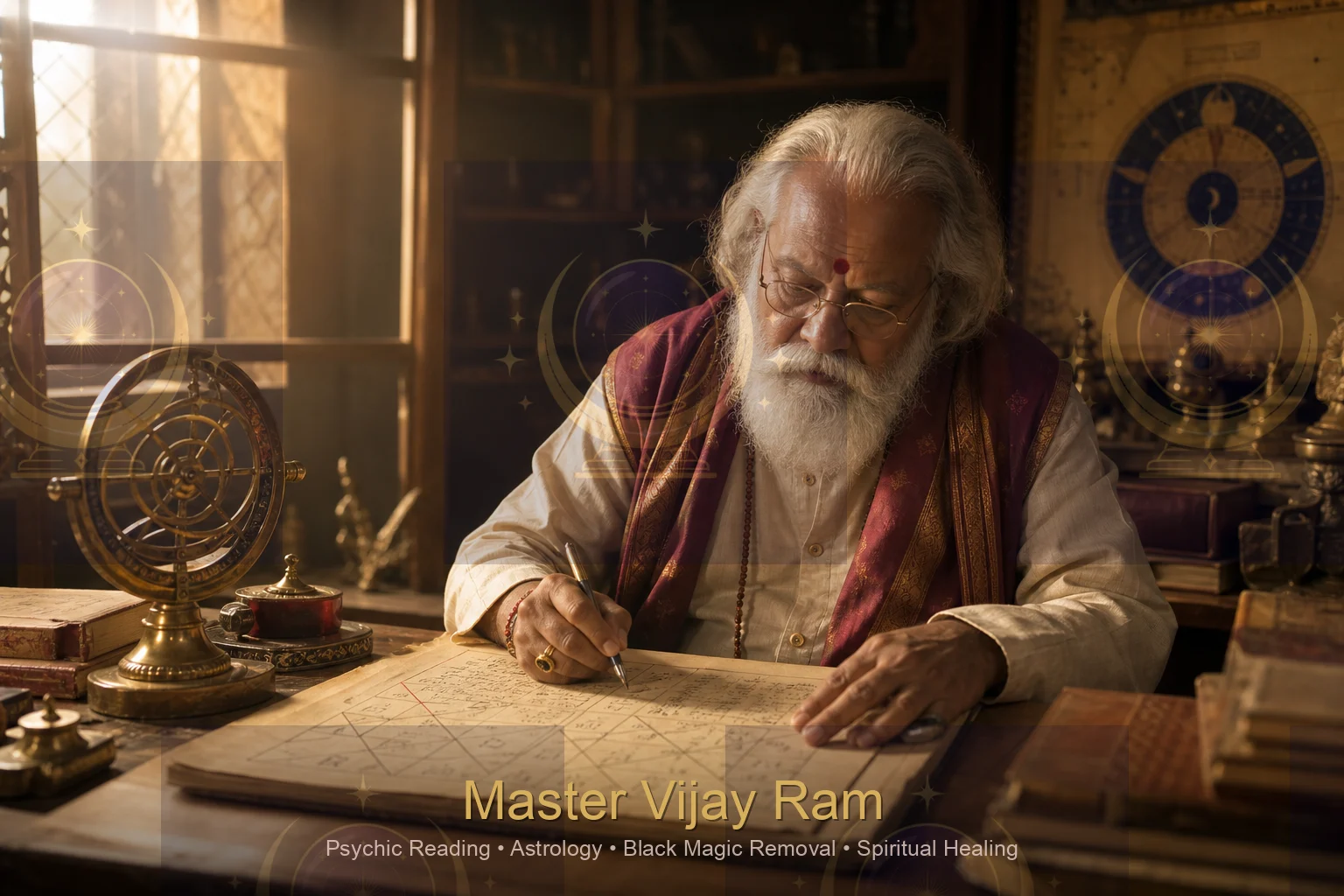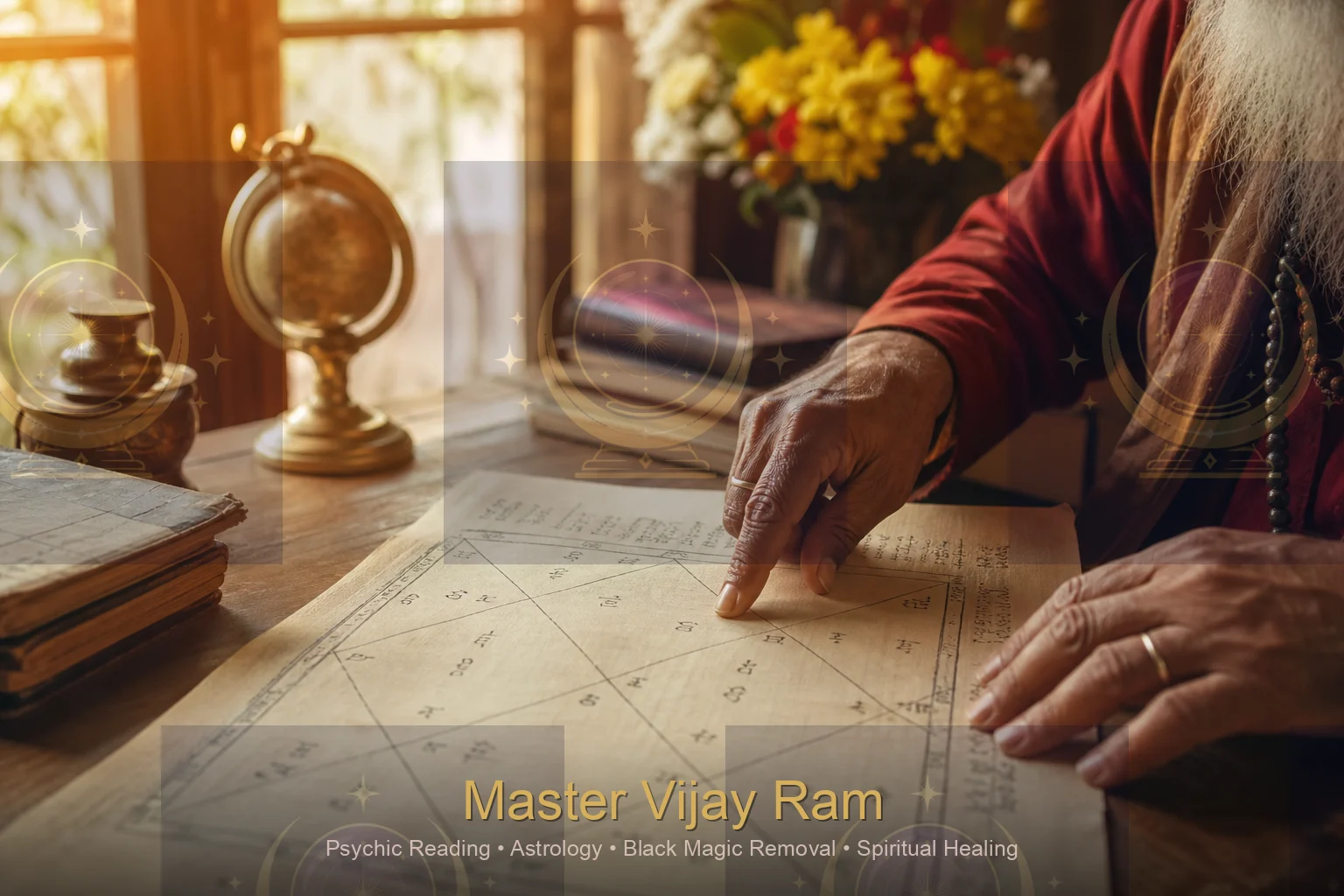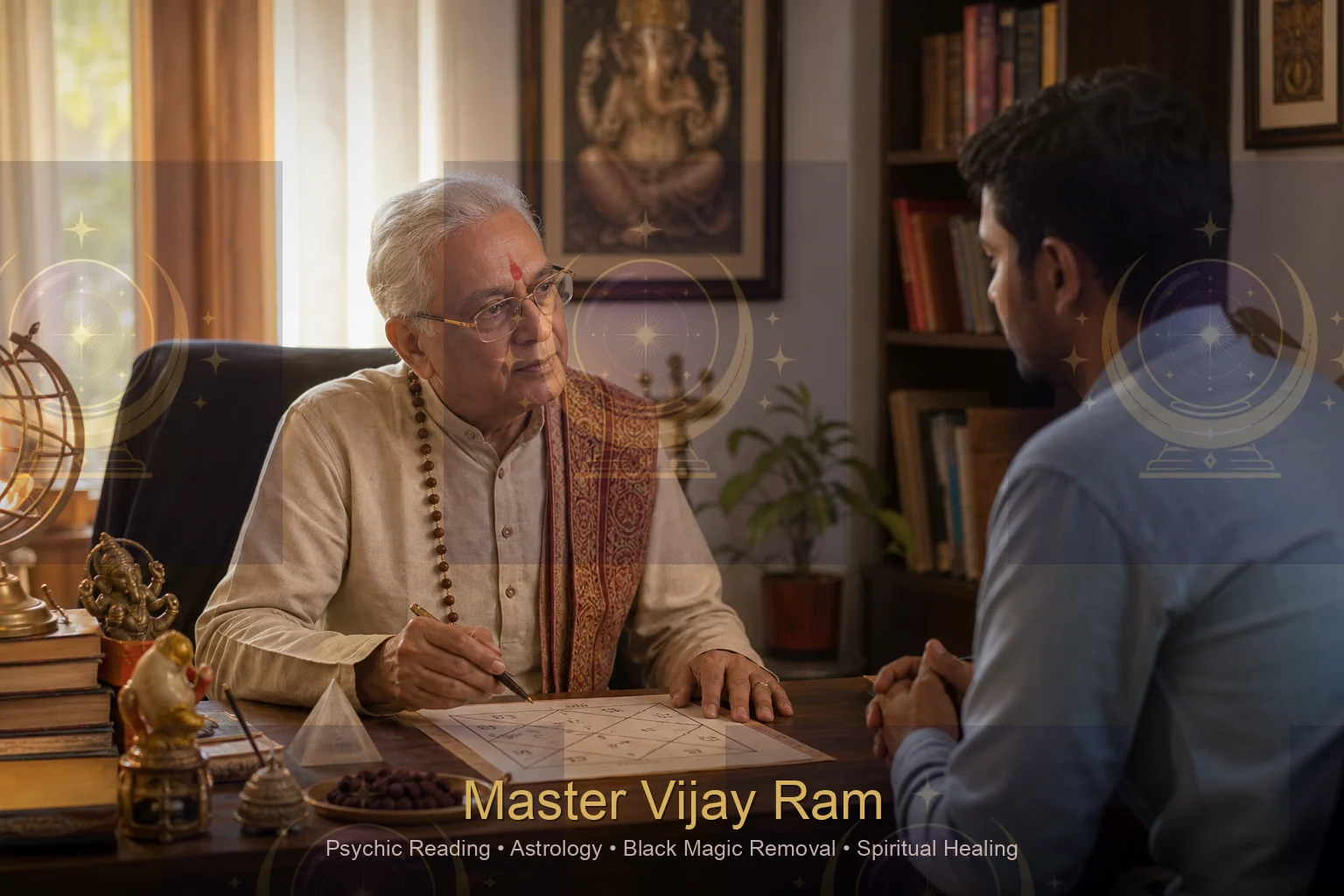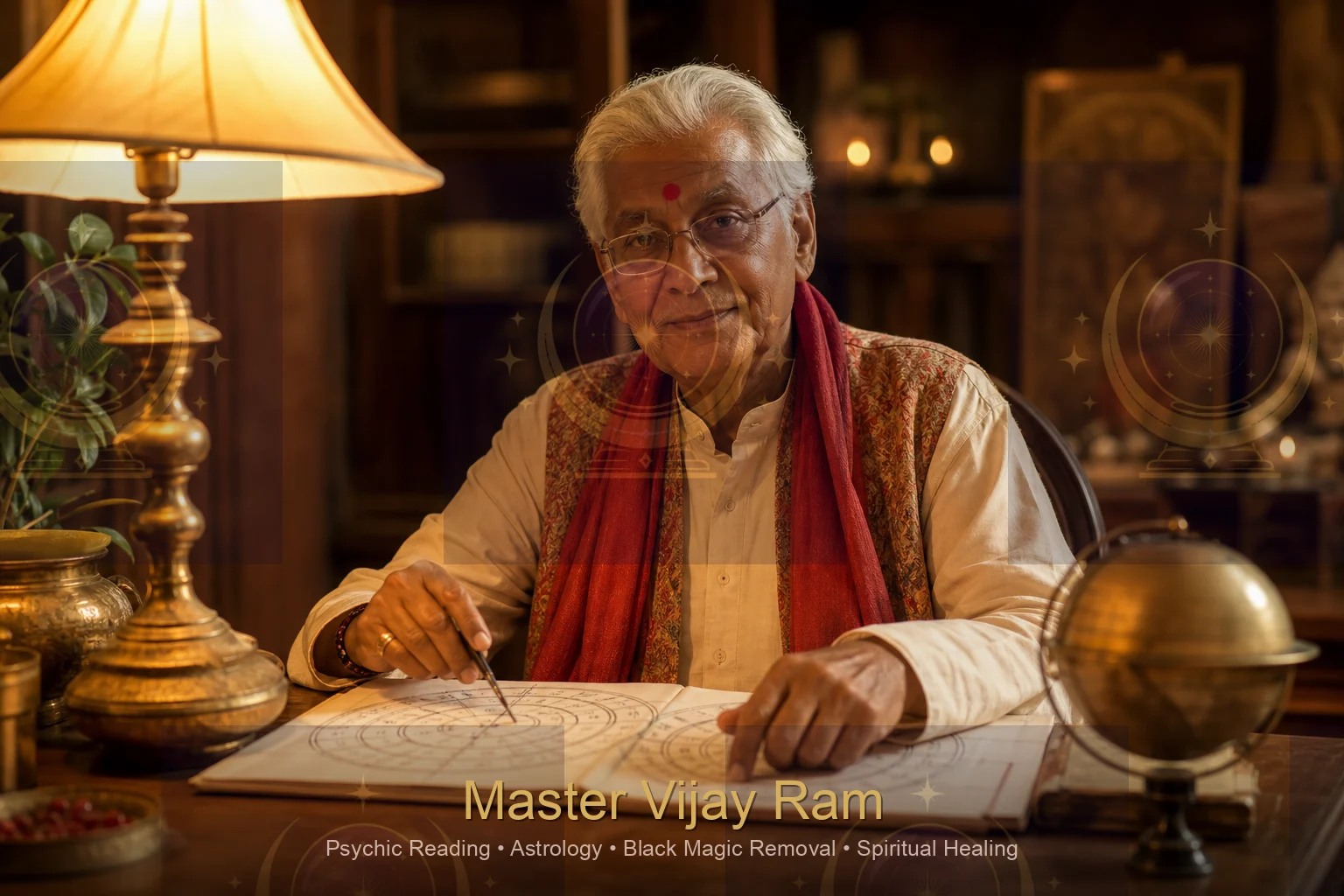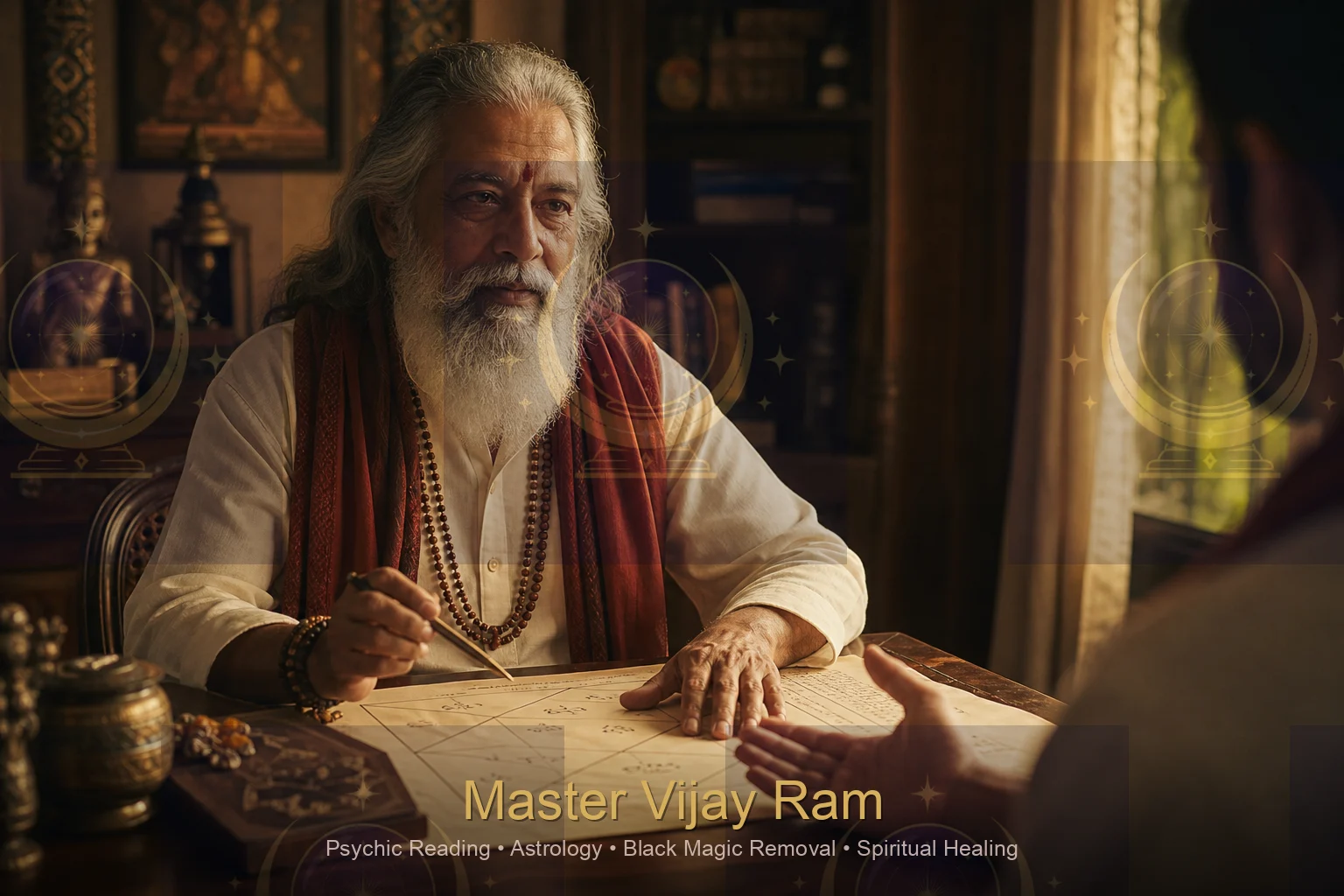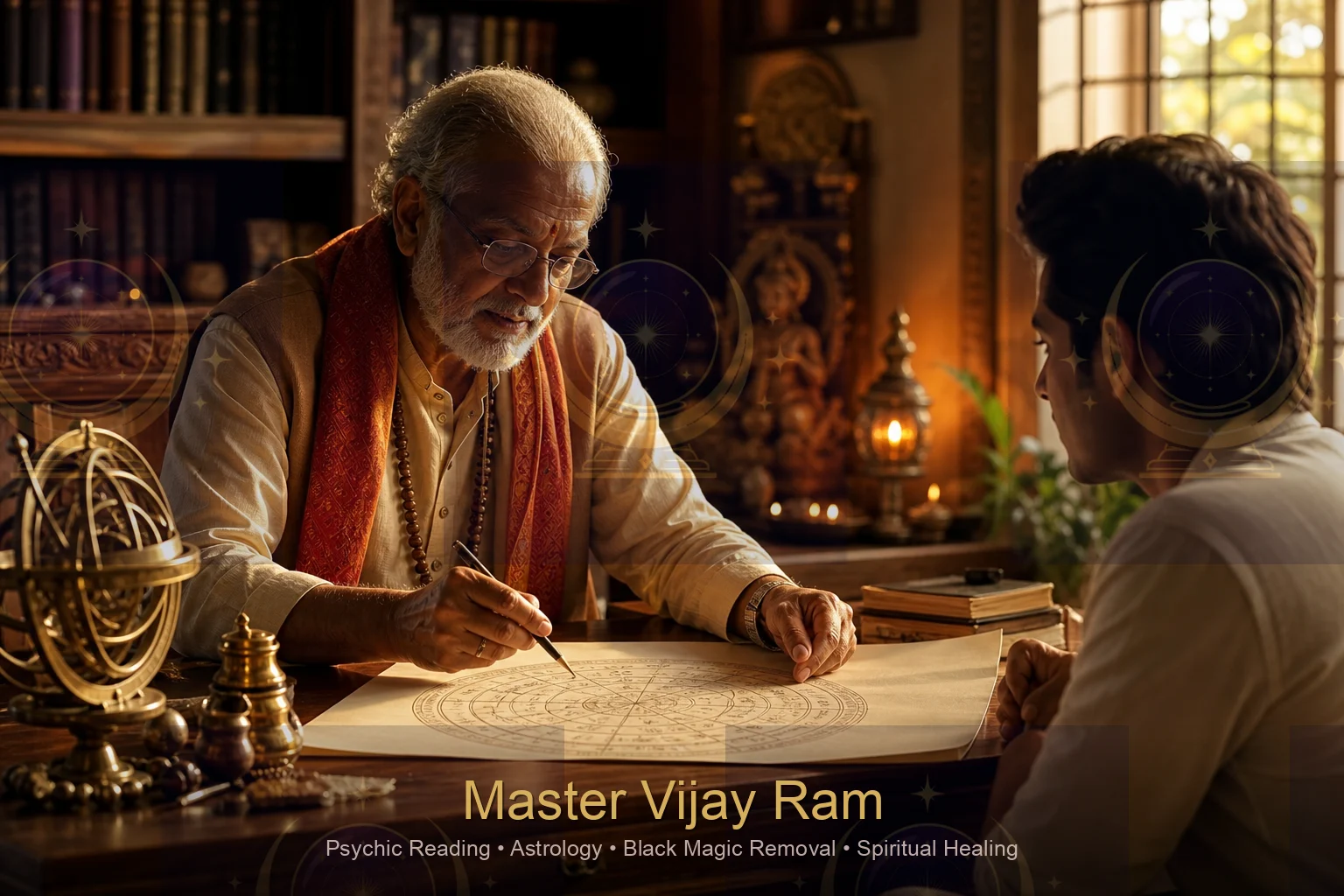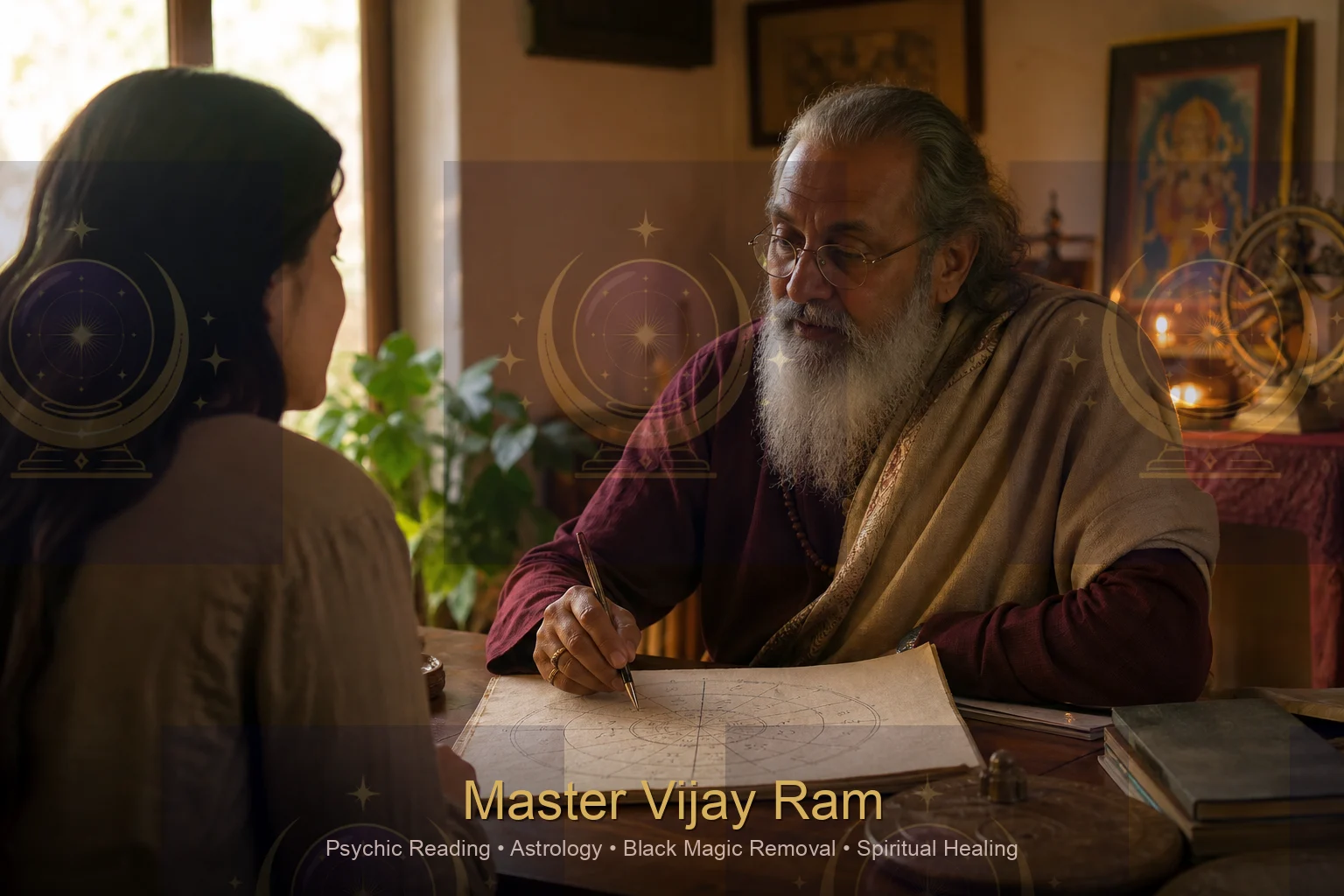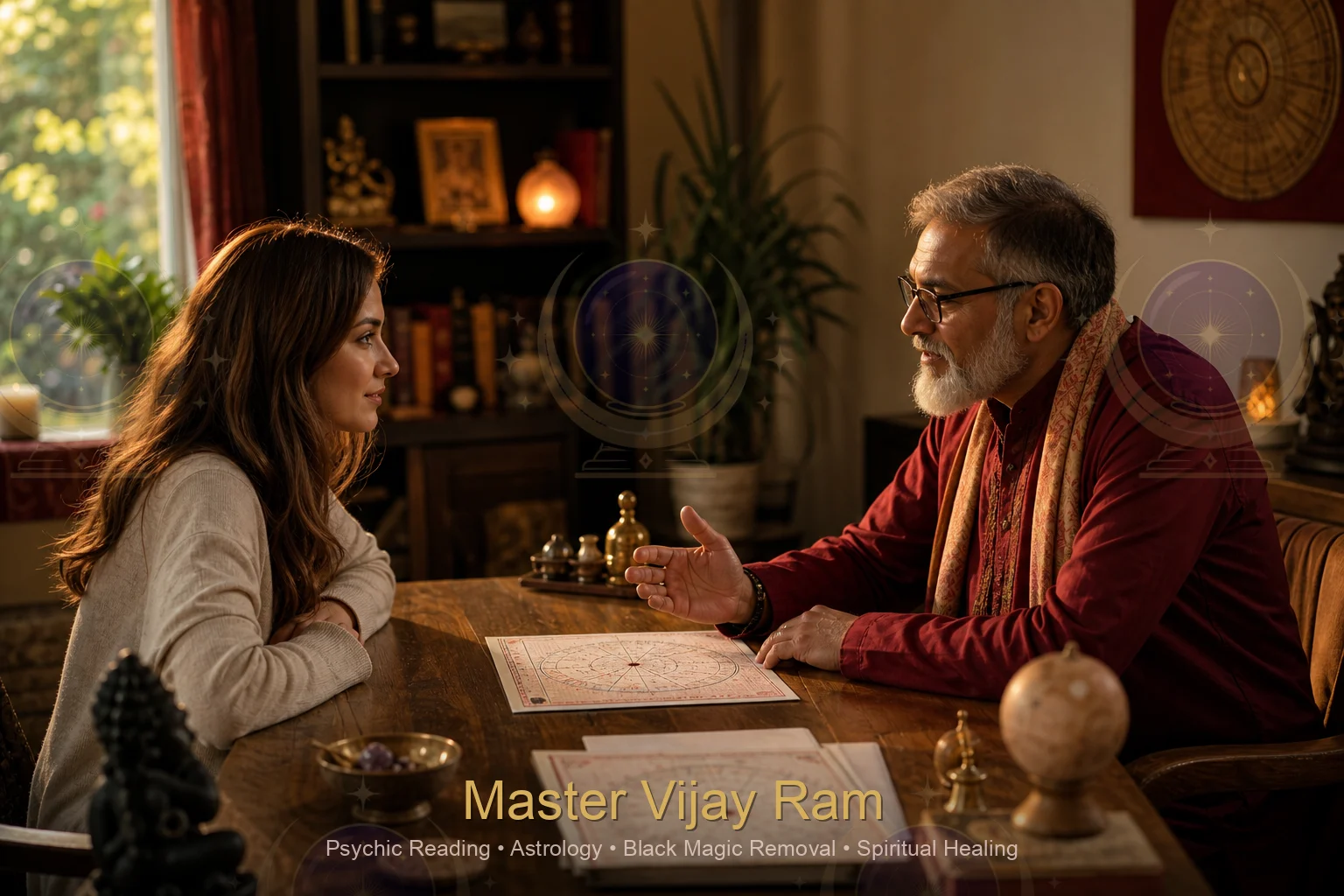
Jyotish is the traditional Hindu system of astrology that reads the positions of the sun, moon, and planets at the moment of birth to describe a person's character, timing of life events, and inner tendencies. Often called the "science of light," Jyotish comes from the Sanskrit word for light or heavenly body, and it forms one of the six ancillary sciences (Vedanga) linked to the ancient Vedas. Many people ask about the vedic astrology meaning behind terms like rashi, nakshatra, and dasha because these form the backbone of a proper kundli reading. Unlike Western astrology, which relies mainly on the tropical zodiac, this indian astrology system uses the sidereal zodiac, tracking the actual visible position of stars. Master Vijay Ram, who has practised Vedic astrology and spiritual guidance for more than 40 years, offers a kundli reading to clients across Kitchener, Waterloo, and beyond who want clarity rooted in this centuries-old tradition.
What Does the Word Jyotish Actually Mean?
Jyotish translates roughly as "science of light" or "study of celestial bodies," from the Sanskrit root jyoti (light). It refers to the ancient Indian discipline of tracking sun, moon, and planetary movements to understand timing, destiny tendencies, and the subtle influences shaping a person's life journey.
The term Jyotish appears in Vedic literature as one of the six Vedangas — supporting disciplines that help interpret the Vedas. Scholars describe it as the study of "light" because it concerns the visible movement of celestial bodies across the sky, and by extension, the light of awareness it can bring to a person's circumstances.
This is different from casual horoscope columns found in newspapers. Genuine Jyotish requires an accurate birth chart, careful calculation of planetary degrees, and years of study to interpret combinations correctly. Because the system draws from Hindu astrology traditions recorded over many centuries, its vocabulary and methods carry deep cultural roots that a serious practitioner respects rather than simplifies.
Key terms every beginner should know
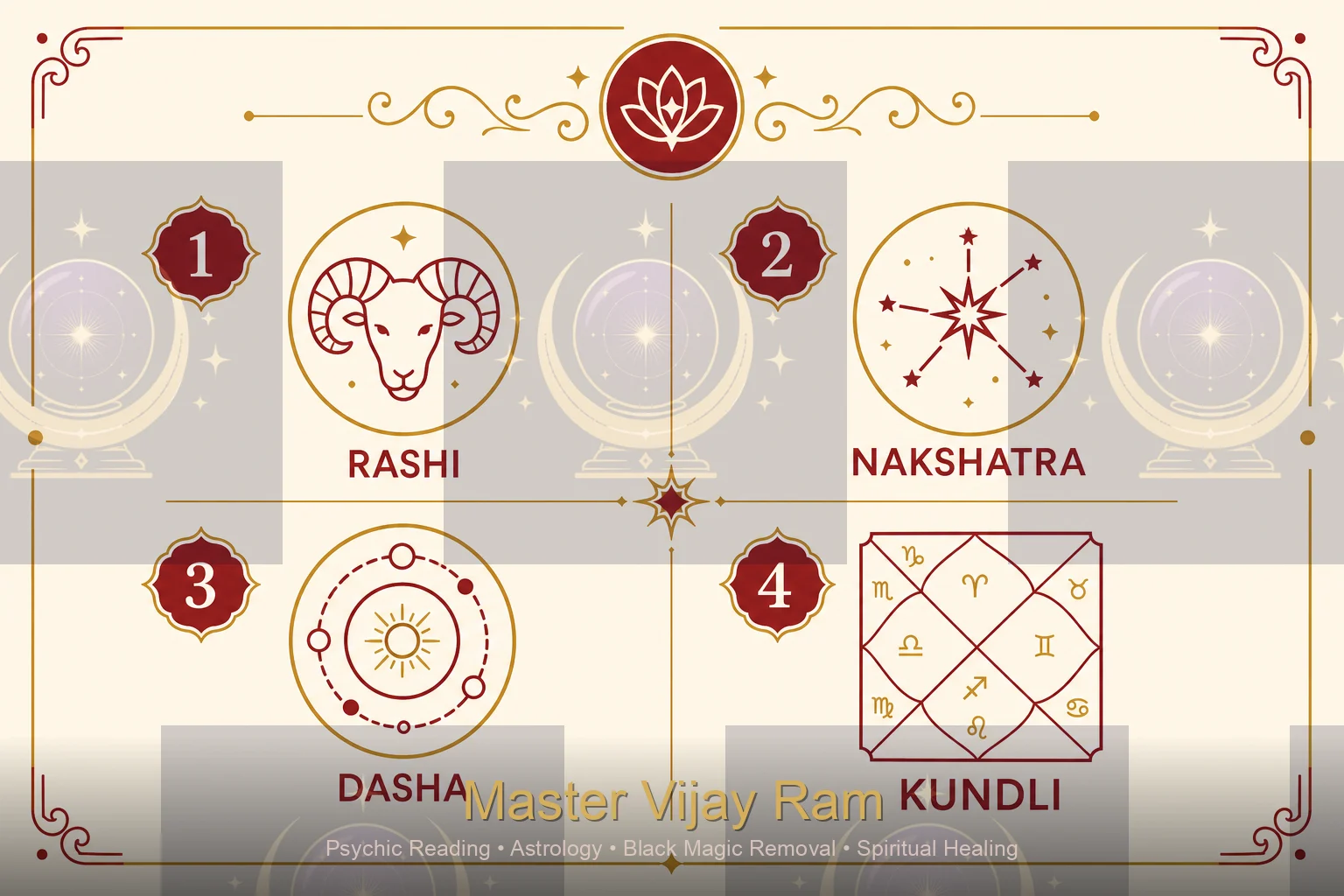
- Rashi – the moon sign, one of twelve zodiac divisions
- Nakshatra – one of 27 lunar constellations used for finer timing
- Dasha – planetary periods that show when certain themes are active
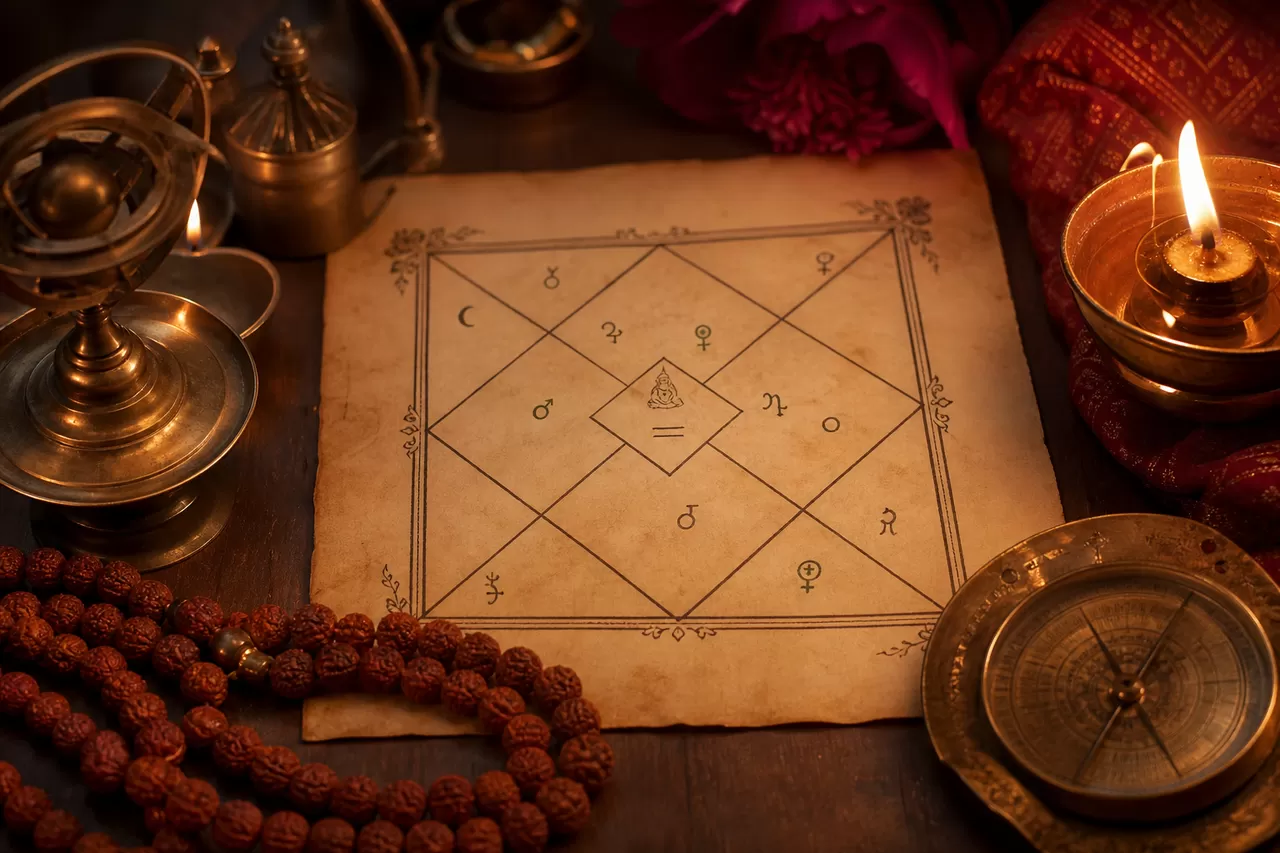
- Kundli – the birth chart itself
How Is Vedic Astrology Different From Western Astrology?
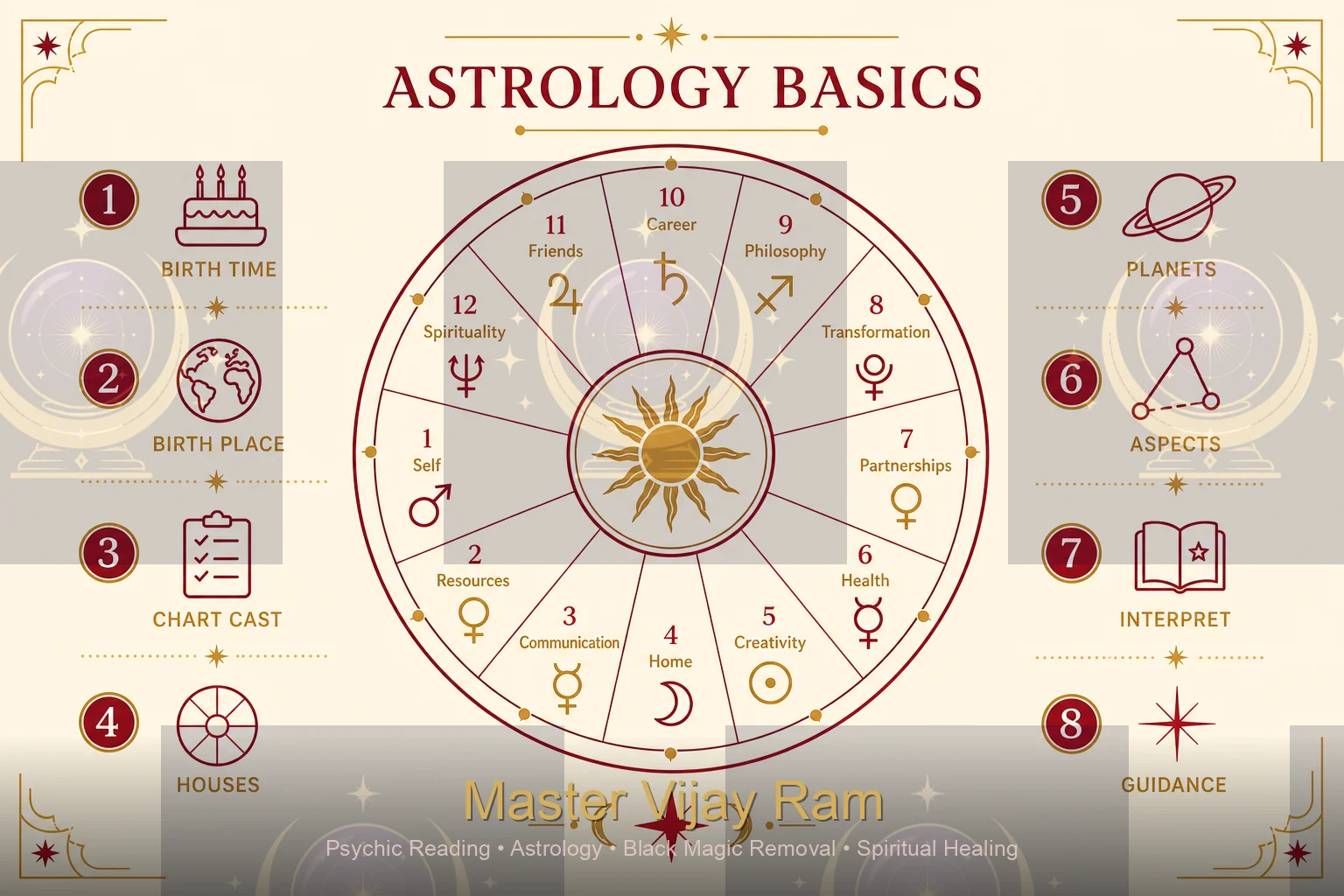
Vedic astrology uses the sidereal zodiac, which aligns with the actual constellations, while Western astrology uses the tropical zodiac, fixed to the seasons. Over time this creates roughly a 24-degree offset, meaning a person's Vedic moon or sun sign may differ from their familiar Western sun sign.
Many first-time clients are surprised to learn their Vedic sign doesn't match the sign they've read about since childhood. This is simply due to the difference between the sidereal and tropical calculation methods, a distinction well documented by astronomers and historians of astrology as a practice.
Vedic astrology also places heavier emphasis on the moon sign (rashi) and nakshatra for personality analysis, while Western astrology tends to foreground the sun sign. Additionally, Jyotish incorporates dasha systems for timing life events with more granularity, something not commonly used in Western methods.
For someone comparing systems out of curiosity, it can help to read about palmistry or astrology, which reading to choose, since both are legitimate but answer slightly different questions about a person's path.
What Can a Jyotish Reading Actually Tell You?
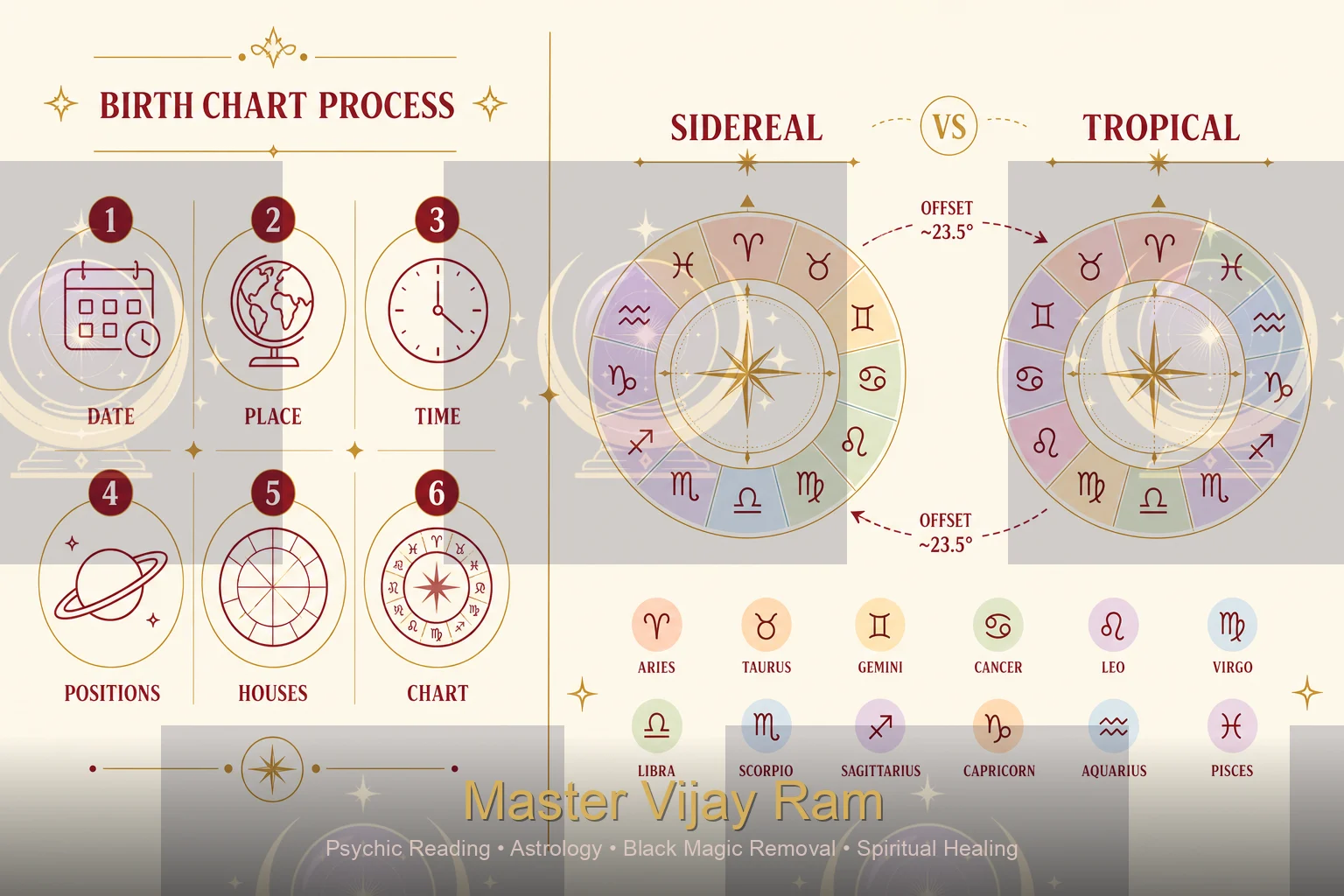
A Jyotish reading examines planetary placements to describe personality traits, likely strengths and challenges, favourable timing for major decisions, and patterns in relationships, career, or health. It offers guidance and perspective, not fixed guarantees, since free will and personal choices always shape how life actually unfolds.
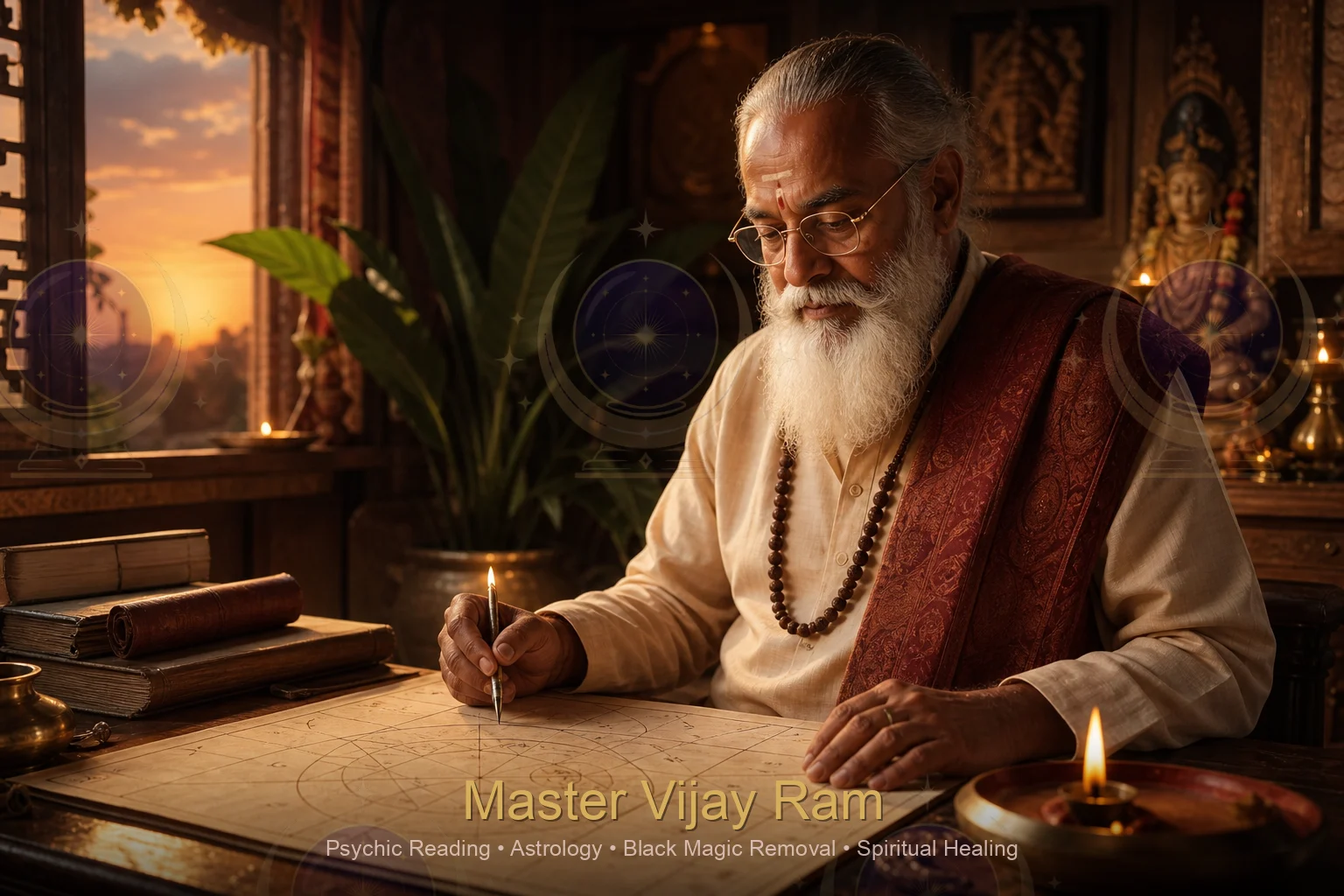
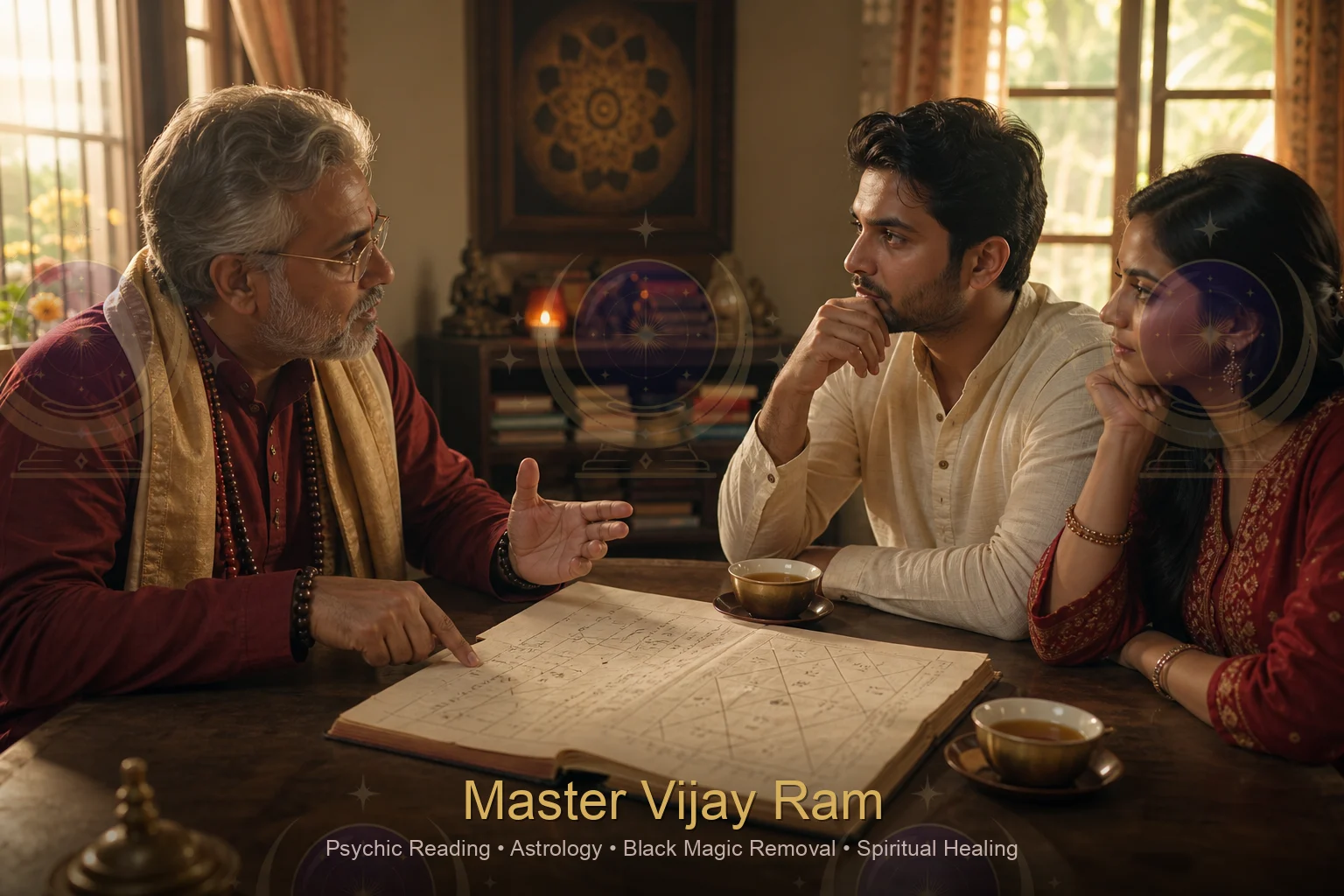
A detailed kundli reading looks at houses (life areas), planets, and their interactions to build a picture of tendencies rather than certainties. For example, someone weighing a career change may find value in a business and career astrology consultation that examines which planetary periods favour risk-taking versus stability.
Couples exploring compatibility sometimes request a love and marriage compatibility reading to understand relational strengths and friction points before making long-term commitments. Others look toward gemstone recommendations, since certain planets are traditionally associated with specific stones; this is explored further through a gemstone and numerology consultation.
An honest limitation
No honest astrologer can guarantee outcomes. Jyotish offers a map of tendencies and timing, not a script that removes the role of personal effort, choice, and circumstance.
How Does Vastu Connect to Jyotish?
Vastu Shastra is the traditional Indian system of architecture and space design that works alongside Jyotish, since both stem from Vedic knowledge. While Jyotish reads time and planetary influence, Vastu reads space and directional energy, and many practitioners consider the two complementary when planning a home or business.
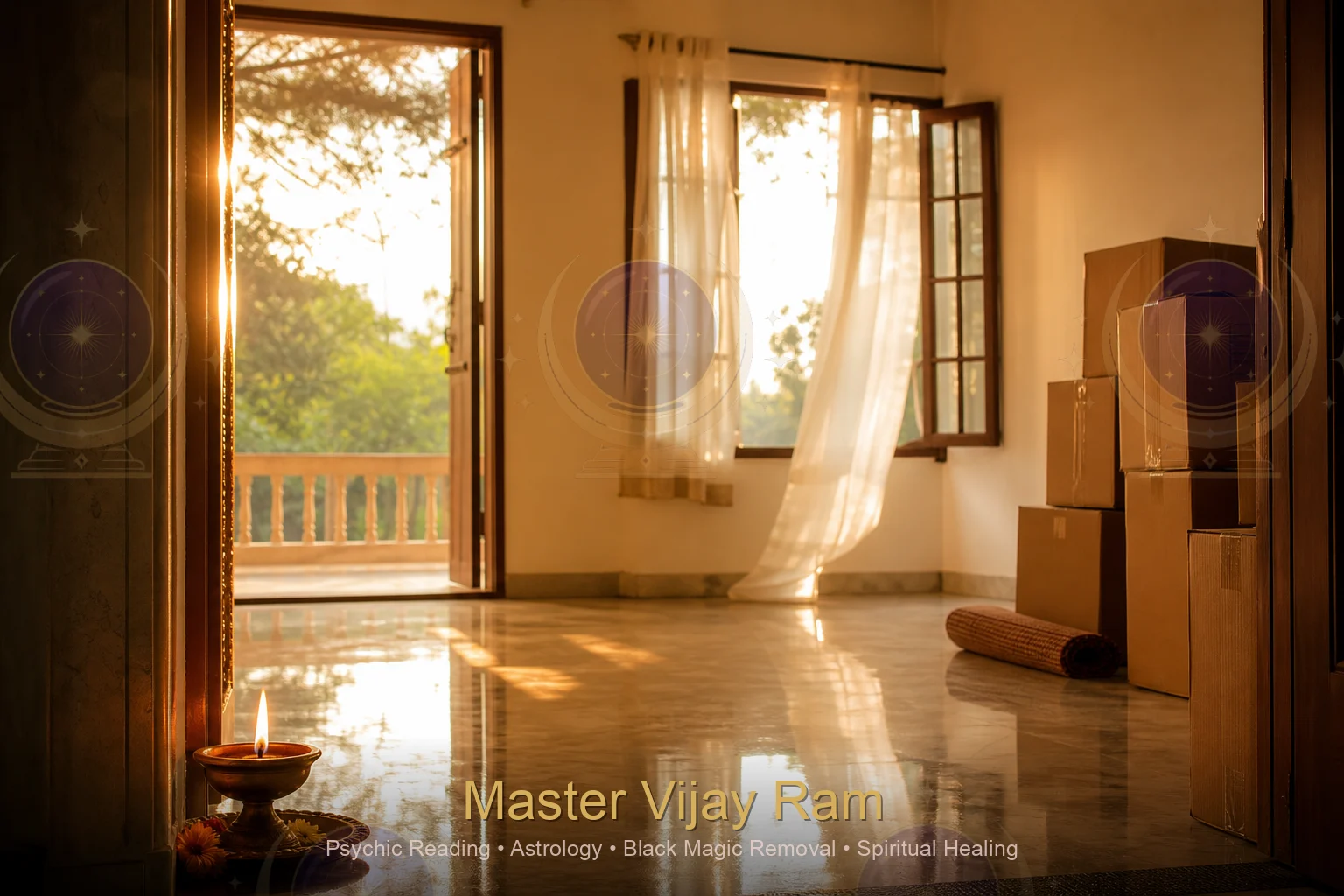
Vastu principles guide the placement of doors, kitchens, and bedrooms according to cardinal directions believed to channel favourable energy. A person building a new home or renovating an office sometimes pairs a kundli consultation with a Vastu consultation to align both timing and physical space.
This pairing reflects a broader idea within Vedic thought: that harmony comes from aligning inner timing (astrology) with outer environment (space). Neither replaces sound structural or legal advice, but many families find the combined perspective reassuring during major transitions.
How Should Someone Prepare for Their First Jyotish Consultation?
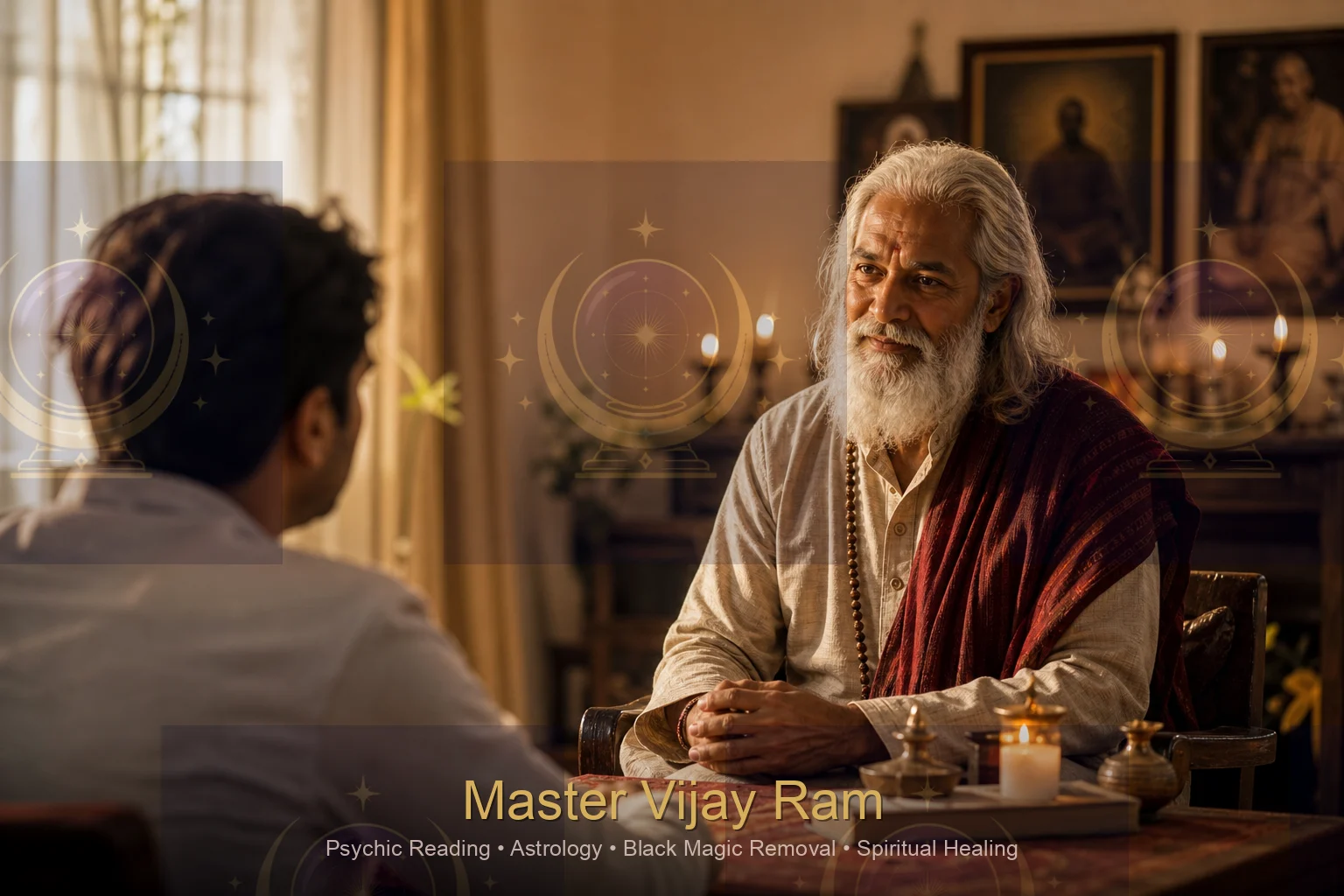
Bring an accurate birth date, time, and place, since even a few minutes' error can shift the chart significantly. Come with specific questions in mind — career, relationships, or timing — and approach the session with openness rather than expecting rigid, guaranteed predictions.
Accuracy matters most in Jyotish because the ascendant (rising sign) changes roughly every two hours, and even a small timing error can alter house placements. If a birth certificate or hospital record is available, it's worth bringing it along.
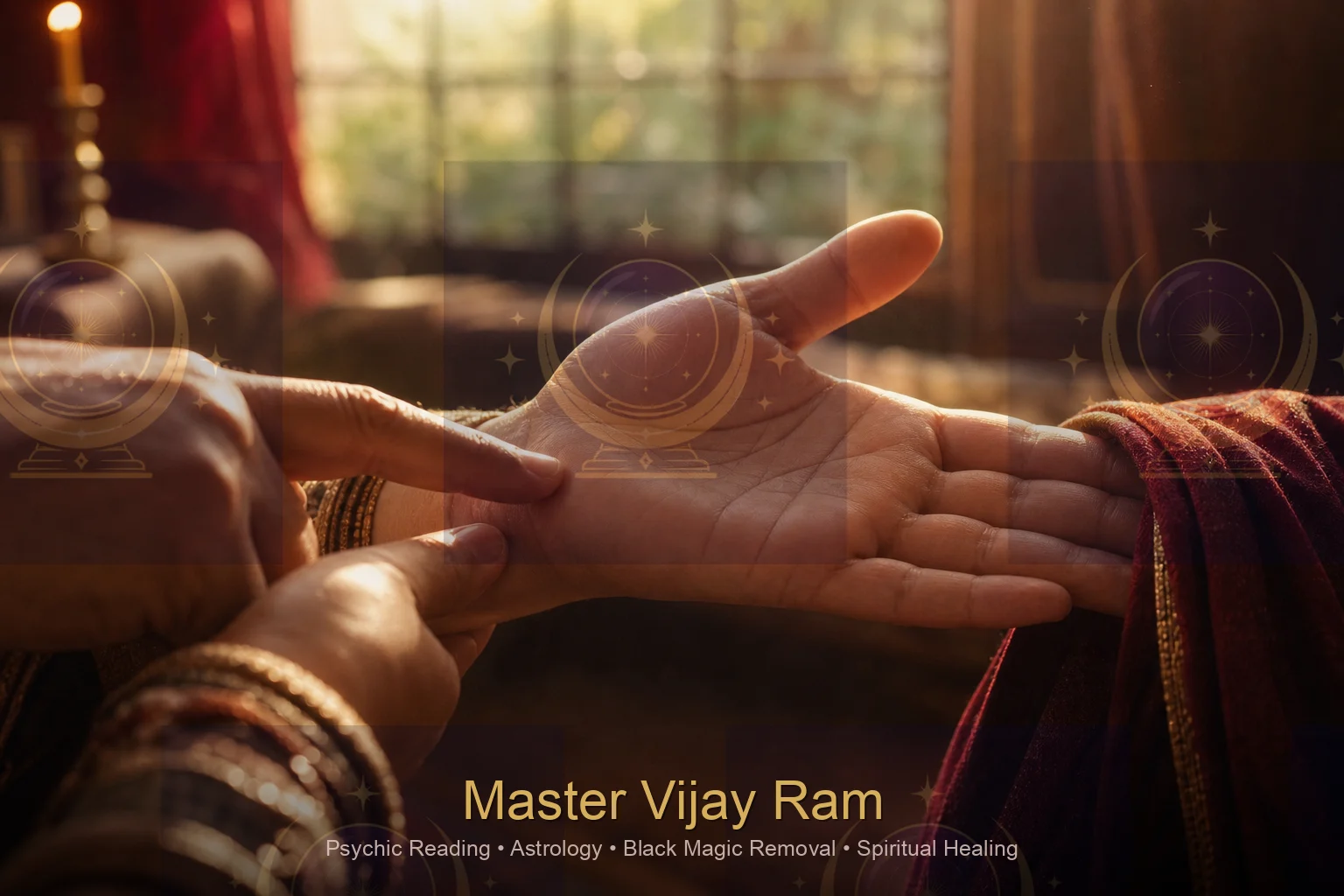
It also helps to write down two or three focused questions beforehand — whether about career direction, family matters, or emotional patterns — so the session stays productive. Readers curious about complementary self-reflection tools sometimes also explore intuition as a Vedic practice for spiritual insight or compare chart reading with the four major lines in palmistry to understand how different traditional tools examine a life story.
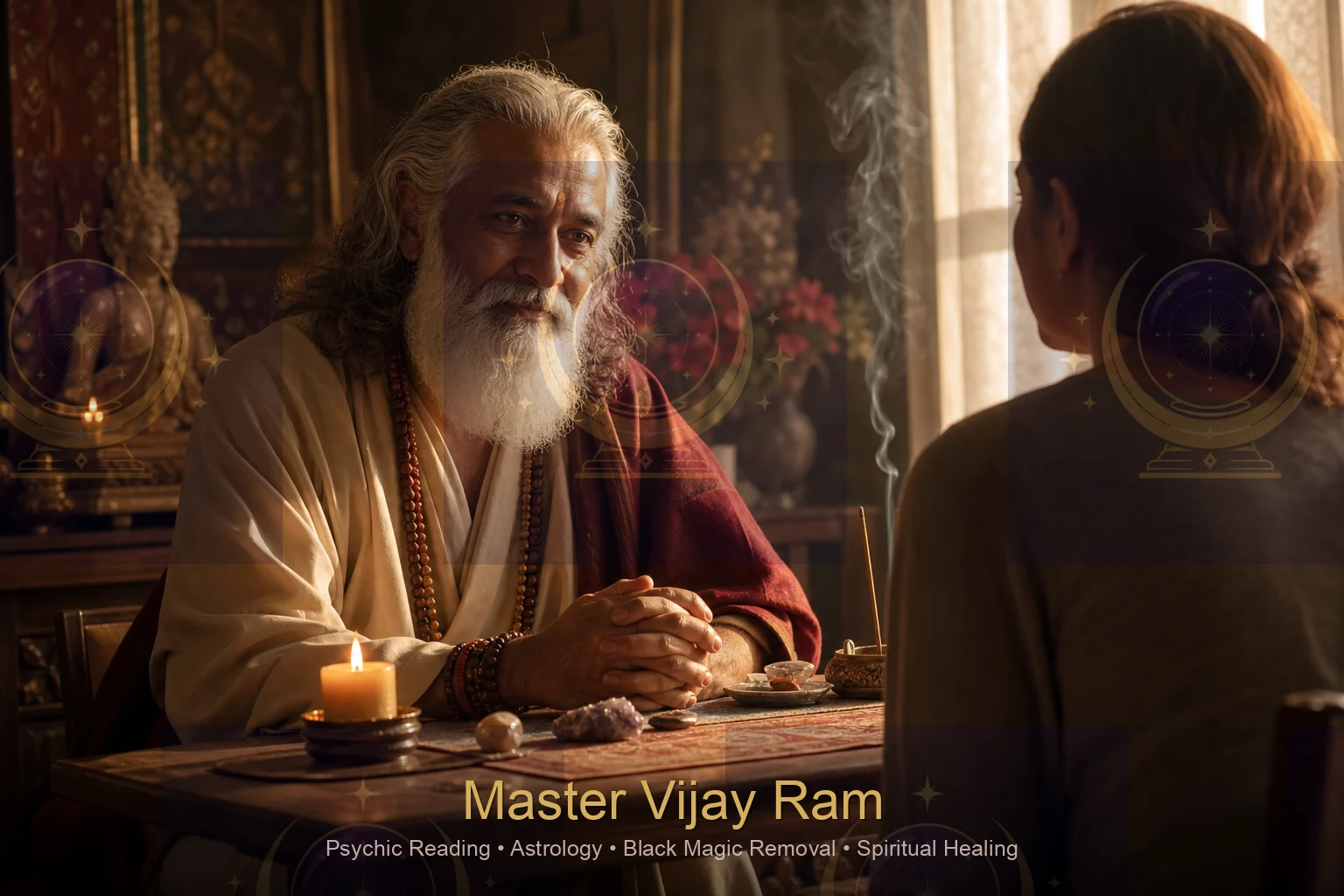
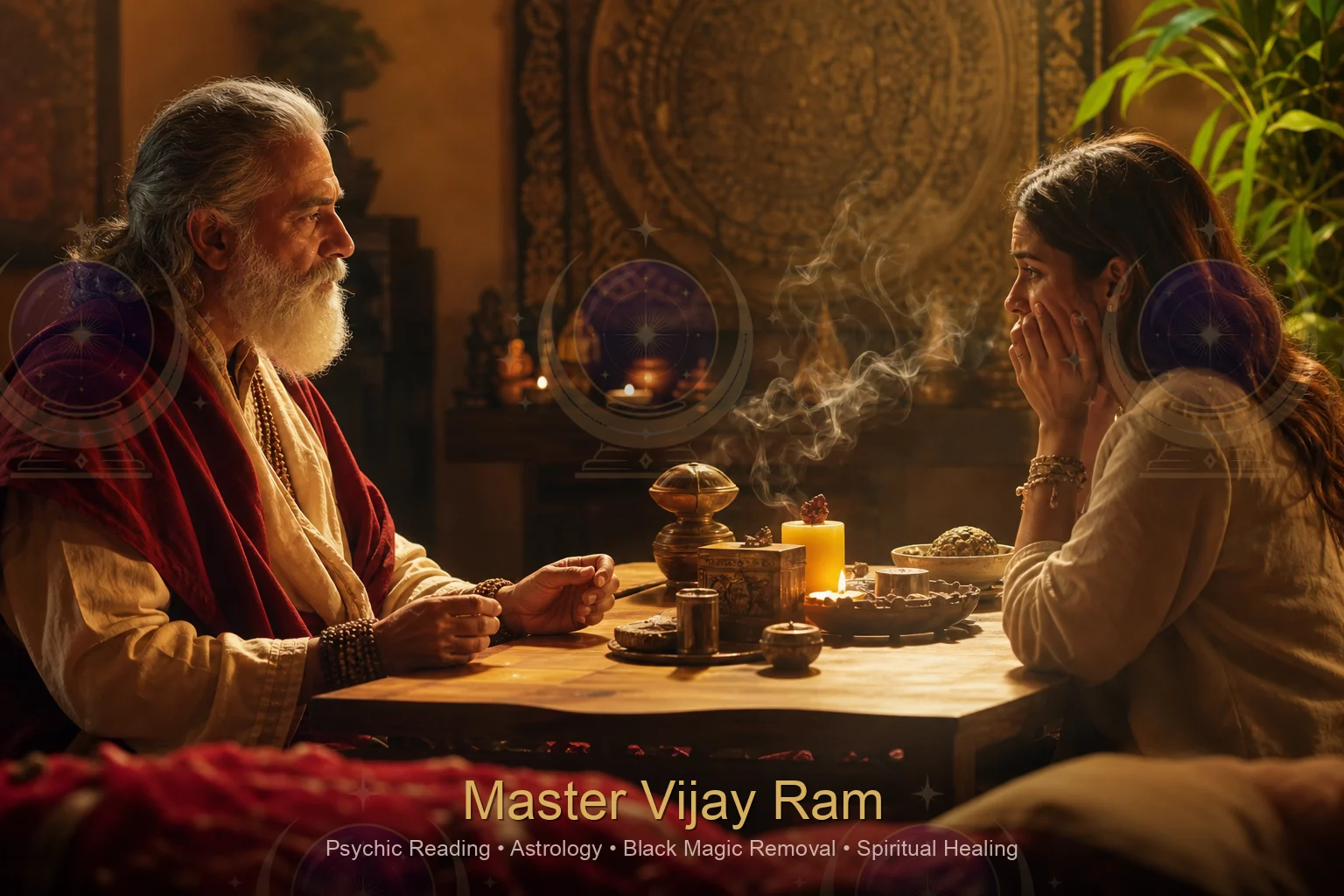
Consultations are confidential and open to people of all faiths and backgrounds; Master Vijay Ram serves clients from Kitchener and Waterloo as well as surrounding communities.
Serving nearby: Kitchener · Waterloo · Cambridge · Guelph · Brantford · Stratford · Woodstock
Key takeaways
- Jyotish means "science of light" and is the traditional Hindu system underlying Vedic astrology.
- It uses the sidereal zodiac, which differs from the tropical zodiac used in Western astrology.
- A kundli reading examines planetary positions, houses, and dashas to describe tendencies and timing, not guarantees.
- Vastu Shastra often complements Jyotish by addressing physical space alongside birth-chart timing.
- Accurate birth time and place are essential for a meaningful, personalized reading.
In closing
Jyotish is a rich, time-tested system, and understanding its basics is only the beginning of what a proper reading can reveal about timing, personality, and life direction. If you're curious how your own birth chart reads, consider booking a private, confidential consultation to explore it with guidance shaped by more than four decades of practice. Visit the full range of services or reach out directly through the contact page to arrange a session that fits your questions and your schedule.