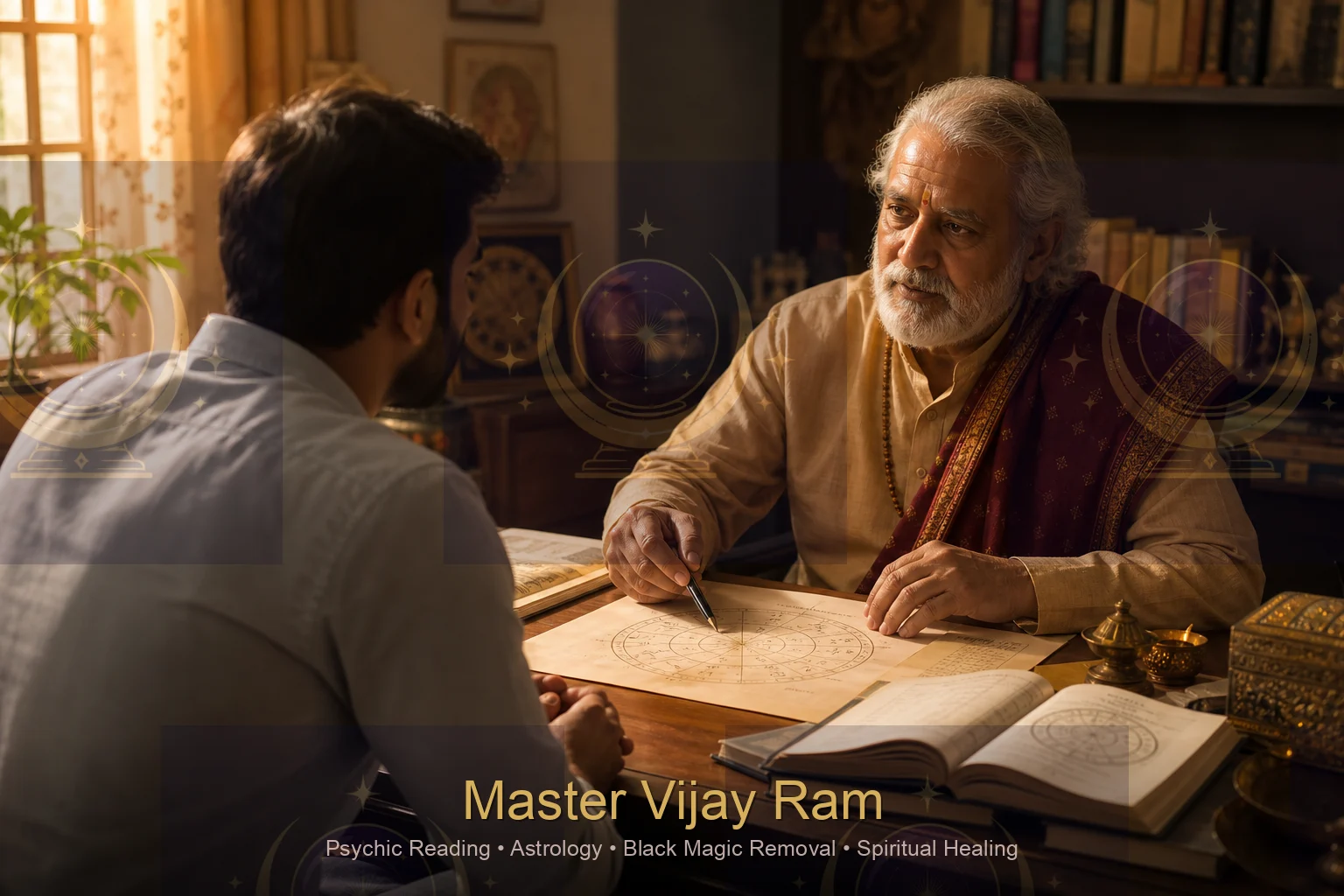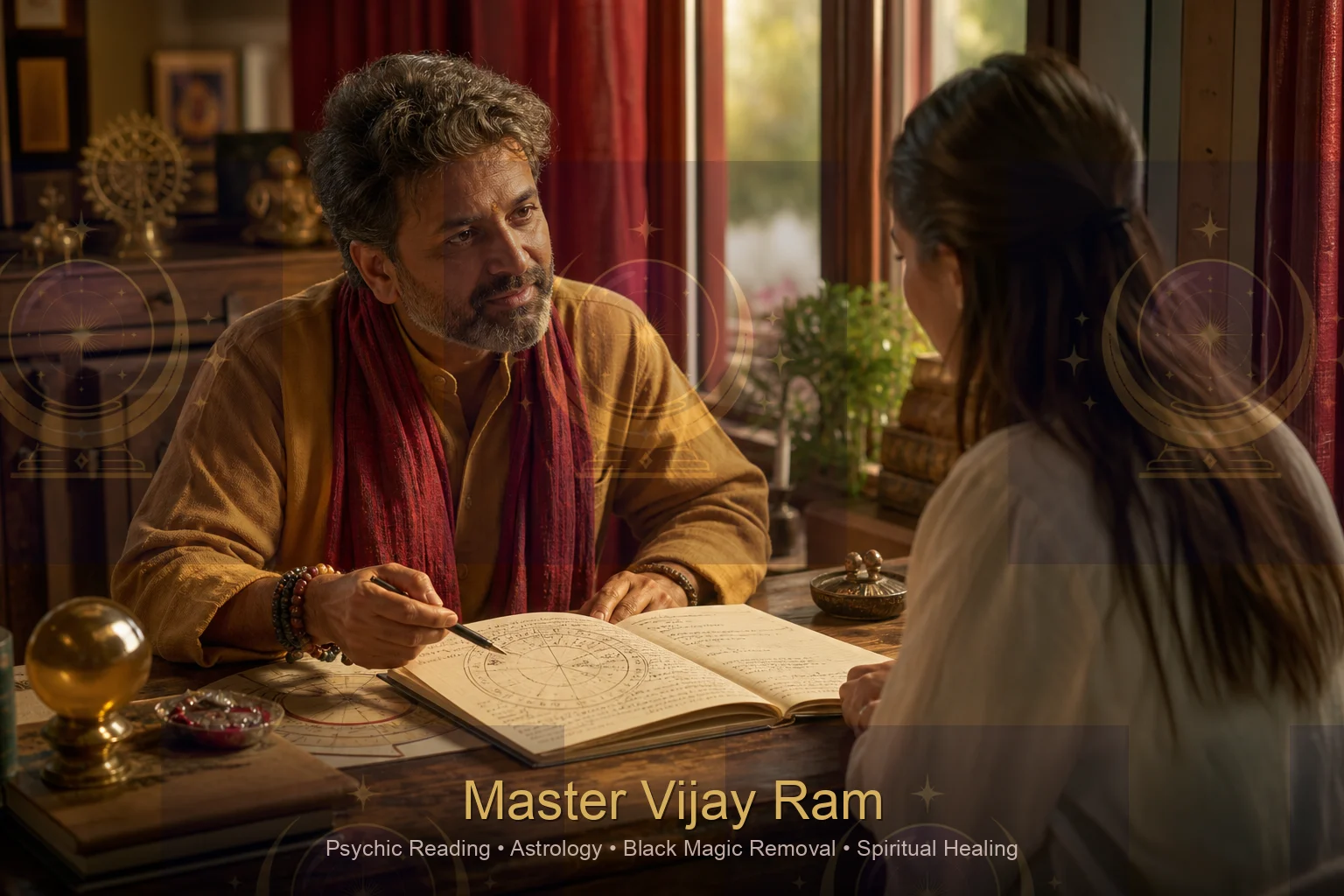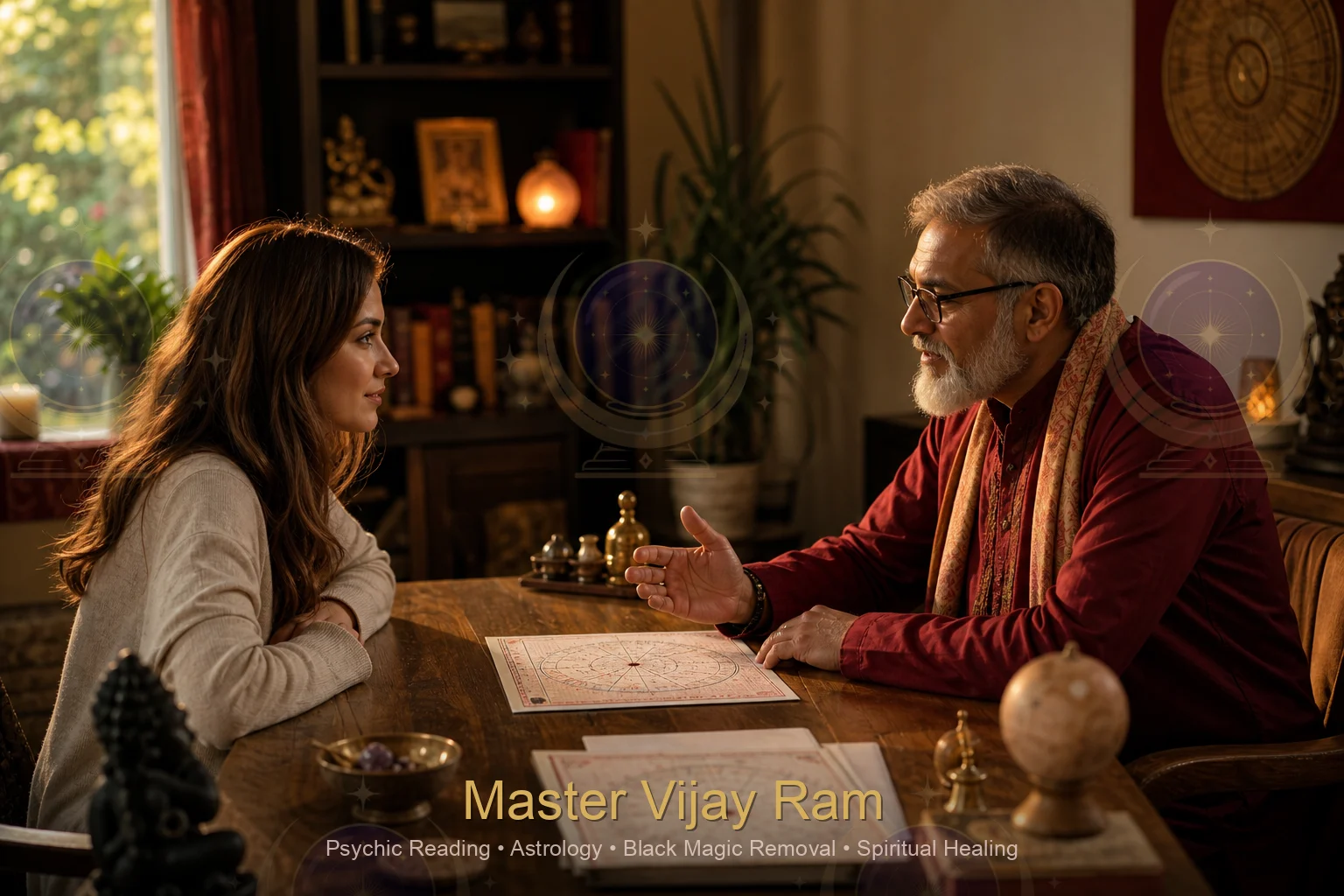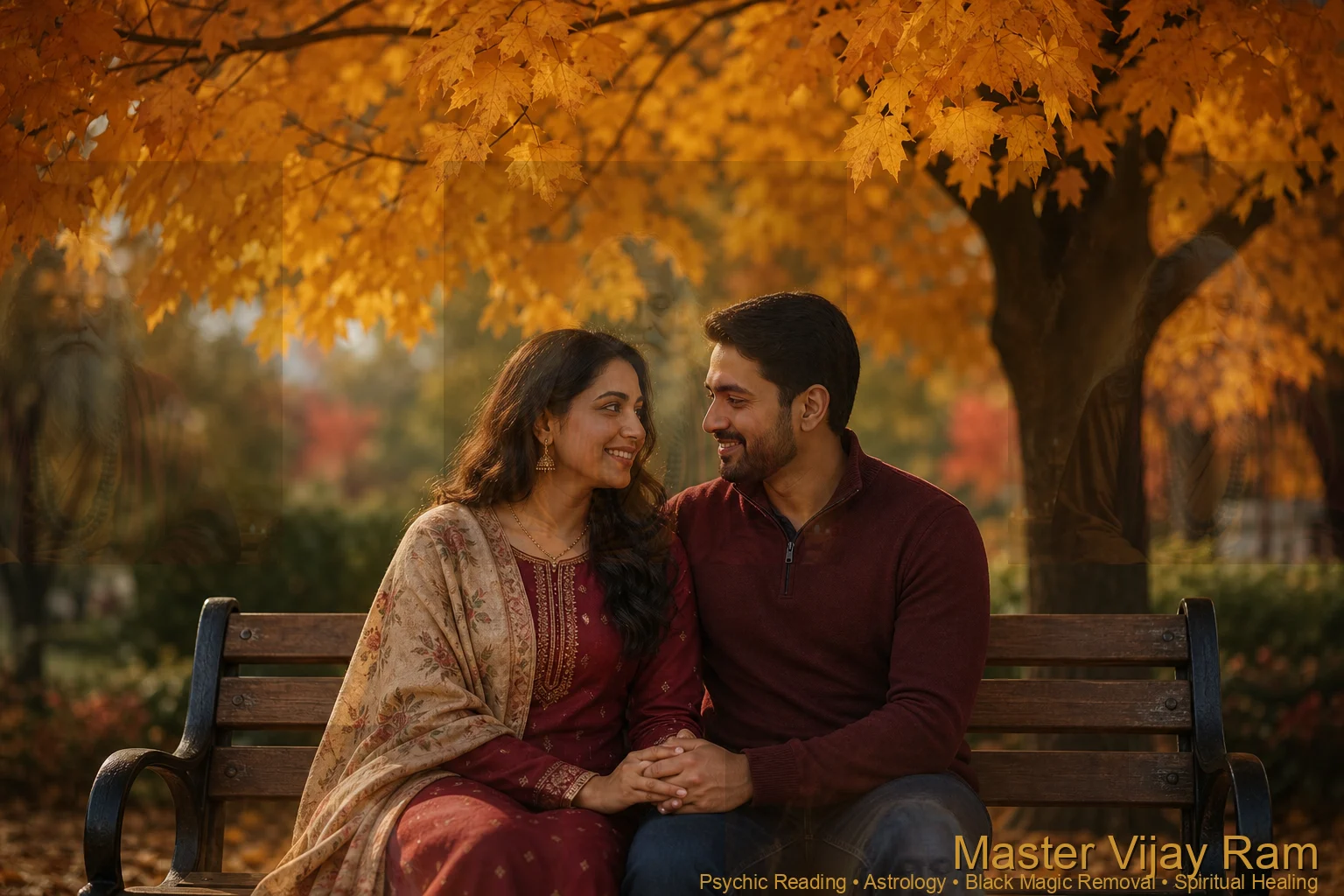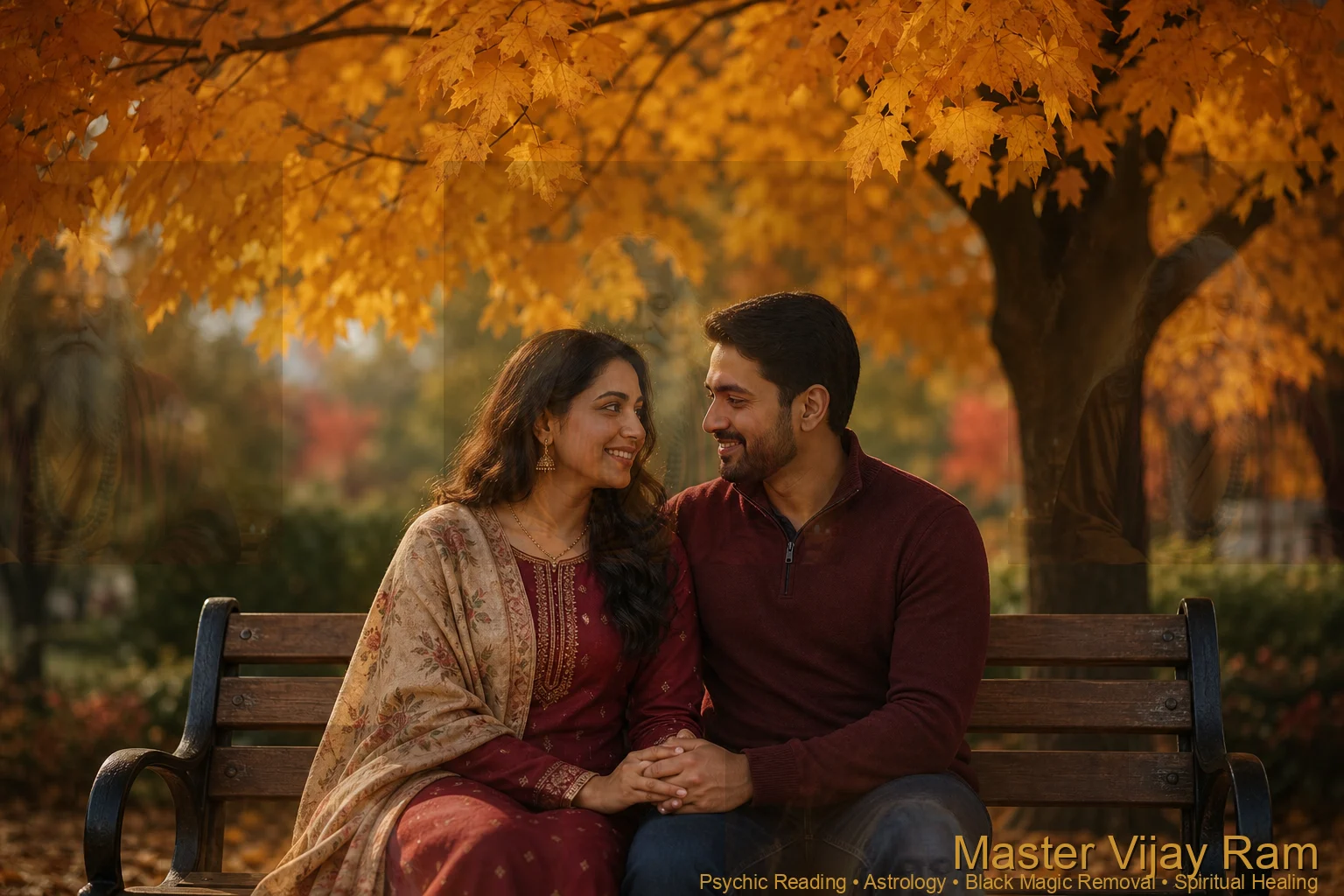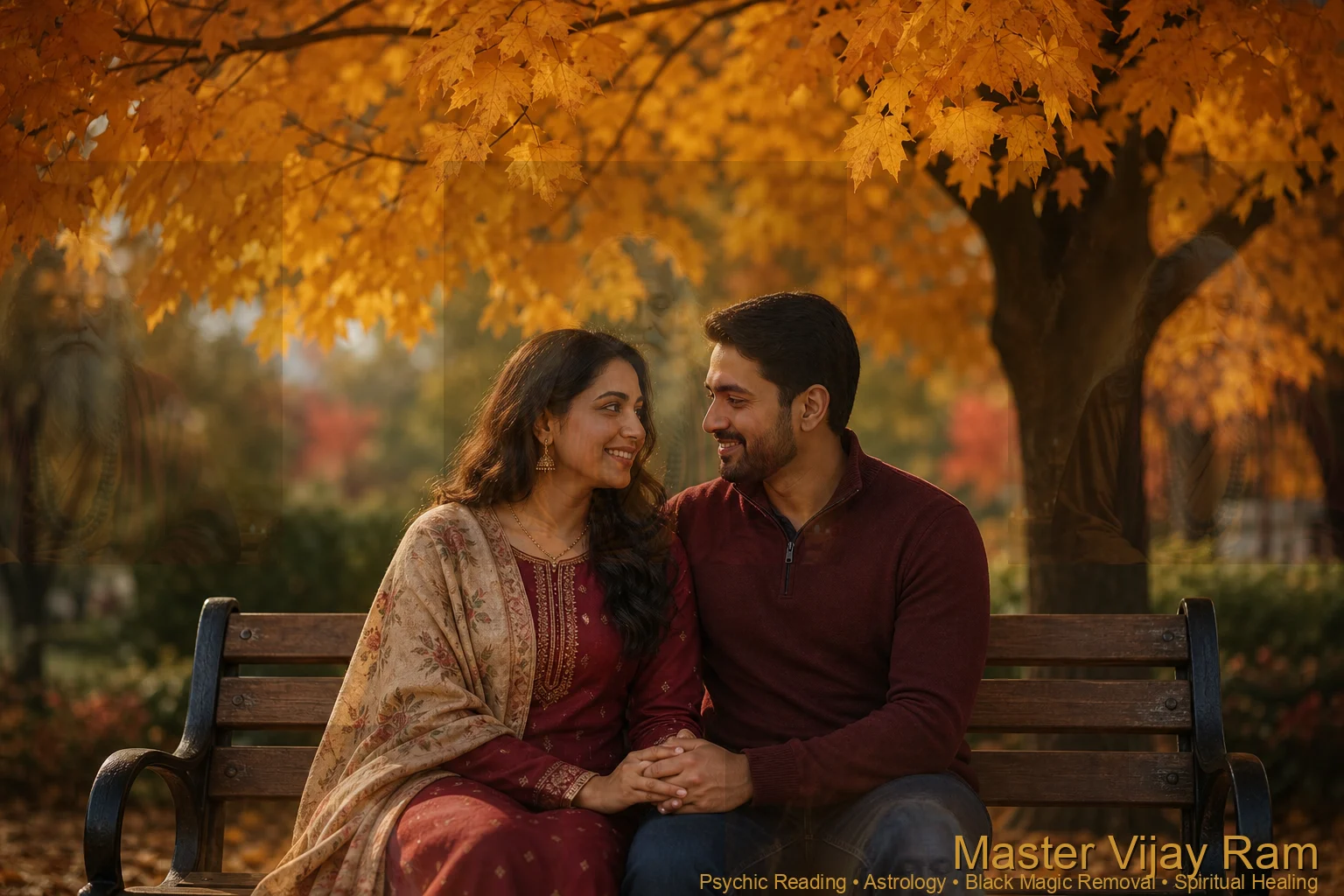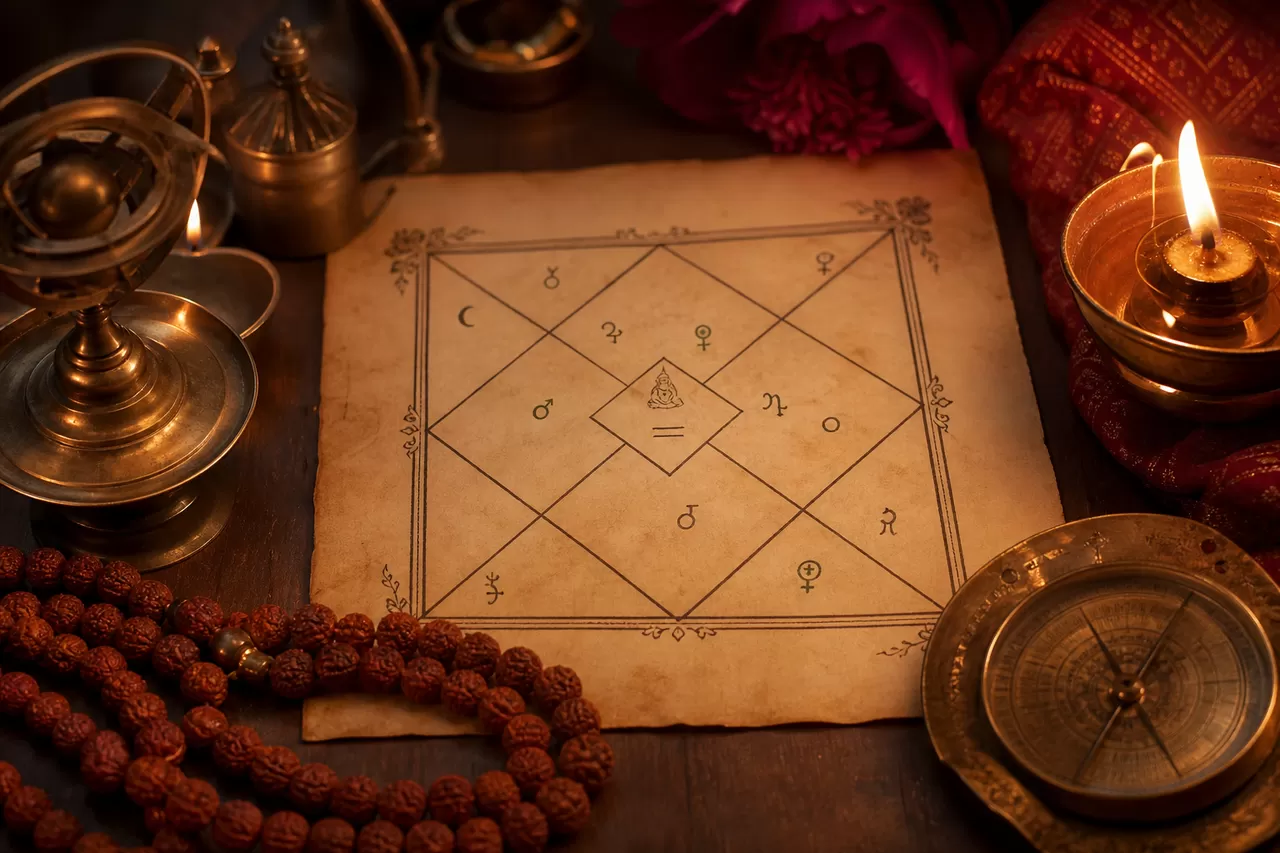
Love marriage vs arranged marriage is one of the most common questions families bring to a Vedic astrologer, especially when two people are deciding how their relationship should move forward. Marriage astrology is a branch of Vedic astrology that studies the seventh house, its ruling planet, and the placement of Venus and Mars to understand how, when, and with whom a person is likely to marry. It does not say one path is superior to the other. Master Vijay Ram, who has practised kundli matching and marriage astrology for more than 40 years from his Kitchener practice, is often asked by couples across Waterloo, Cambridge, Guelph, and Brantford whether their chart leans toward a self-chosen union or a family-arranged one. This article explains what specific planetary combinations actually indicate, how kundli matching works in both scenarios, and where astrology can genuinely help a couple — and where it cannot replace honest conversation.
What planetary combinations point to a love marriage?
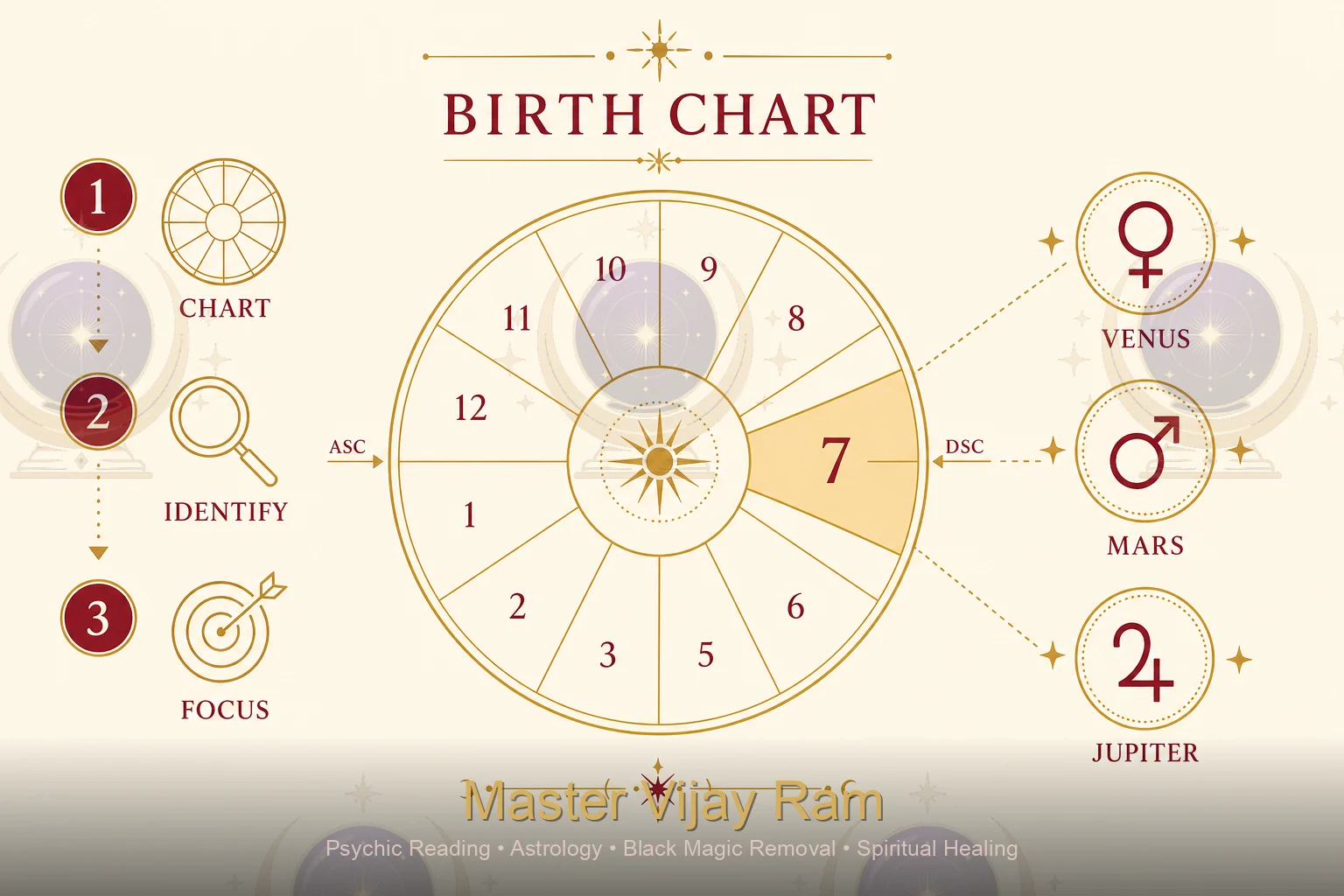
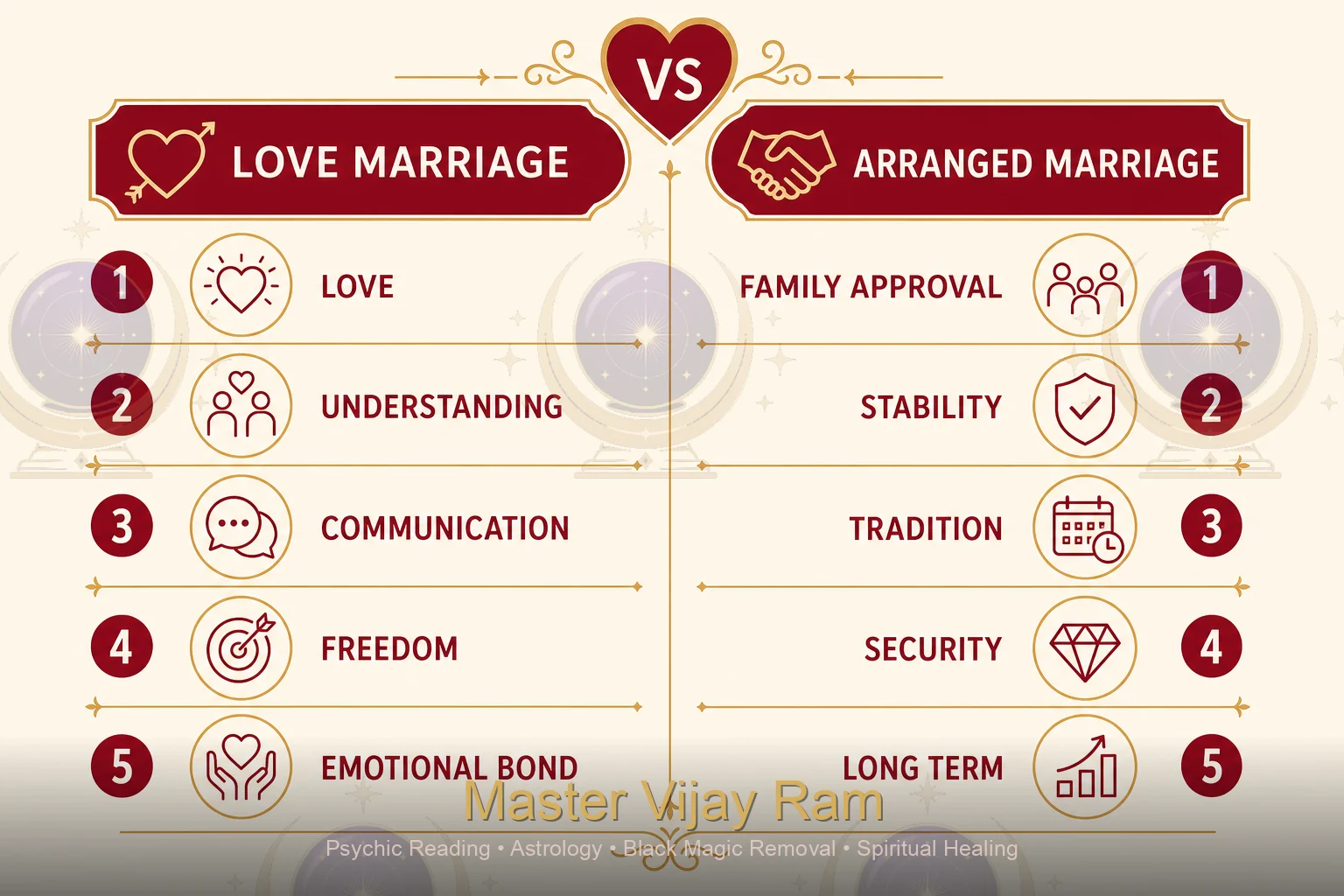
A love marriage in Vedic astrology is often linked to Venus and Mars forming a connection with the seventh house or its lord, or Rahu influencing the seventh house or fifth house. These placements suggest attraction, independence in choice, and a relationship that forms before family involvement.
In classical marriage astrology, the seventh house governs partnership, while the fifth house governs romance and courtship. When these two houses or their lords are connected — through conjunction, mutual aspect, or exchange — a self-initiated relationship becomes more likely.
Common indicators astrologers look for
- Venus-Mars conjunction or aspect, especially touching the fifth or seventh house
- Rahu in the seventh house, often associated with unconventional or cross-cultural unions
- Fifth lord connected to the seventh lord, linking romance to commitment
- Moon-Venus combinations that heighten emotional attraction
None of these placements guarantee a love marriage will happen or succeed — they describe a leaning in the chart, not a fixed outcome. Couples navigating this stage sometimes reach out for love marriage guidance to understand timing and family acceptance, particularly when parents are hesitant about a relationship that started outside the traditional process.
What planetary combinations favour an arranged marriage?
A traditionally arranged marriage is often shown by a strong, well-placed seventh lord with minimal Rahu or Mars interference, and benefic aspects from Jupiter. This suggests a stable, family-guided path to partnership rather than one driven by early romantic attraction.
When the seventh house and its lord are supported mainly by Jupiter, Mercury, or the Moon — without strong Venus-Mars-Rahu involvement — the chart often points toward a marriage arranged through family, matchmaking, or introduction rather than a prior romantic relationship.
Signs that often appear
- Jupiter aspecting the seventh house, associated with stability and blessings through elders
- A seventh lord placed in a friendly sign with no affliction
- Limited fifth-seventh house connection, meaning romance and marriage develop together rather than beforehand
This does not mean an arranged match is destined to be free of difficulty, or that a love marriage chart guarantees struggle. Both patterns are simply descriptions of how a partnership tends to begin, not predictions of its long-term happiness.
How does kundli matching work when love and family expectations differ?
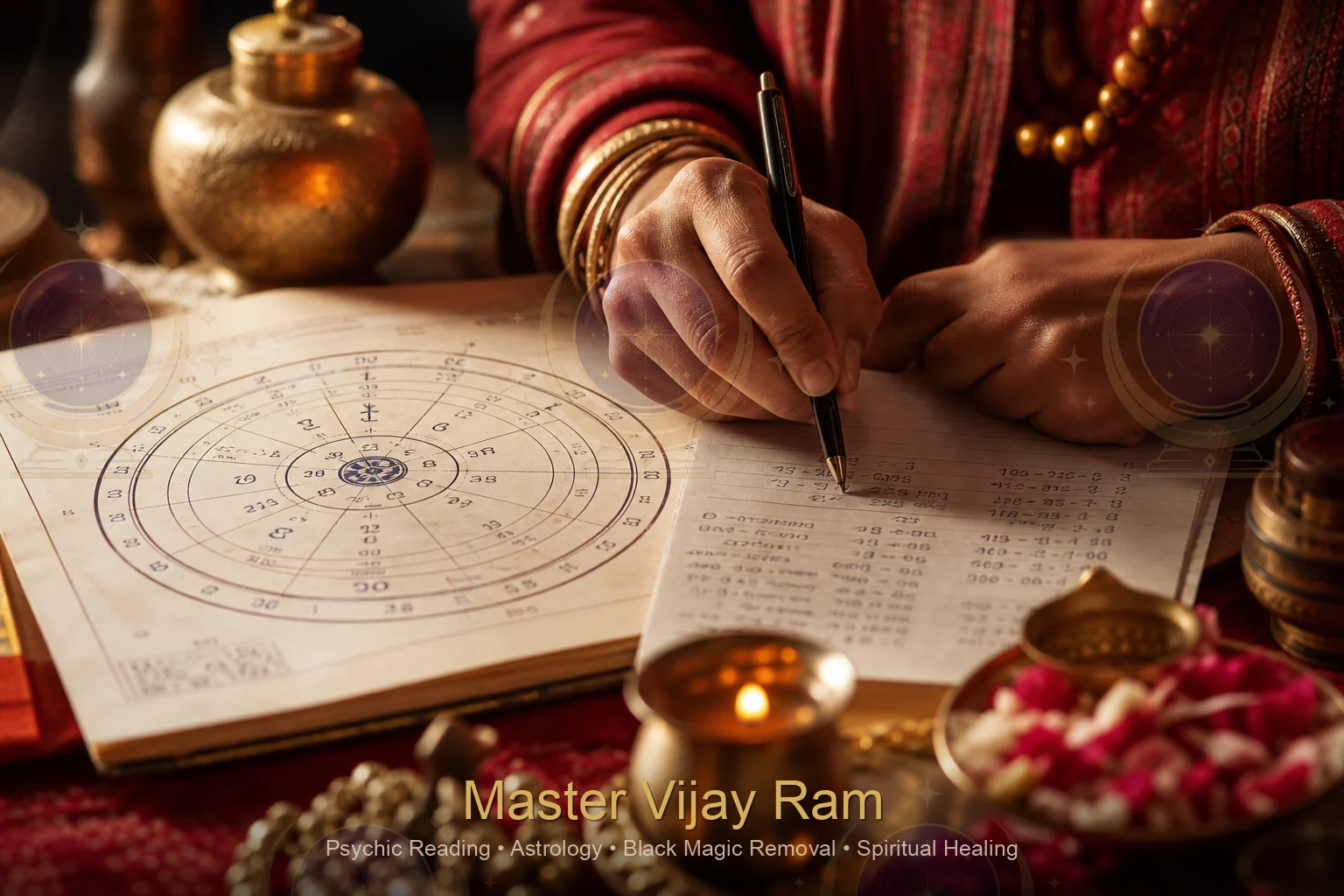
Kundli matching, or Guna Milan, compares two birth charts across eight categories to assess compatibility in temperament, health, and long-term harmony. When a couple has chosen each other, matching is used to identify friction points and suggest remedies rather than to approve or reject the match.
Traditional kundli matching awards points (out of 36) across eight compatibility factors, commonly known as Ashtakoot Milan, a method rooted in classical Vedic astrology as described in traditional Hindu texts on Hindu astrology. For a love match, the process shifts slightly — instead of deciding whether to proceed, it highlights where the couple may need patience, such as differences in temperament (Gana) or emotional needs (Nadi dosha).
Where this helps couples in practice
- Identifying likely friction points before marriage, not after
- Offering remedies for specific doshas rather than dismissing the relationship
- Helping families see compatibility beyond surface-level objections
Many couples in Kitchener and Waterloo come in already committed to each other and want a relationship compatibility reading simply to understand each other better and prepare for the practical realities of married life together.
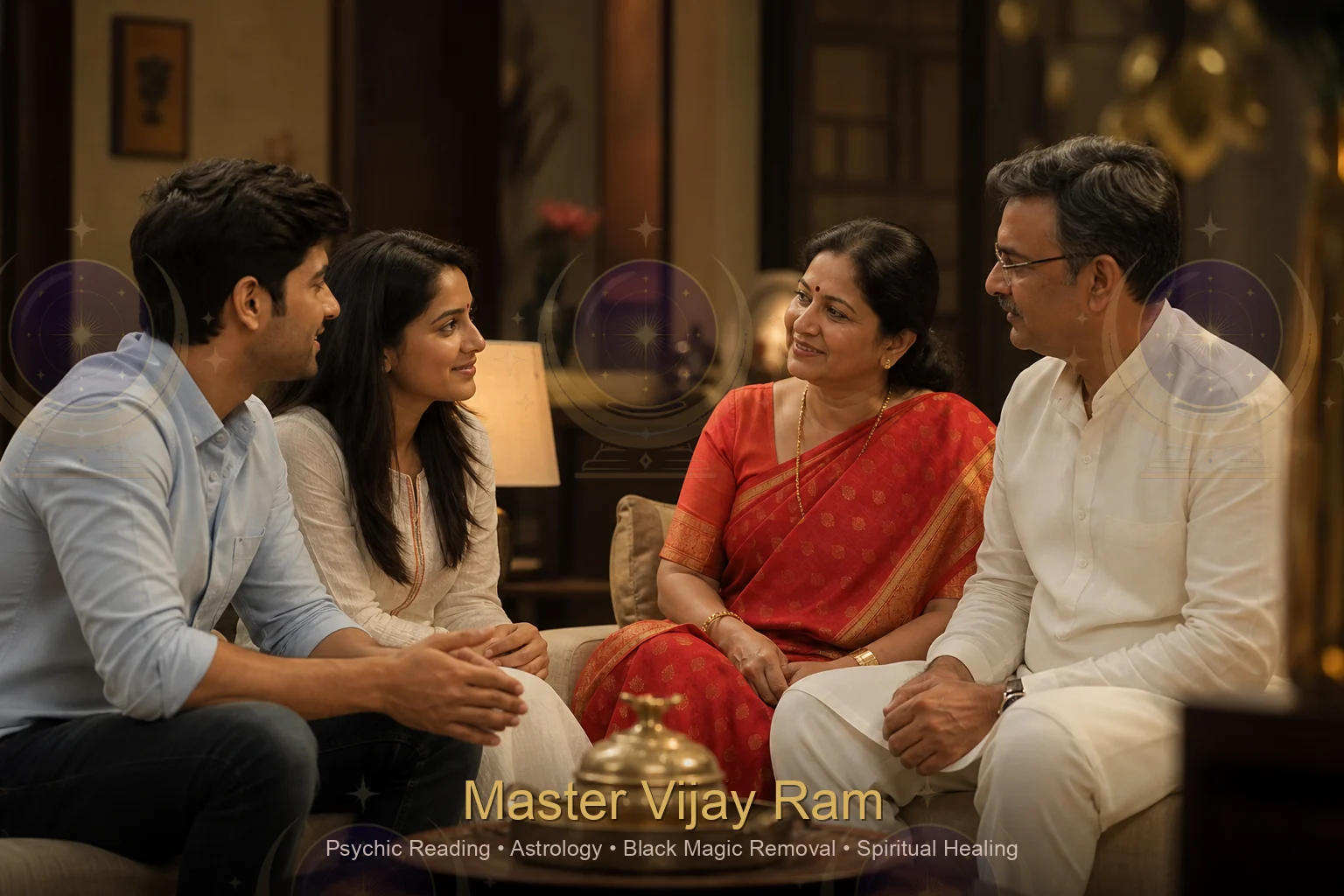
Can astrology help if the family disapproves of a love match?
Yes — a chart reading can identify the planetary timing and remedies that support smoother family acceptance, but it cannot force approval or override anyone's free will. Astrology works alongside honest conversation, not as a replacement for it.
Family resistance to a love marriage often has real roots — caste, community, financial concerns, or simple unfamiliarity with the partner. A chart reading cannot dissolve these concerns instantly, and Master Vijay Ram is careful never to promise that a remedy will change a parent's mind against their will.
What a reading can offer is clarity: identifying favourable periods (dashas) for approaching the family, understanding whether current planetary transits are adding unnecessary tension, and recommending simple remedies for peace in the home. For relationships under real strain, a dedicated love problem consultation looks at both partners' charts together to find practical, respectful ways forward.
If a relationship has already broken down under family pressure, some clients later seek support to reconnect — this is covered in depth in an honest guide to getting an ex back in Kitchener.
Does one type of marriage last longer in astrology?
No chart pattern guarantees a longer or happier marriage in either category. Longevity and harmony depend more on the seventh house's overall strength, mutual aspects between both partners' charts, and how both people handle the ordinary friction every marriage faces.
This is one of the most misunderstood ideas in marriage astrology. A love marriage chart is not inherently more fragile, and an arranged marriage chart is not automatically more stable. What matters more is:
- The overall strength of the seventh house and its lord in both partners' charts
- Absence of severe affliction (such as multiple malefics in the seventh house)
- Compatible Moon signs, which govern emotional temperament day to day
- How both people communicate and resolve conflict — something no chart can measure alone
When ongoing marital friction is the concern rather than the wedding decision itself, a focused marriage problem reading examines current transits affecting the relationship and offers grounded remedies.

How is marriage timing calculated for either path?
Marriage timing is estimated through dasha (planetary period) analysis, focusing on when the seventh lord, Venus, or Jupiter becomes active. This applies equally to love and arranged marriages — the timing principles do not change based on how the couple met.
Vedic astrologers typically examine the running Mahadasha and Antardasha (major and sub-period) to see when significant seventh-house or Venus-related activations occur. A period ruled by the seventh lord, or by Jupiter aspecting the seventh house, is often considered supportive for marriage regardless of whether it follows a courtship or a family introduction.
Why timing consultations matter
Many clients from Guelph and Cambridge ask specifically about timing when they are already in a relationship and want to know if the coming year is favourable, or when family introductions might go smoothly for an arranged process. This is a distinct question from compatibility, and both are usually reviewed together in a full Vedic astrology consultation in Kitchener.
Serving nearby: Kitchener · Waterloo · Cambridge · Guelph · Brantford · London Ontario · Hamilton
Key takeaways
- A birth chart shows tendencies toward love or arranged marriage through the seventh house, Venus, Mars, and Rahu placements — it does not dictate which path is better.
- Venus-Mars-Rahu connections to the seventh or fifth house often lean toward love marriage; a calm, Jupiter-supported seventh lord often leans toward arranged marriage.
- Kundli matching (Guna Milan) can be used for both love and arranged matches, focusing on identifying friction points rather than approving or blocking a relationship.
- No chart pattern guarantees a longer or happier marriage — overall seventh house strength and real-life communication matter more than how the couple met.
- Astrology can guide timing and family conversations but cannot override anyone's free will or guarantee family approval.
In closing
Whether a marriage begins with a shared glance across a room or a careful introduction arranged by family, a Vedic chart can offer real insight into timing, compatibility, and the emotional patterns each partner brings into the relationship. It cannot replace trust, communication, or a family's willingness to listen. If you would like to understand what your own chart says about your path to marriage, Master Vijay Ram offers a calm, confidential, and judgement-free space to talk it through — for details on all offerings, visit the services page, or reach out directly through the contact page to book a private consultation.