People use "fortune telling" and "astrology" as though they were the same thing, and practitioners rarely correct them because the correction sounds pedantic. But the distinction is genuinely useful when you are deciding who to see, because the two answer different kinds of question — and picking the wrong one is how people end up disappointed by a perfectly competent reading.
Astrology is calculation; fortune telling is the wider category
Astrology produces a chart from your exact birth data. Fortune telling is the umbrella term that includes it, alongside palmistry and intuitive reading.
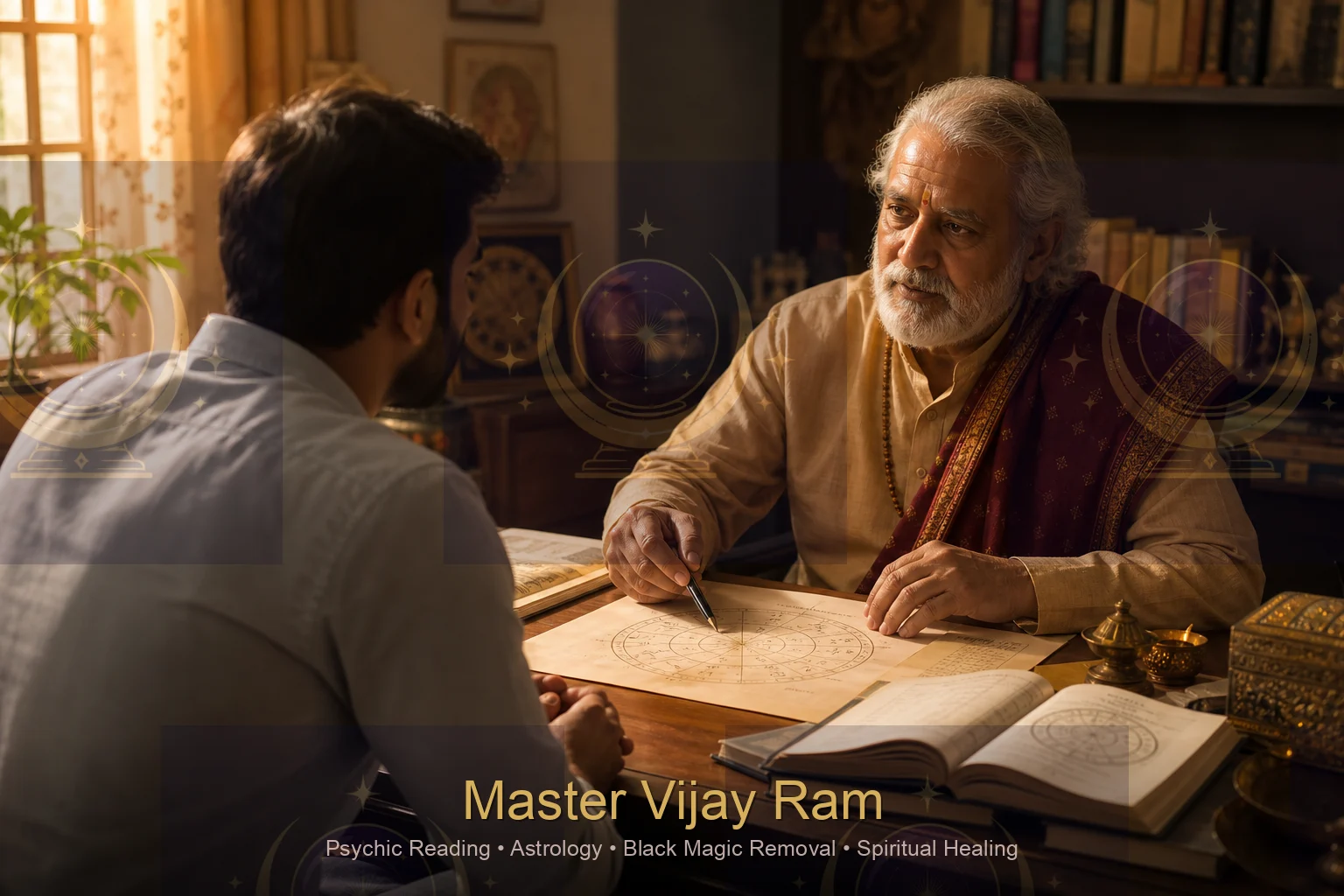
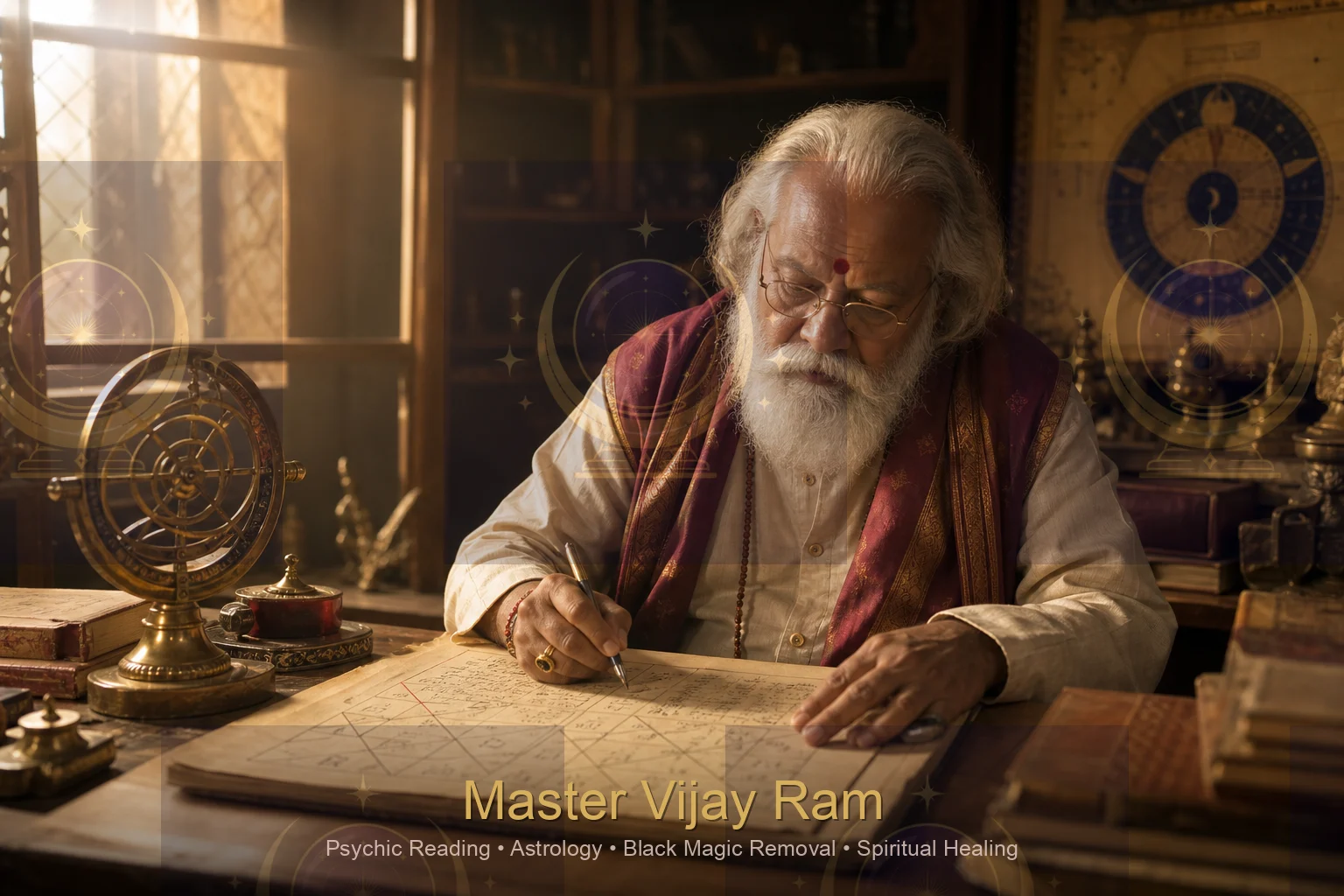
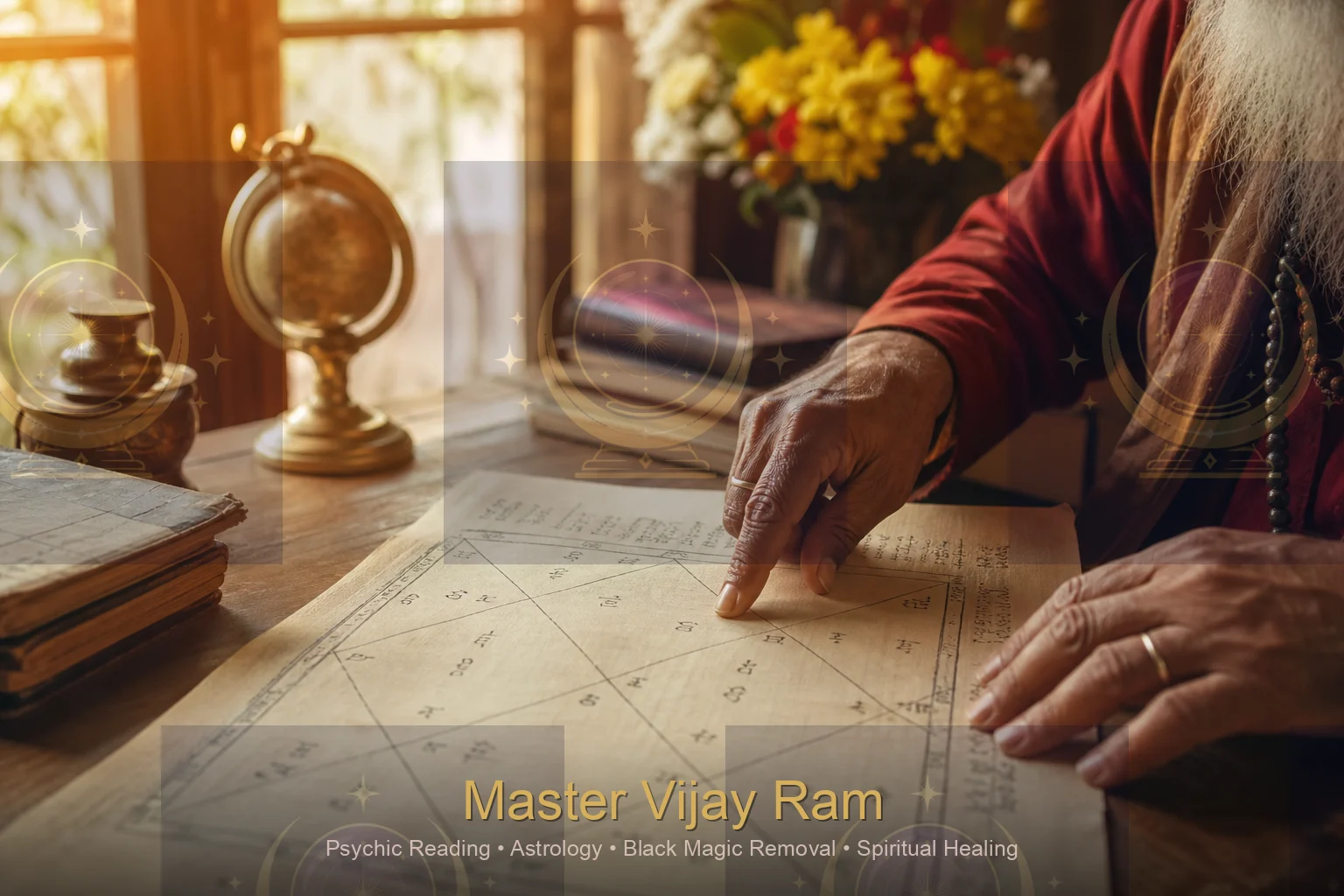
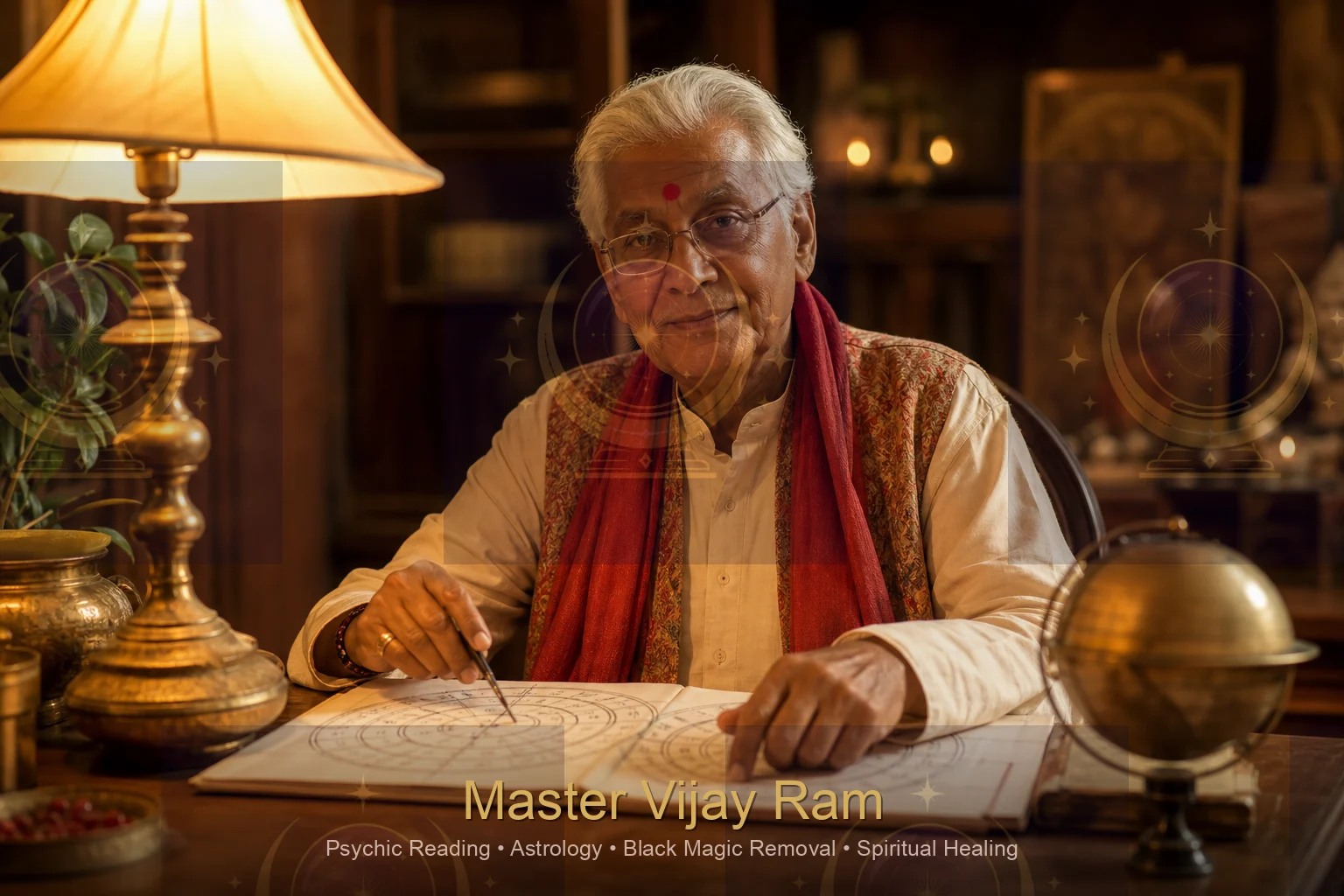
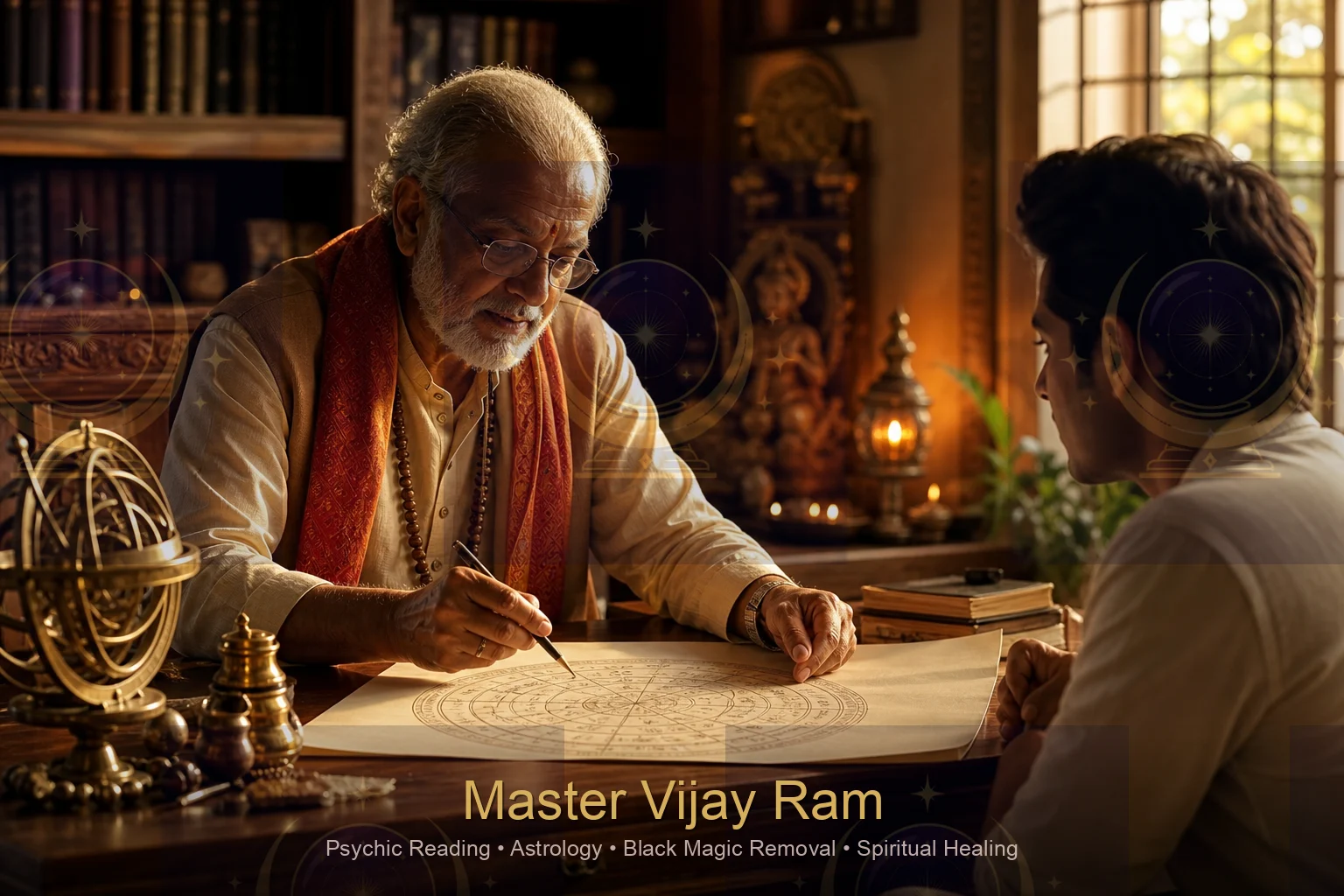
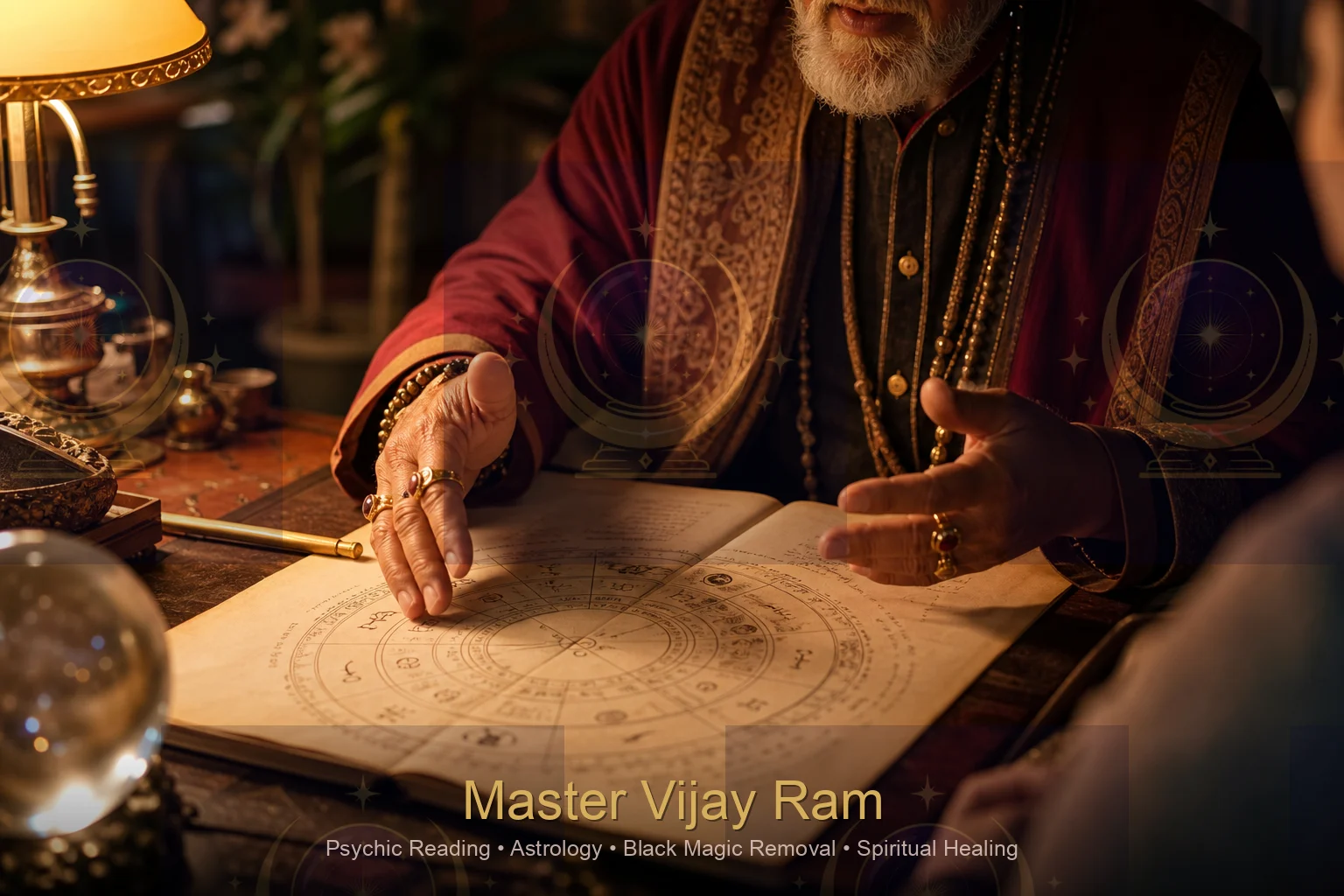
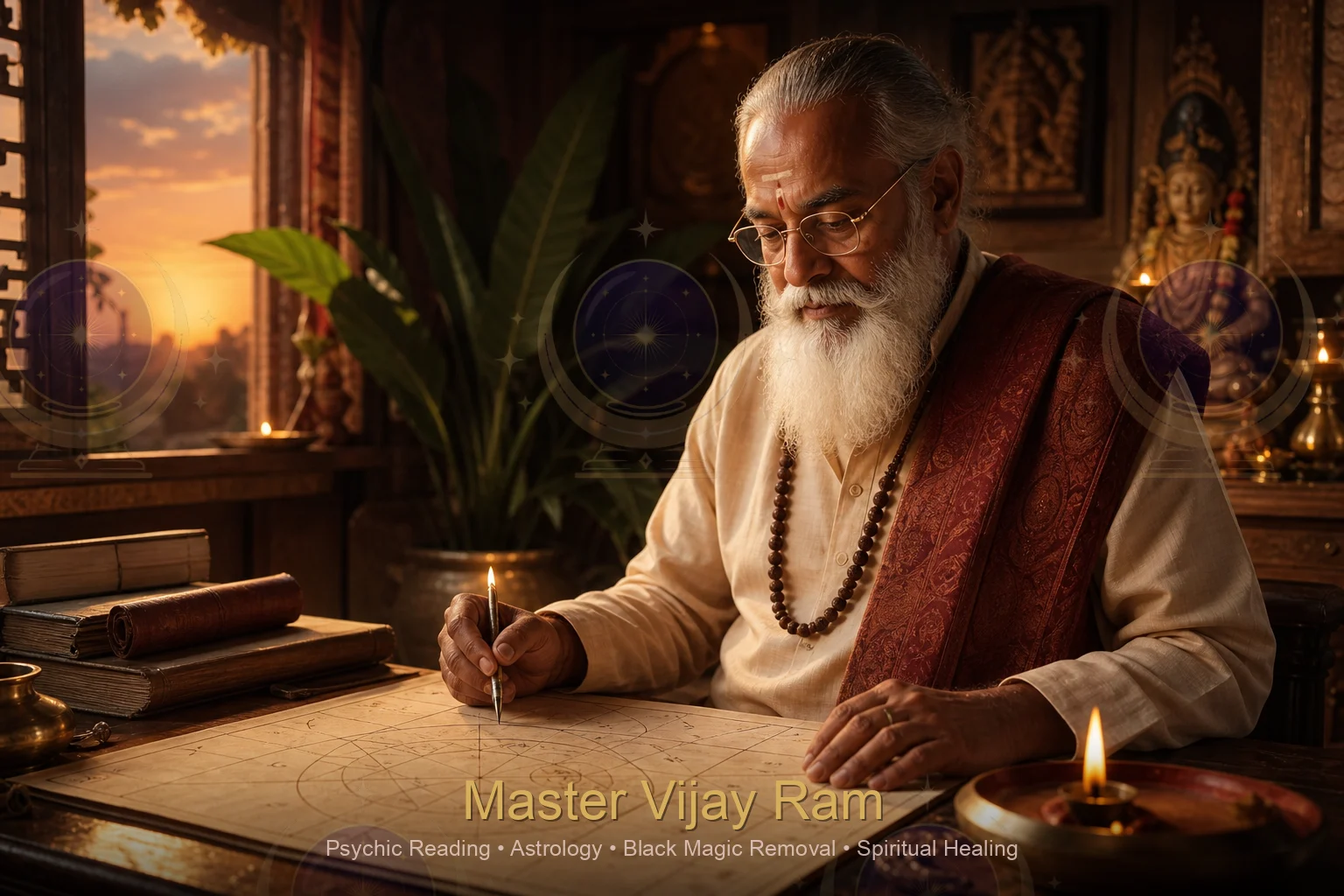
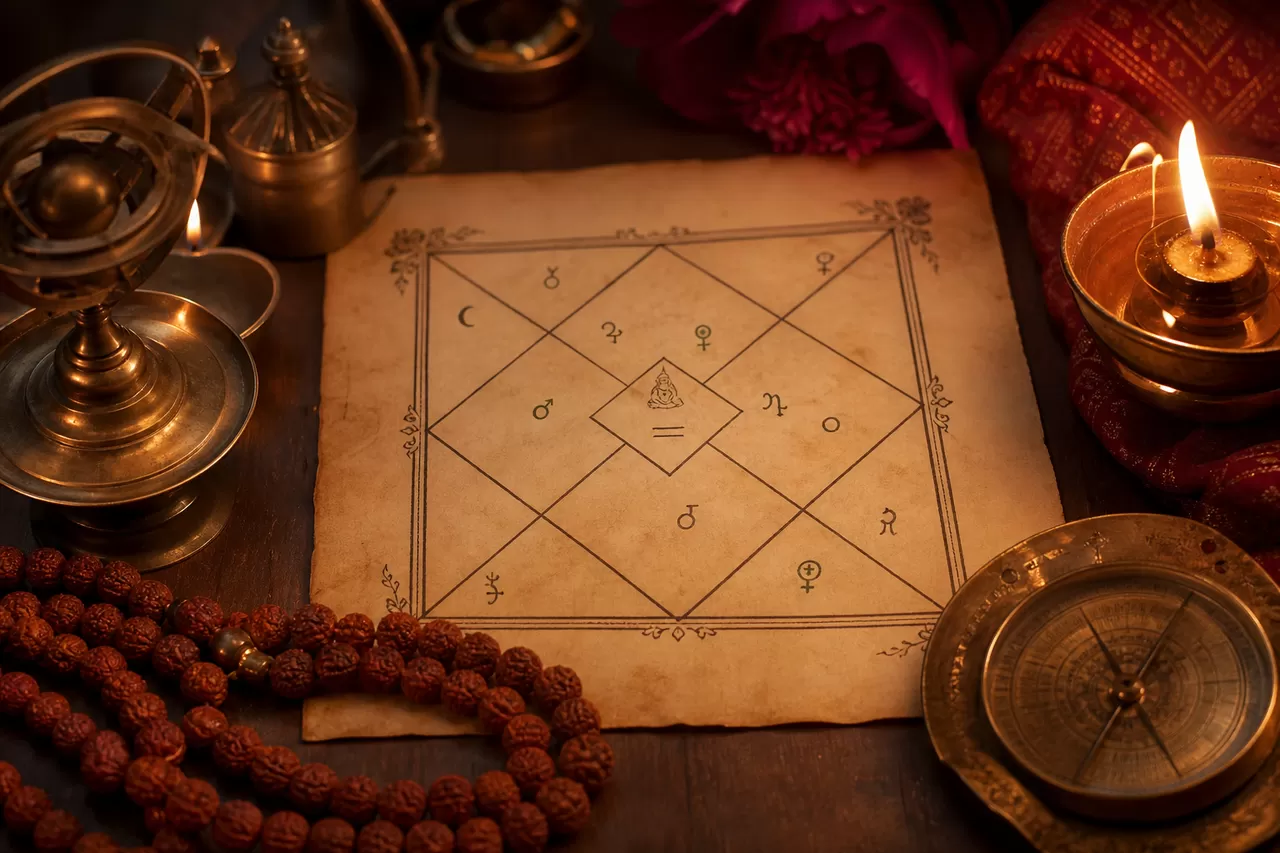
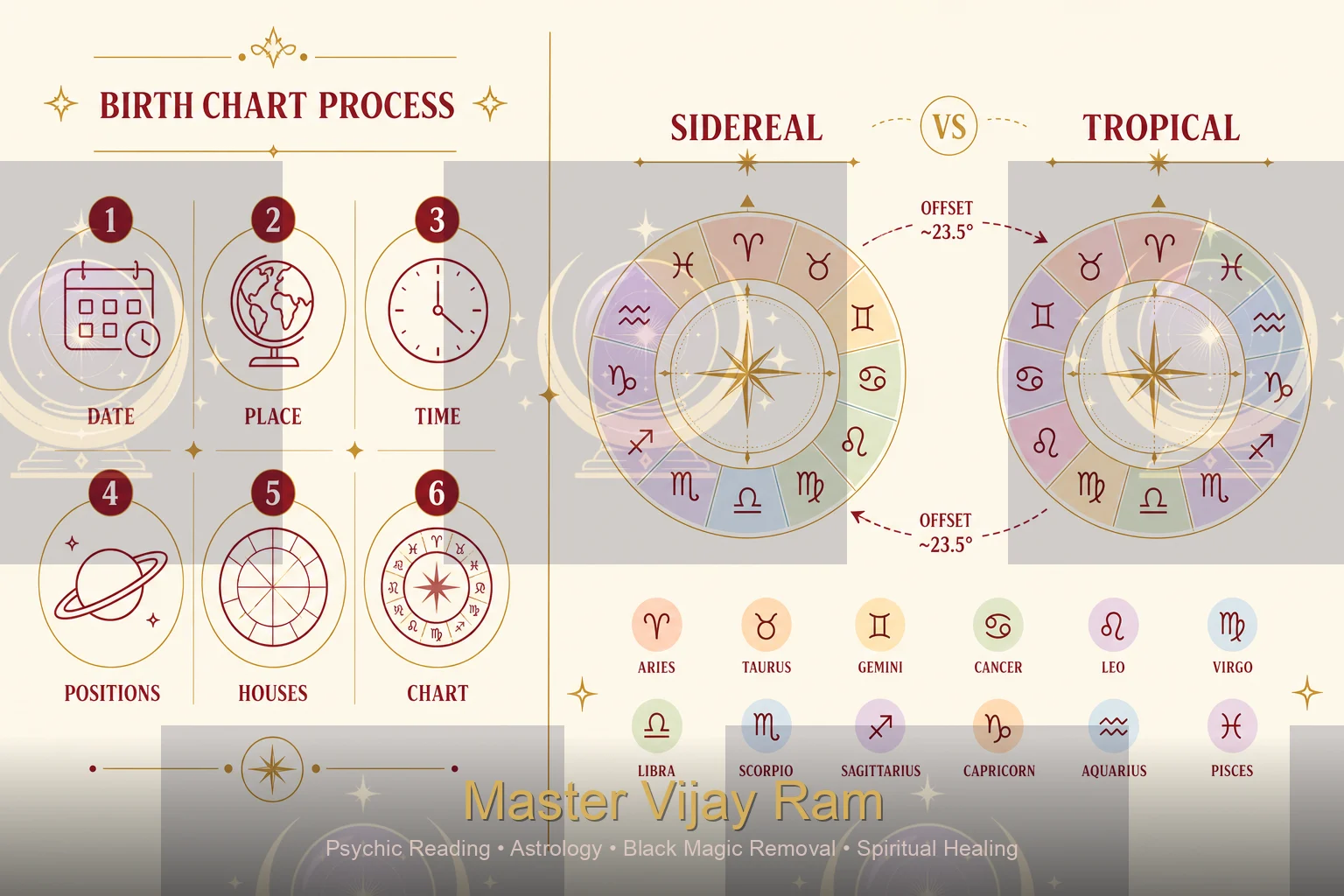
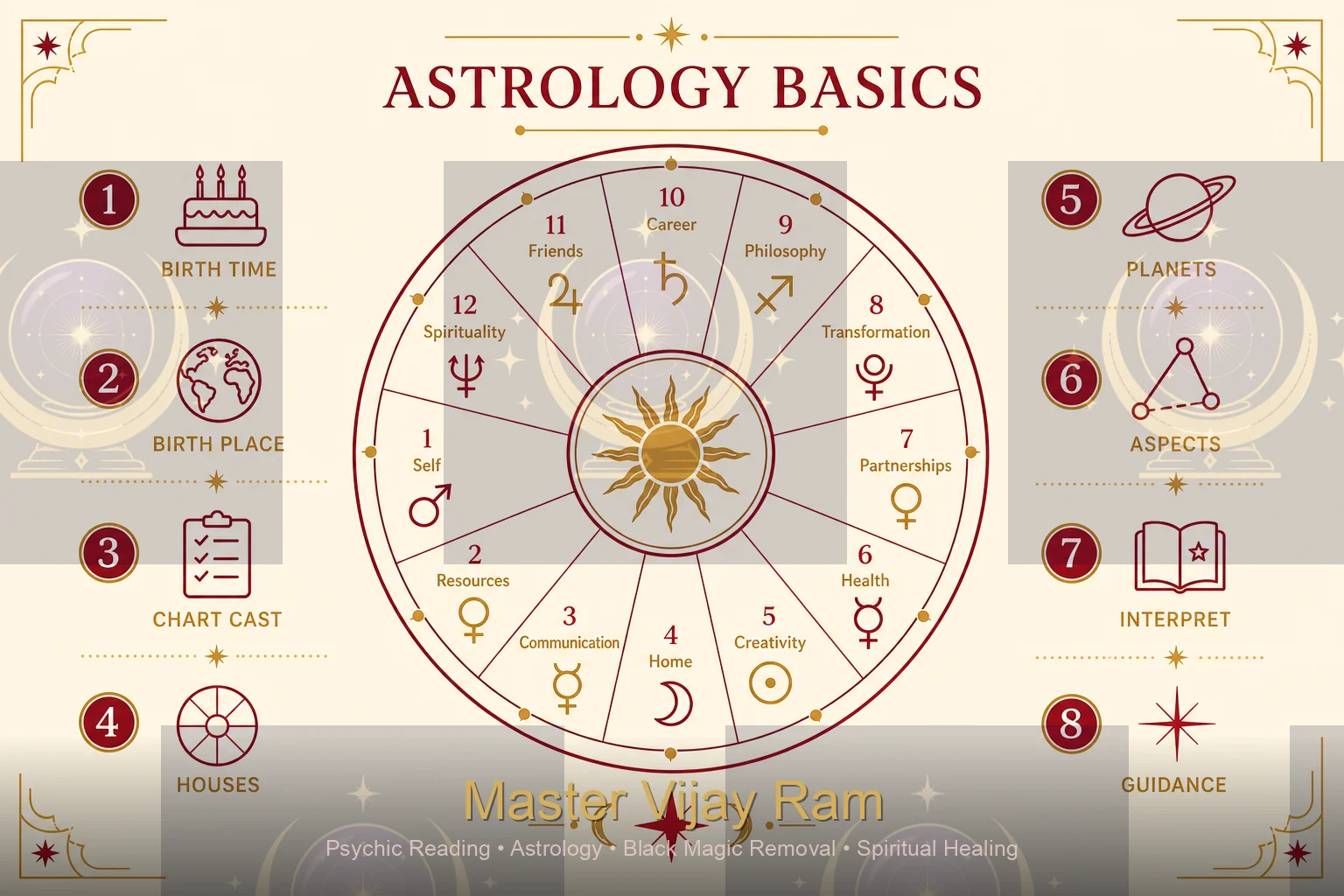
The cleanest way to hold the distinction: astrology is a method, fortune telling is a category. Vedic astrology takes your date, exact time and place of birth, computes the positions of the planets and the twelve houses, and reads the result. It is arithmetic before it is interpretation, and two competent astrologers working from the same birth data will produce recognisably similar charts.
Fortune telling is the broader word. It covers astrology, but also palmistry, and intuitive reading, and in other traditions a range of practices not offered here. Someone advertising as a fortune teller may be doing any of these. Someone advertising as a Vedic astrologer is telling you specifically which method they use.
That is why the phrasing of your search matters more than it seems. It is not a question of which is more legitimate — it is a question of which tool fits your question.
Choose astrology when your question is about timing
The dasha system makes Vedic astrology unusually good at timing — which periods support marriage, a career move, or a major decision.
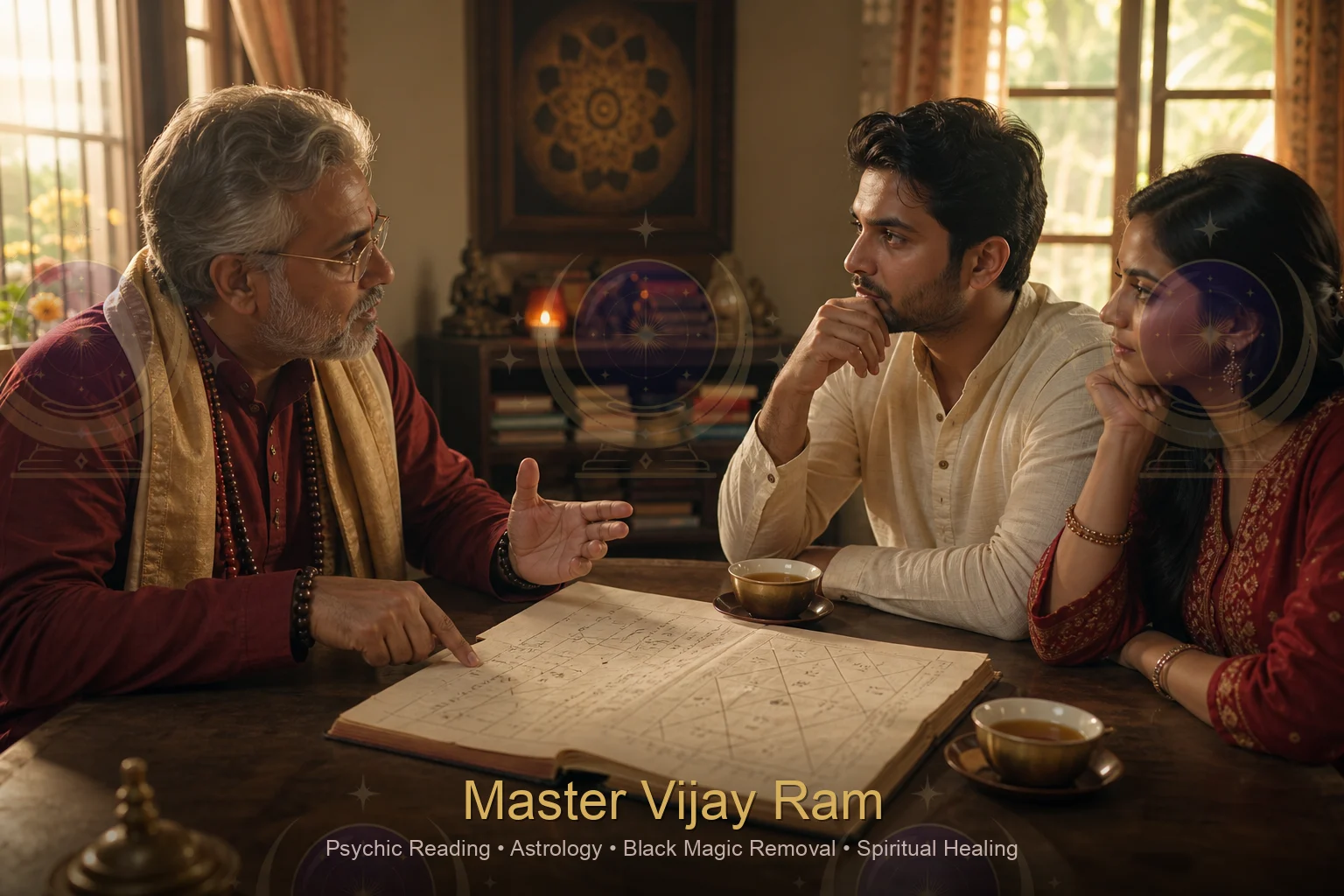
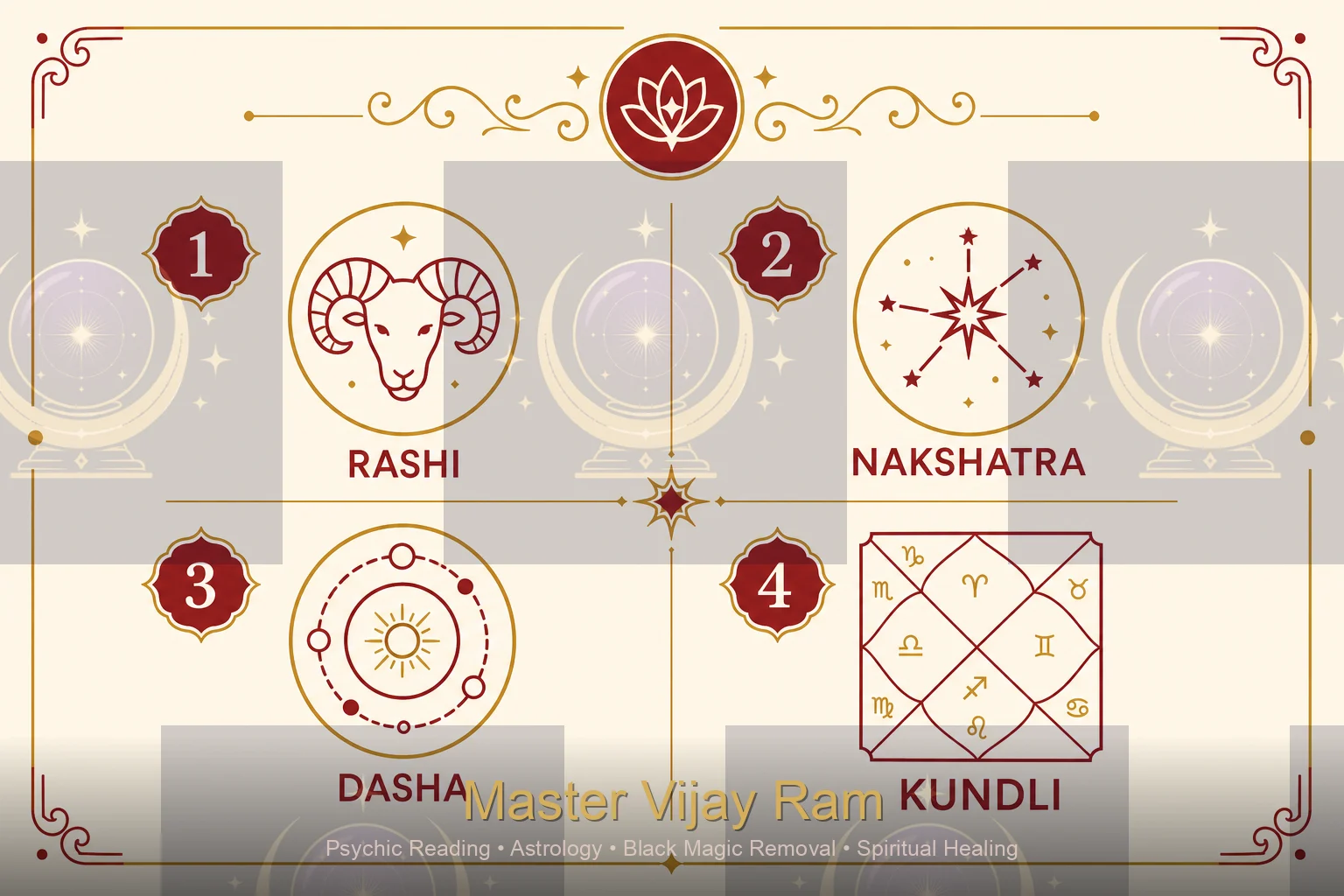
If your question has a when in it, you want a chart. Vedic astrology carries a timing system — the Vimshottari dasha — that divides a life into planetary periods of known length, and it is the single most practically useful thing the tradition offers.
It answers questions of the form: is this the year to change jobs, or am I eighteen months early? Why has every proposal fallen through at the same stage? How much longer does this difficult stretch run? Those are structural questions, and a chart addresses them in a way that intuition alone does not.
It is also what makes marriage matching, muhurta and remedial work possible at all. All three depend on calculation, which means all three depend on an accurate birth time.
Choose palmistry or intuitive reading when you have no birth time
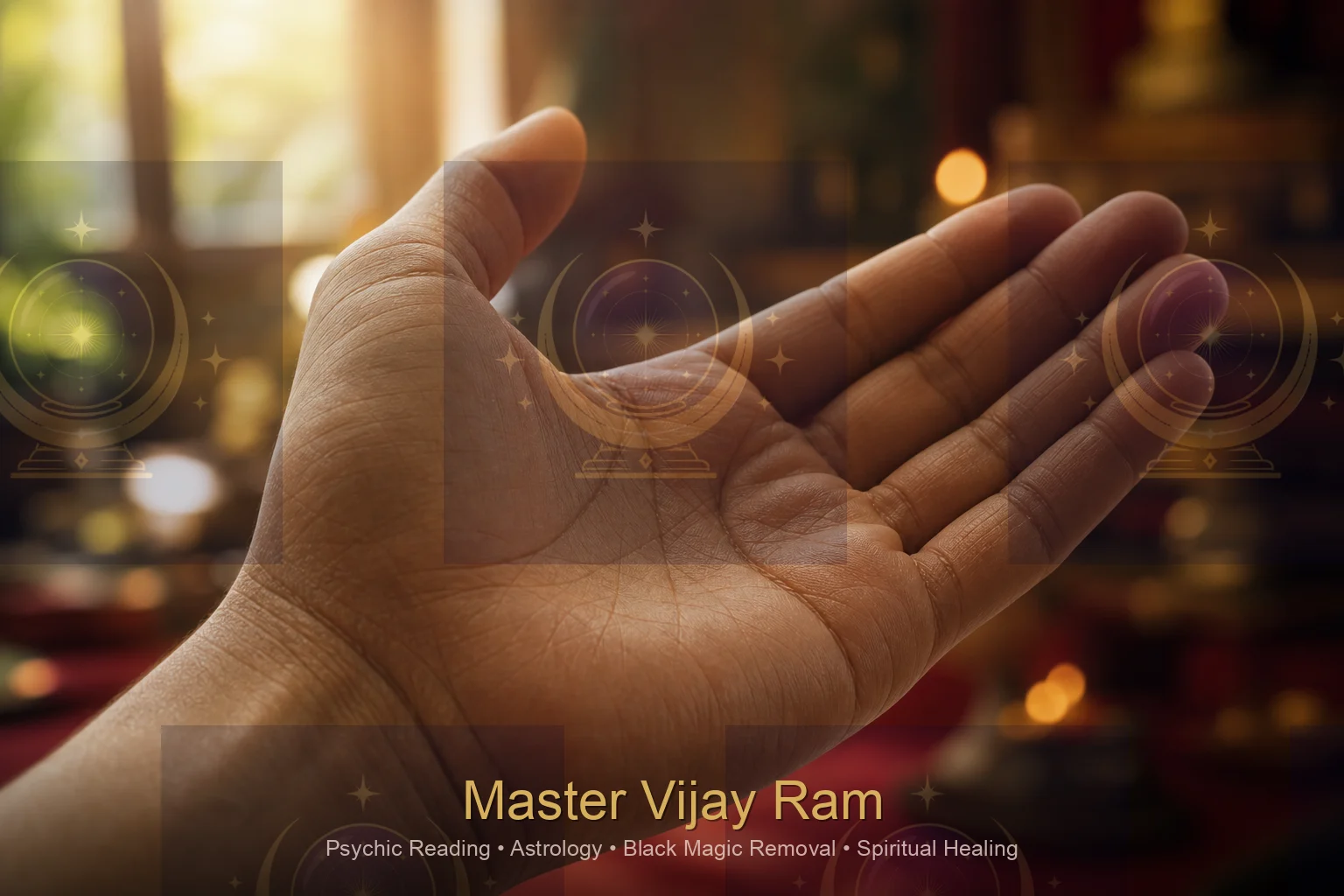
Palmistry needs no birth data at all. Intuitive reading suits open questions that do not reduce to a placement.
A great many people simply do not know their birth time, particularly those born at home, born abroad, or born where records rounded to the nearest hour. Without it, house-based conclusions become unreliable — and houses are where most of the interesting content lives.
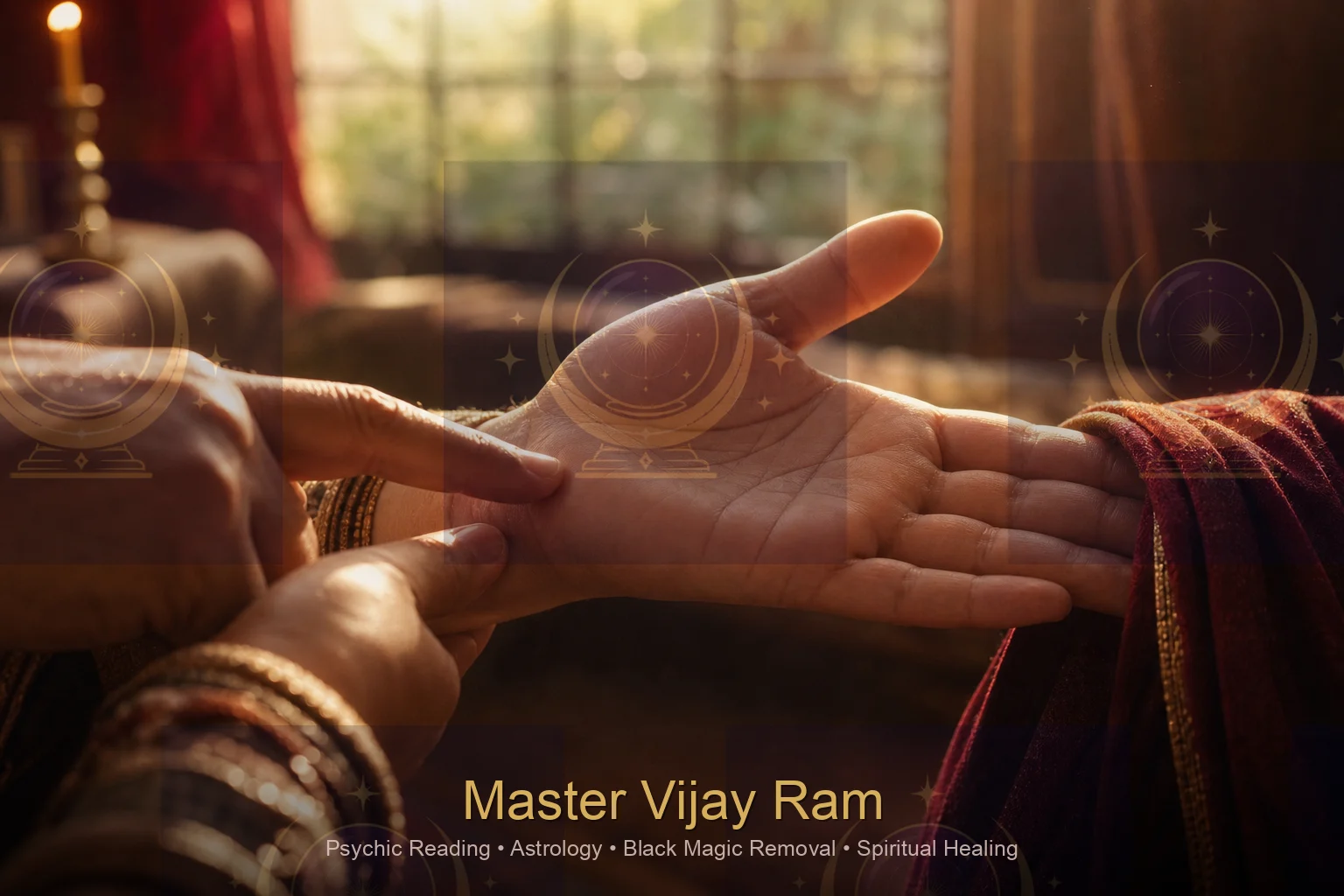
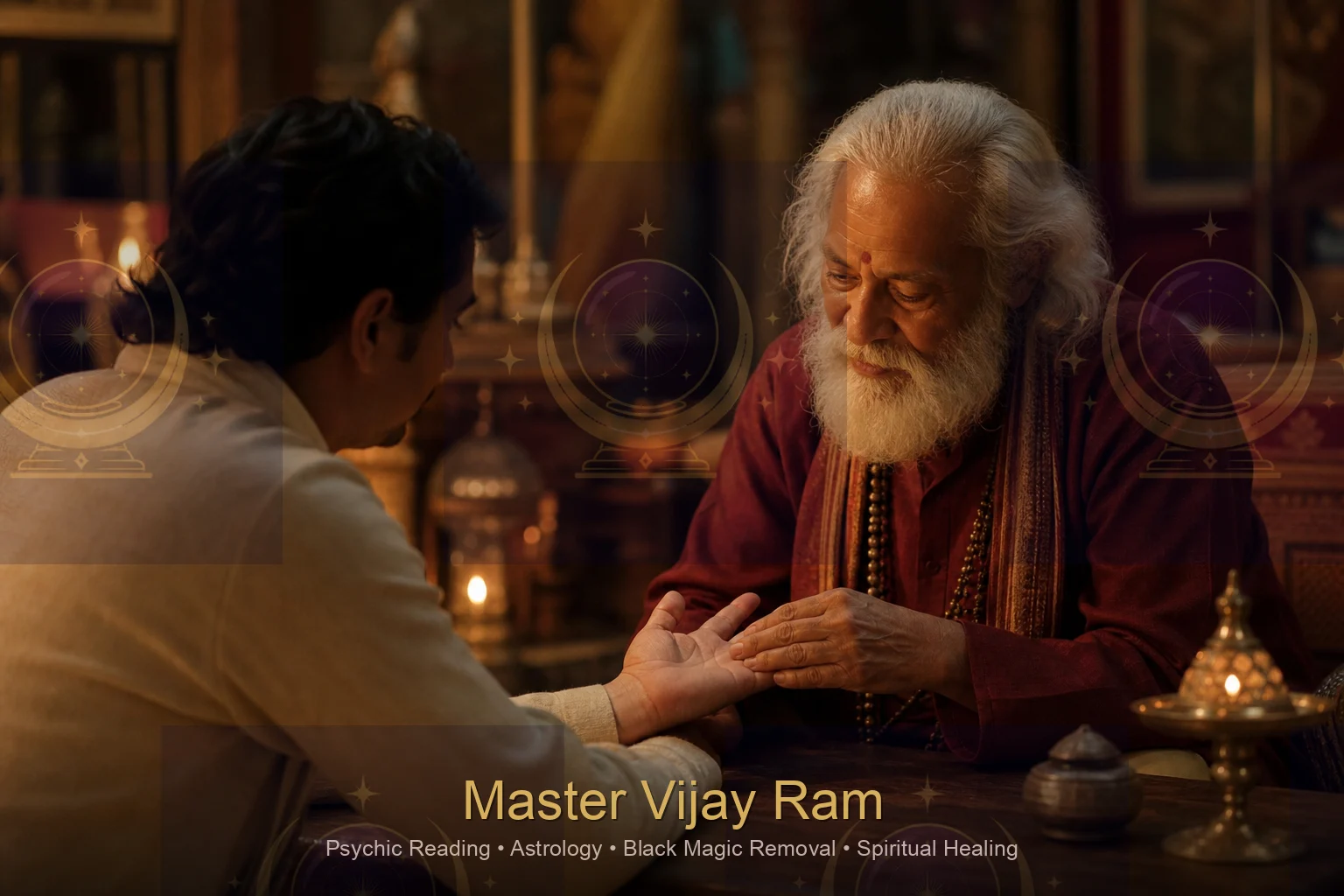
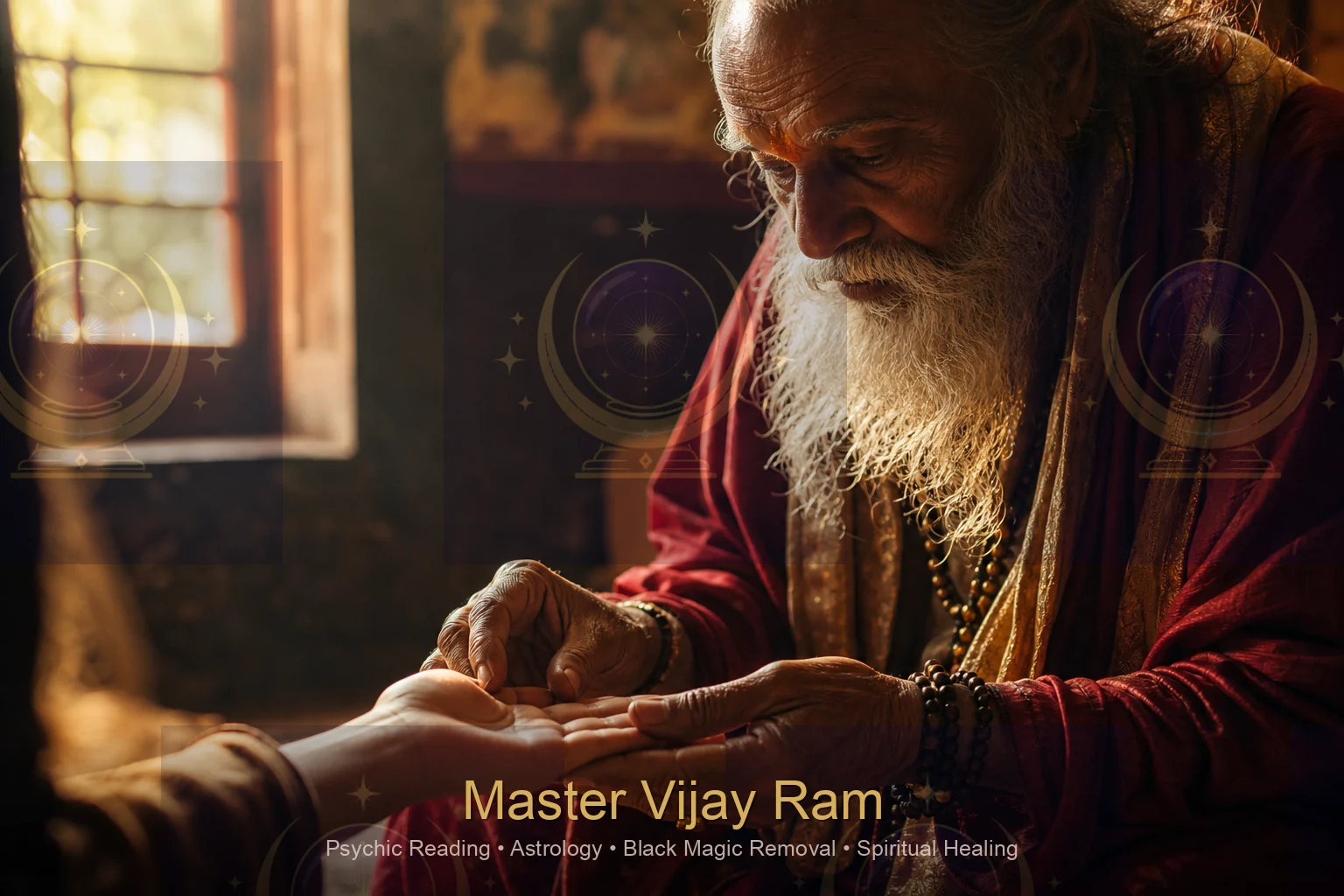
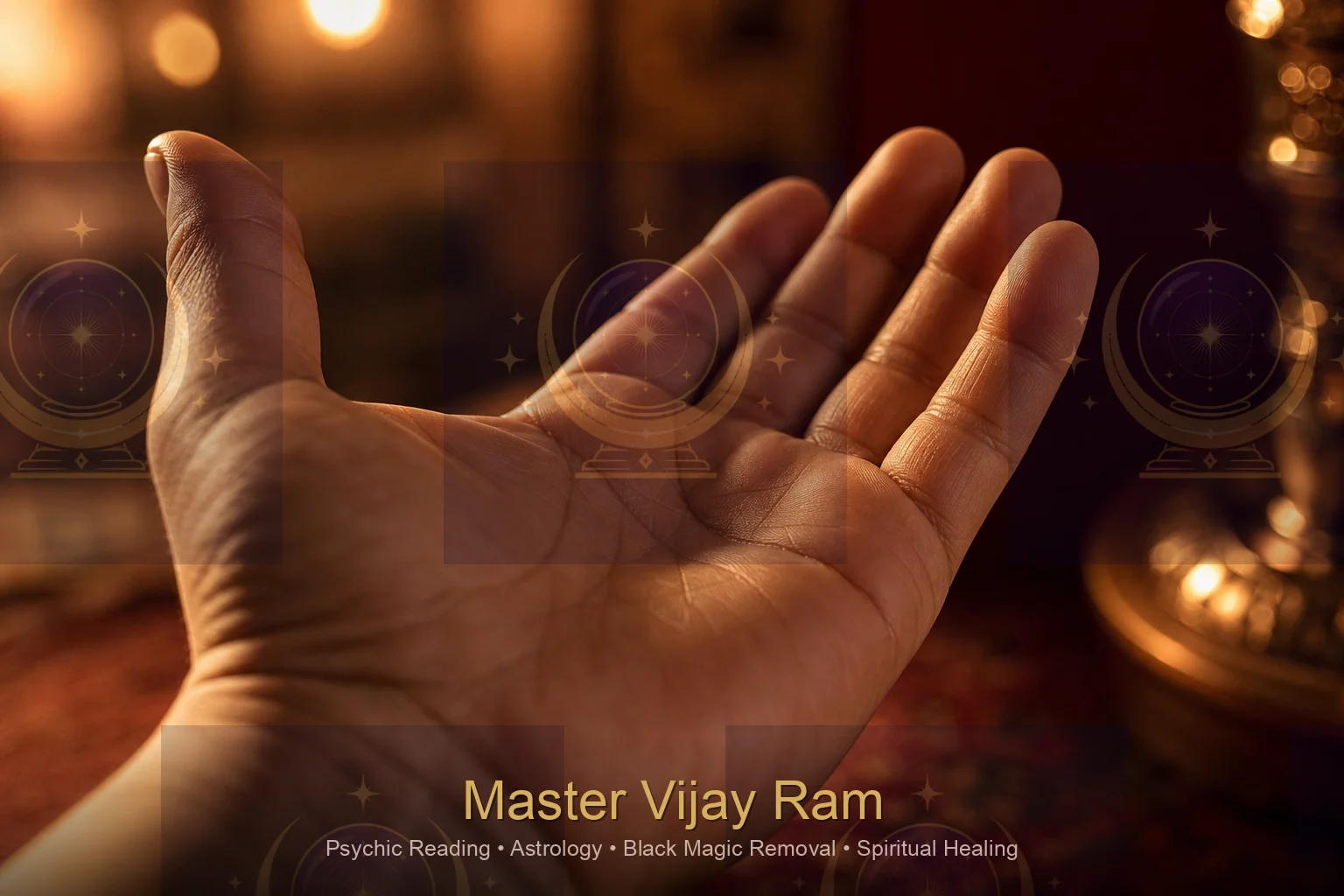
Palmistry sidesteps the problem entirely. It needs nothing but your hands, and it reads temperament, vitality, relationships and life direction from the lines, mounts and shape. It can be done in person in Kitchener or from clear photographs.
Intuitive reading suits a different case: the question that does not reduce to a placement at all. "Something feels wrong and I cannot say what." "I have been going round on this decision for months." A chart can inform those, but the useful part is often the conversation with someone experienced and outside the situation.
Both are poor at the same things
Neither produces exact dates, names or numbers. Any method promising those is overreaching, and the confidence is the warning sign.
Whichever you choose, the limits are the same, and they are worth stating because the advertising rarely does.
Neither method produces exact dates. Both produce windows and conditions. Neither produces names — not of a future partner, not of whoever is supposedly working against you. Neither produces numbers: lottery results, exact salaries, the precise number of children.
What both do well is describe pattern, tendency and the shape of a period. That is genuinely valuable, and it is a different product from the one the fairground image sells. A practitioner who cheerfully supplies dates and names is not using a better method; they are simply willing to say things the method does not support.
In practice, most good readings use more than one
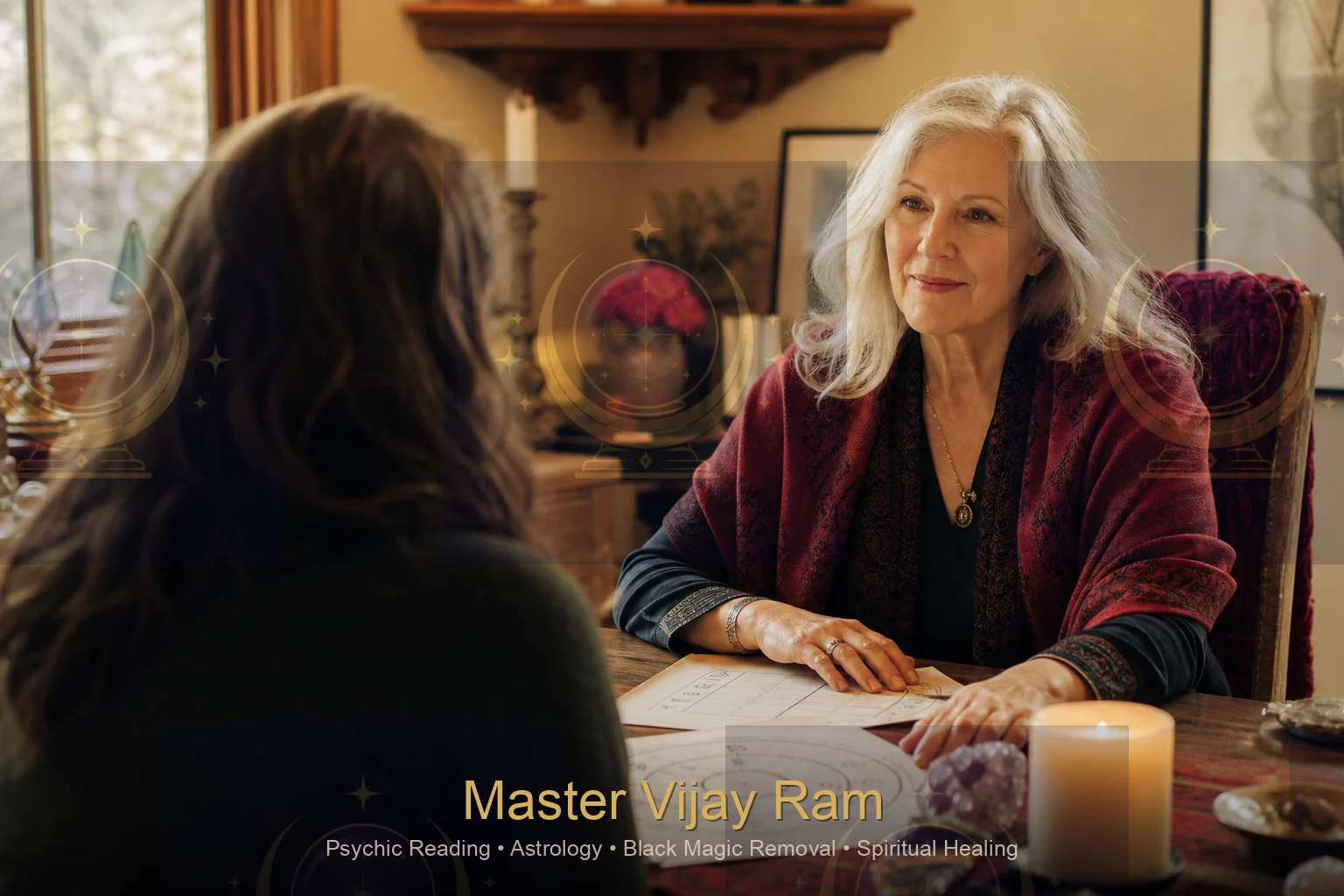
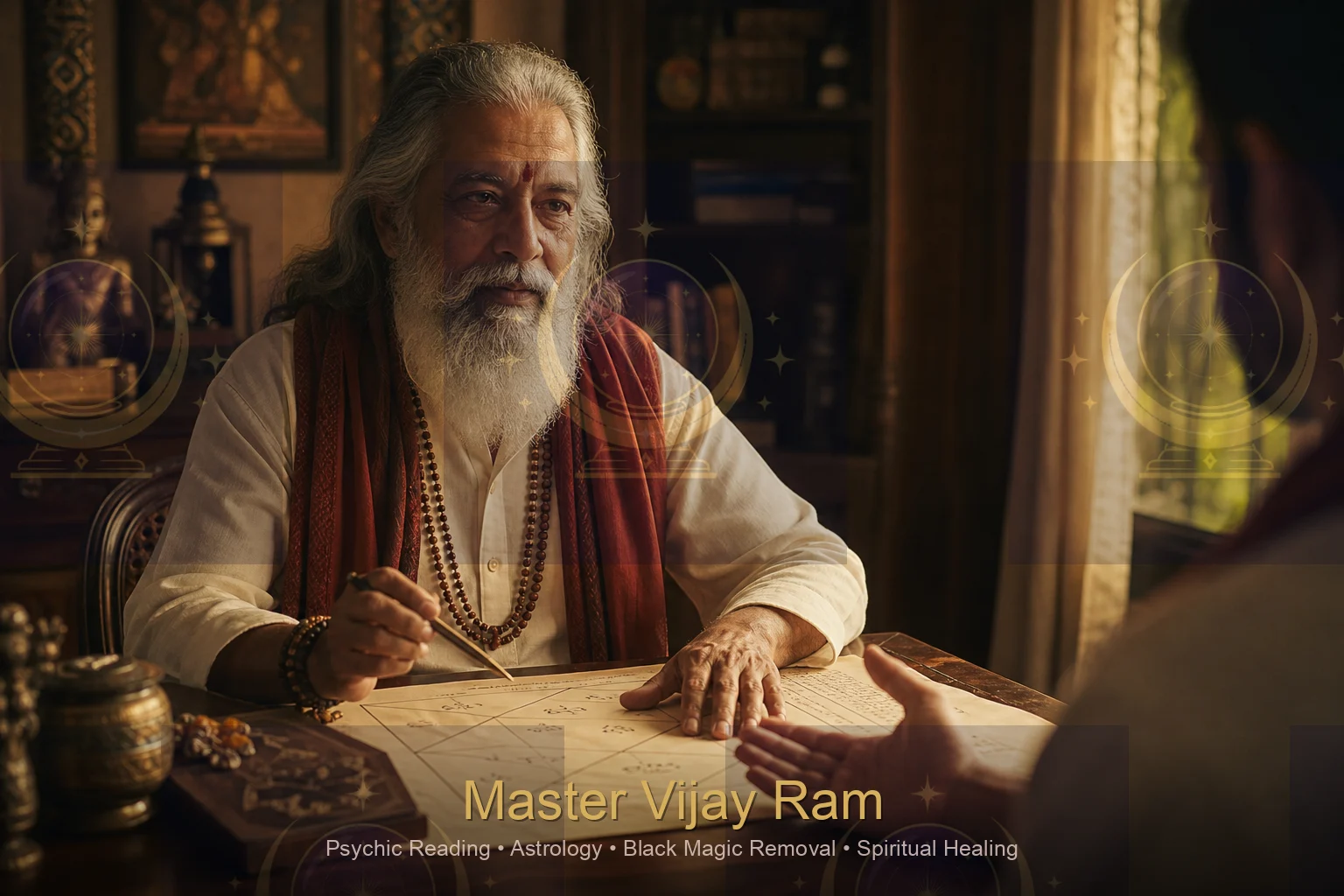
A chart and a hand read together are more informative than either alone, because where they diverge is itself meaningful.
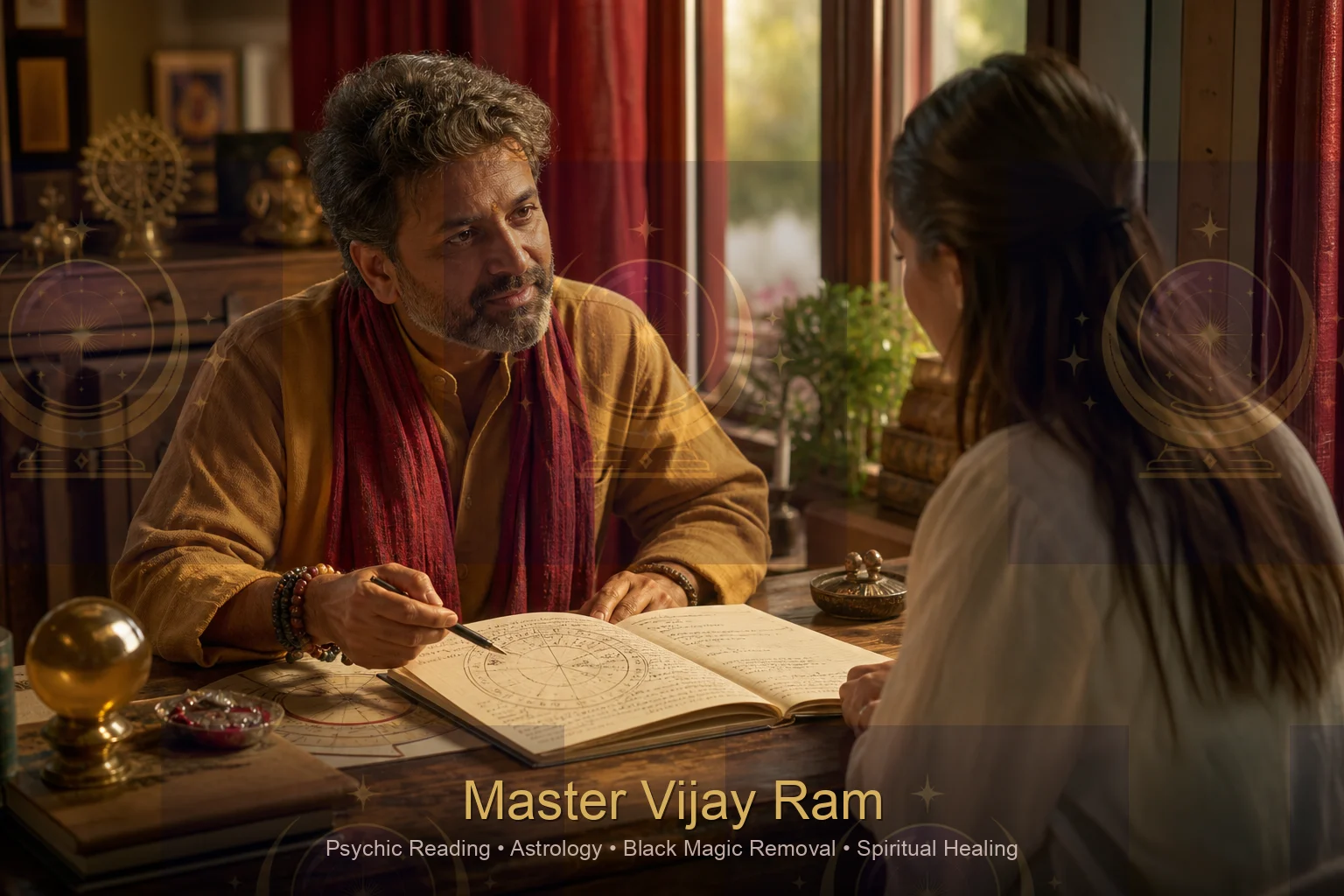
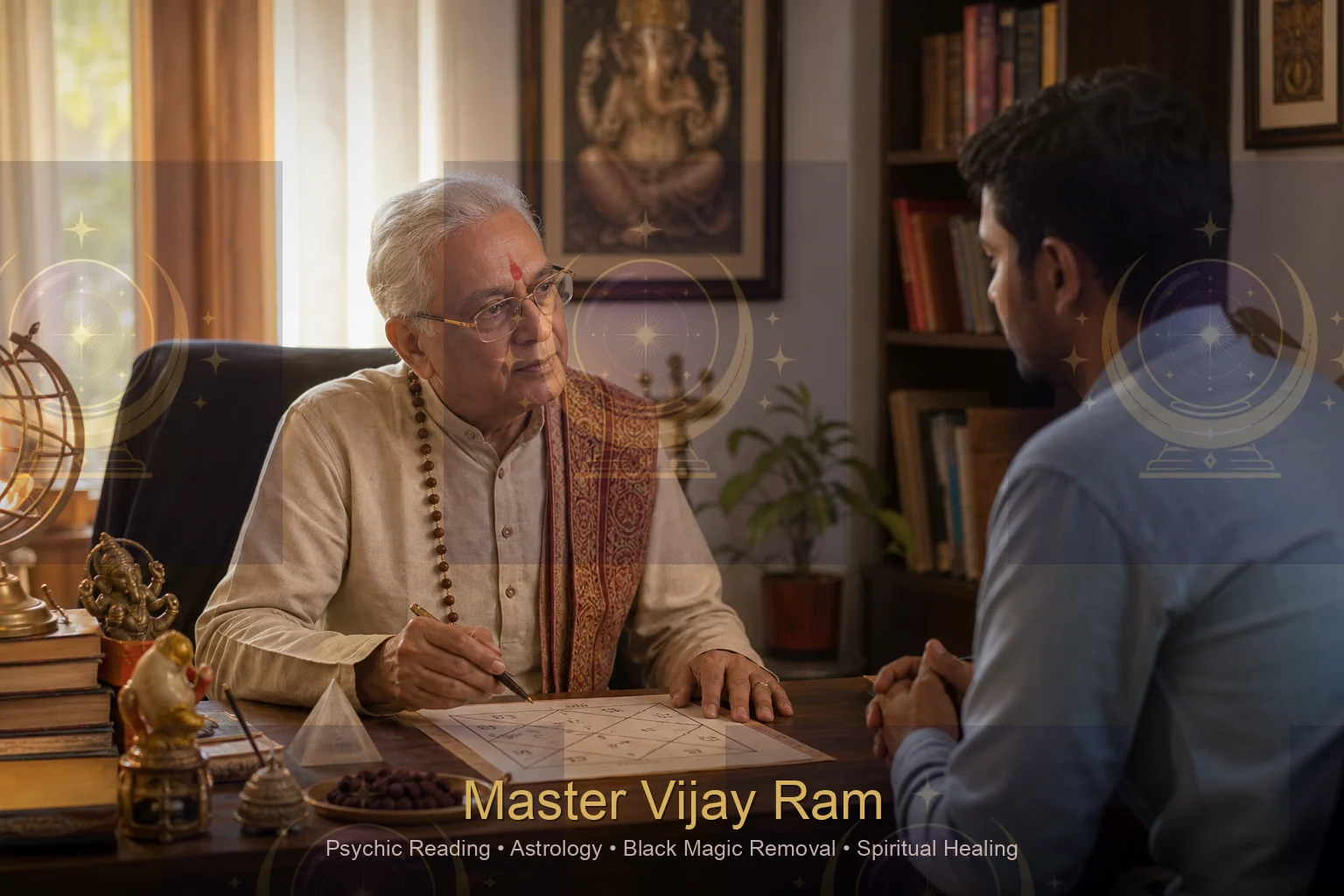
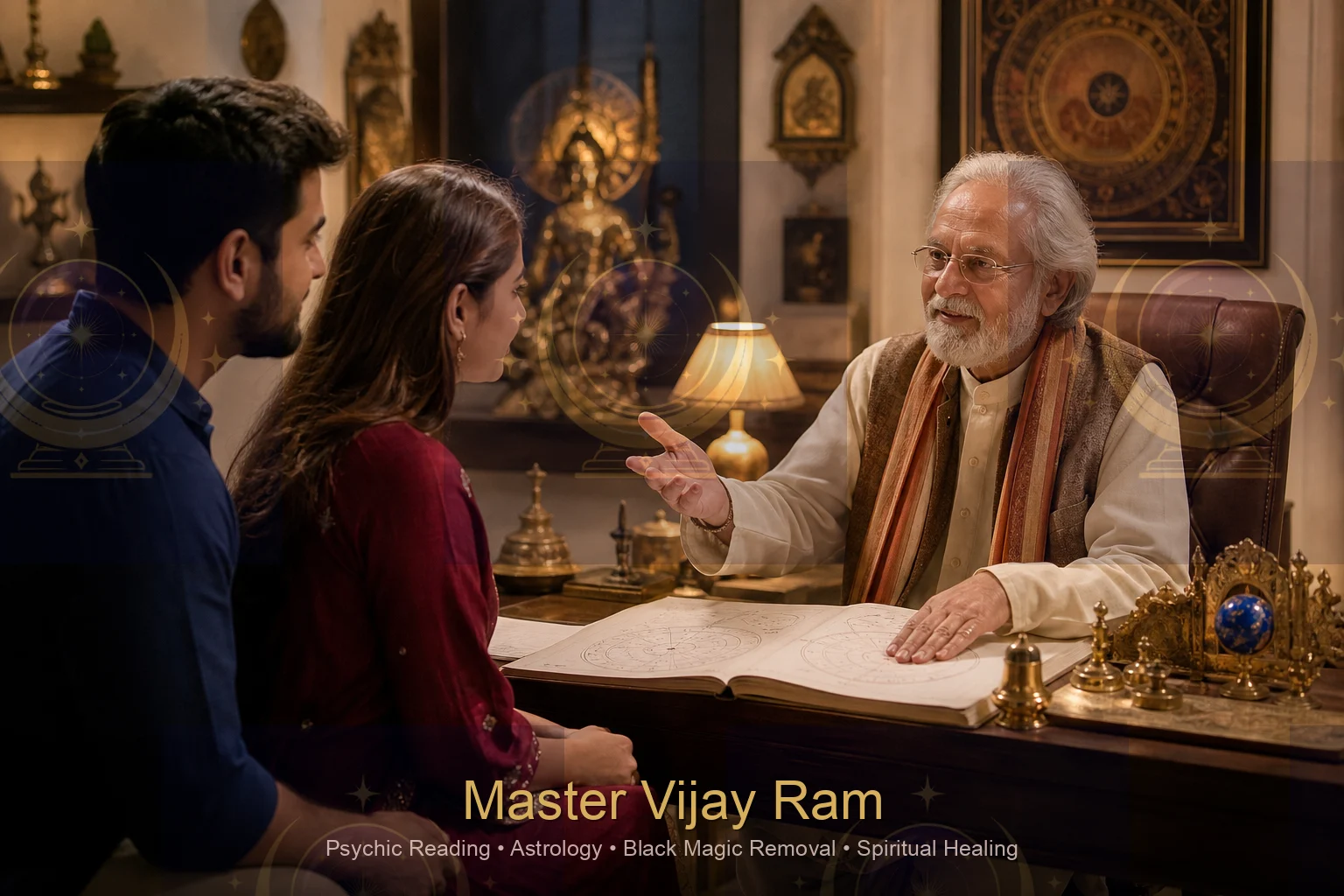
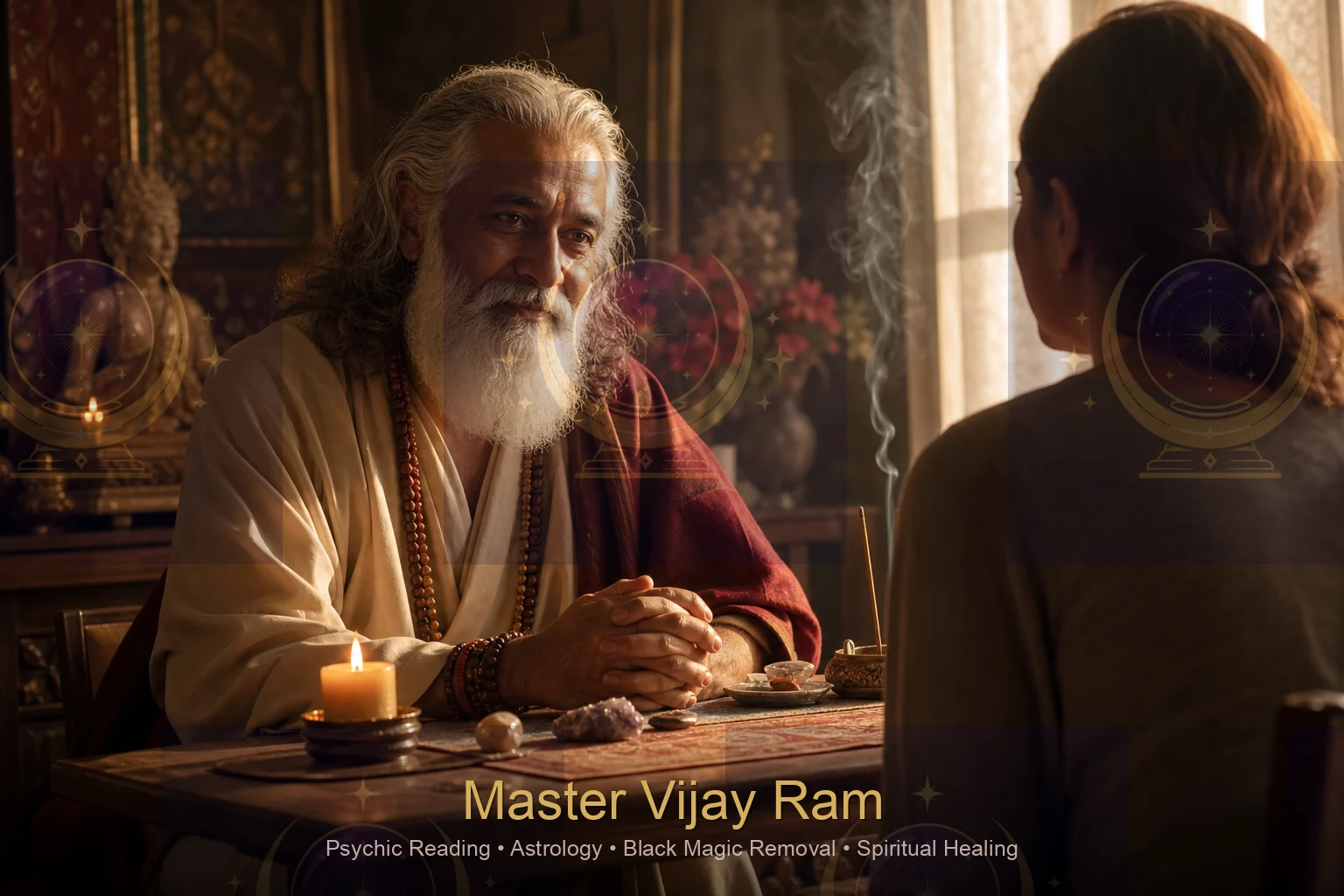
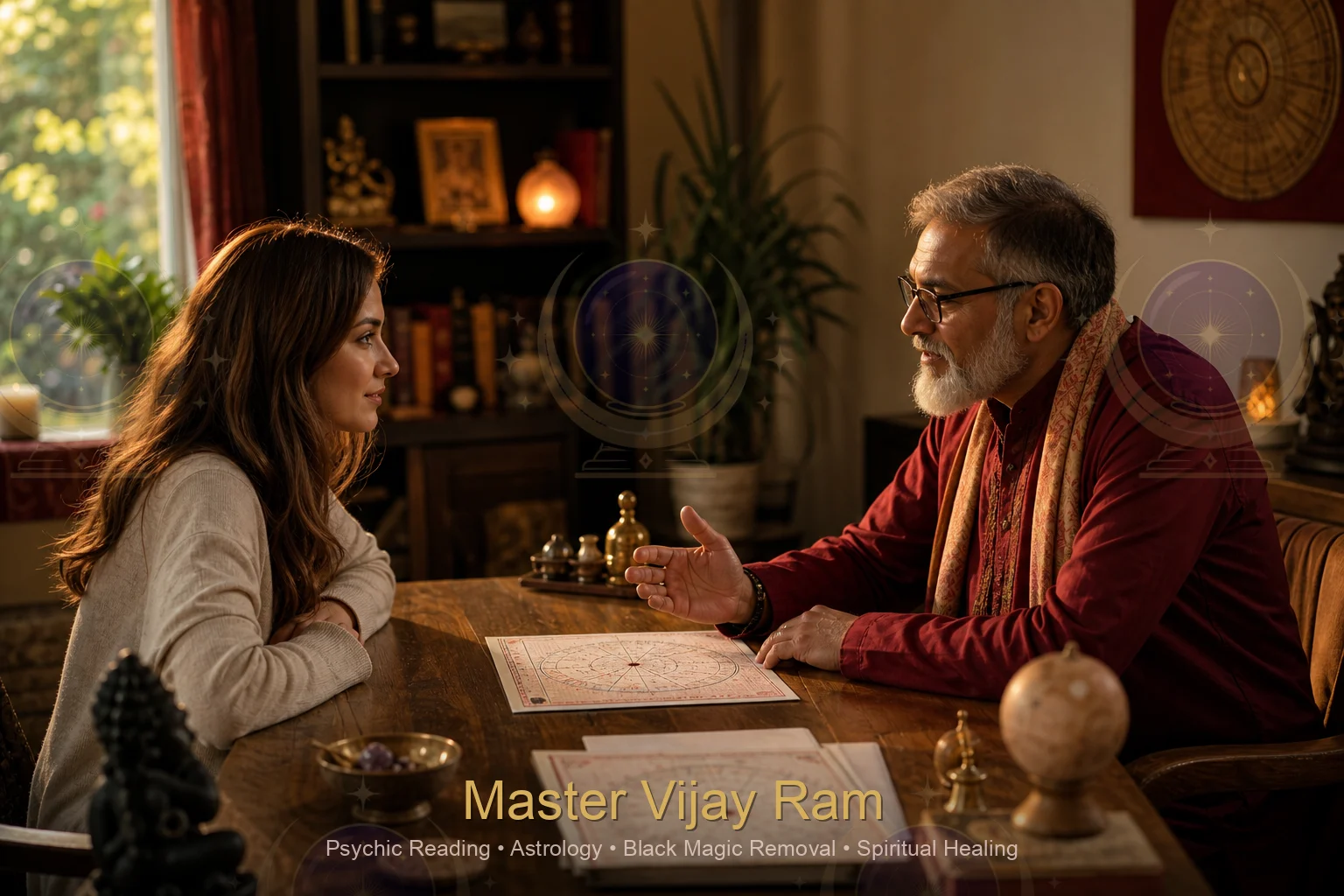
In an actual consultation the distinction is less rigid than this article makes it sound. Master Vijay Ram will usually read a chart and a hand together where both are available, because the comparison is informative in its own right.
The chart shows the design — what the life was set up to do. The hand shows something closer to how it has actually been lived, and the minor lines do change over years. Where the two agree, the reading is on firm ground. Where they diverge, the divergence is usually the interesting part of the conversation, and it often corresponds to something the client recognises immediately.
So the practical answer to "which do I want?" is frequently "bring what you have". If you know your birth time, bring it. If you do not, come anyway.
Serving nearby: Waterloo · Cambridge · Guelph · Brantford
Key takeaways
- Astrology is a calculated method; fortune telling is the umbrella term that includes it
- Questions with a "when" in them need a chart and an accurate birth time
- Palmistry needs no birth data and works from photographs if you are remote
- Neither method produces exact dates, names or numbers — treat confidence in those as a warning
- Read together, a chart and a hand are more informative than either alone
In closing
The distinction is worth holding lightly. If your question turns on timing, bring your birth details and ask for a chart. If it does not, or you have no reliable birth time, the other methods will serve you perfectly well. Either way, judge the reading by whether it states its limits — not by how confidently it fills them in.