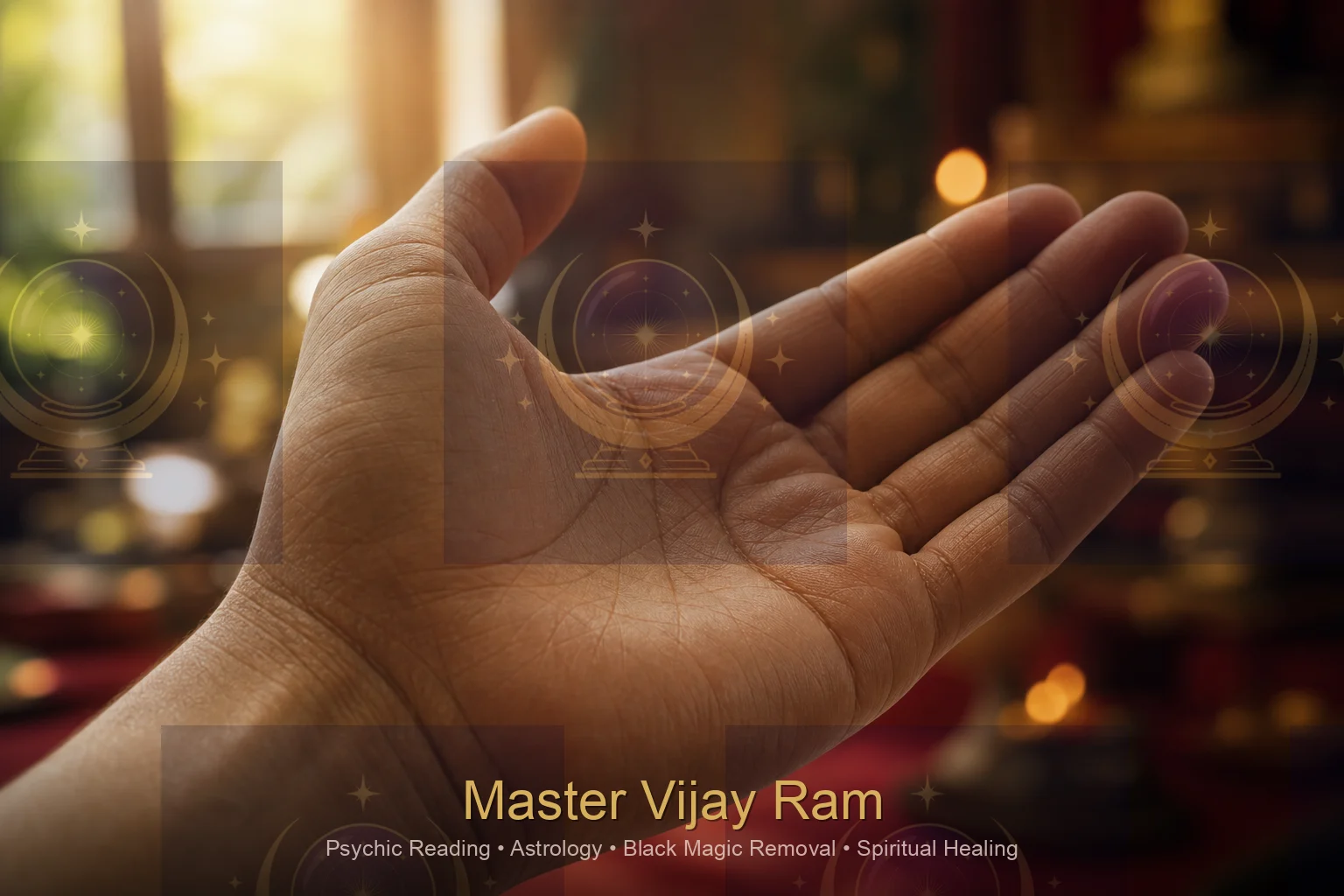

Palmistry lines are the natural creases across the palm that practitioners study to understand a person's temperament, relationships and life patterns. Palmistry is a centuries-old art that reads the shape, depth and markings of the hand as a mirror of one's character and tendencies. Among the many lines on the palm, four are considered the most important: the life line, heart line, head line, and fate line. Each carries its own story, and together they form the foundation of any serious hand analysis. Master Vijay Ram, who has practised Vedic astrology and palm reading for more than 40 years from his Kitchener practice, is often asked to explain these four lines to first-time clients before a full palm reading session. This guide walks through what each line traditionally represents, how they are read together, and why an experienced eye matters more than a quick glance at your palm.
What Does the Life Line Reveal?
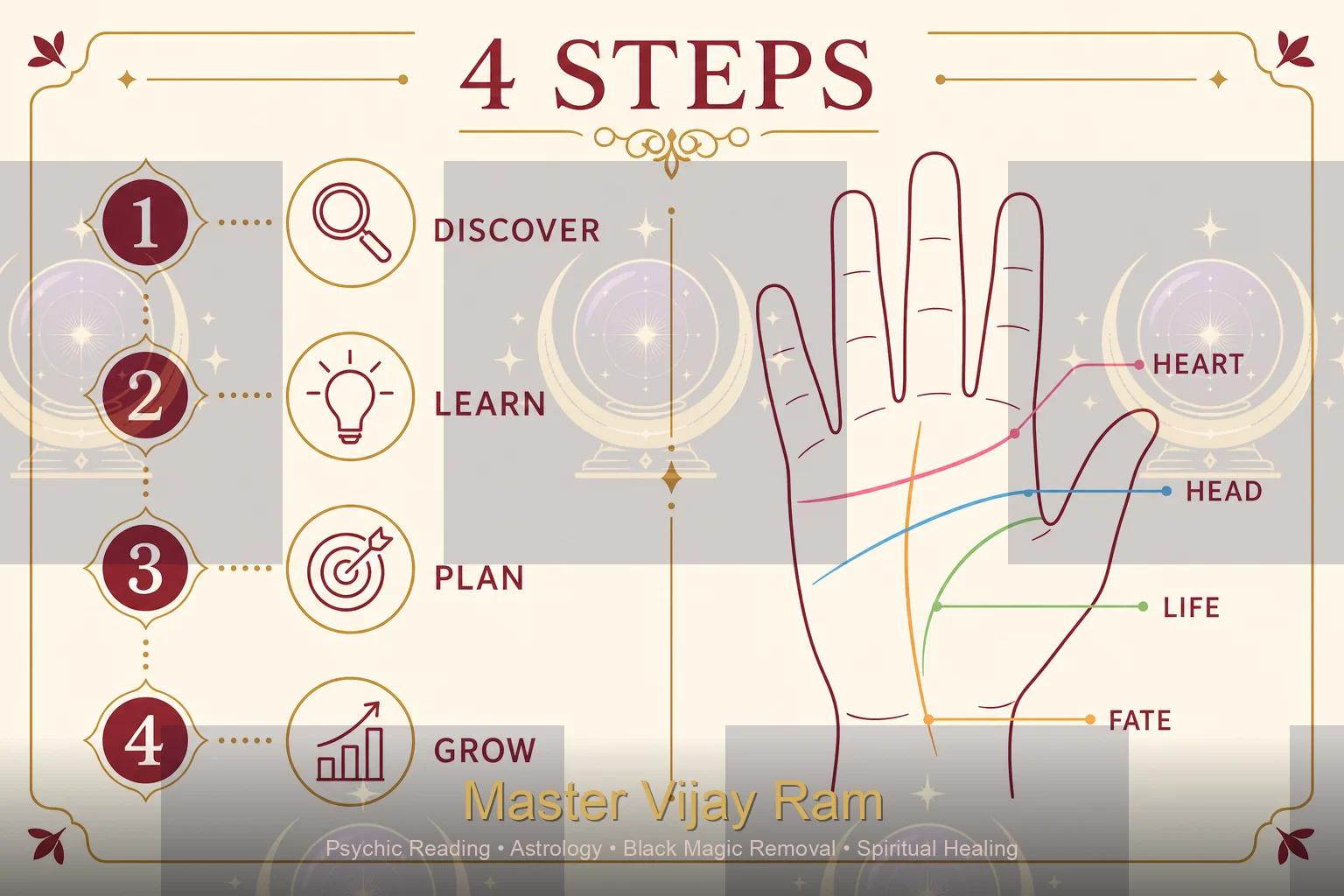
The life line curves around the base of the thumb and is traditionally linked to vitality, major life changes, and overall physical wellbeing — not literal lifespan. Its depth and length are read alongside other lines, and a short life line does not mean a short life.
The life line is usually the first line people ask about, often out of worry that its length predicts how long they will live. Traditional palmistry does not actually treat it this way. Instead, it is read as an indicator of vitality, resilience, and the ebb and flow of significant life events such as illness, travel, or major transitions.
What reading style looks for
- Depth and clarity of the line — a well-defined line is generally read as steady vitality
- Breaks or islands, which some readers associate with periods of stress or health changes
- Curve width, sometimes linked to energy levels and enthusiasm
A short or faint life line is not read as a sign of a short life; many people with short lines live long, full lives. This is one of the most common myths Master Vijay Ram addresses during a palm reading in Kitchener appointment.
What Does the Heart Line Tell You About Relationships?
The heart line sits at the top of the palm and is traditionally read for emotional nature, capacity for love, and relationship patterns. A curved line may suggest openness, while a straighter line may suggest a more reserved emotional style — always read alongside the rest of the hand.
Running just below the fingers, the heart line is the line most people want explained when they are curious about romance or emotional wellbeing. It is traditionally associated with how a person gives and receives affection, handles heartbreak, and connects with others.
- A line that starts under the index finger is sometimes read as contentment in love
- Multiple branches may be linked to varied emotional experiences over a lifetime
- Depth is often read as intensity of feeling rather than a guarantee of outcome
Clients working through a breakup or considering a psychic reading alongside their palm reading often ask how the heart line connects to their current relationship. Master Vijay Ram treats the heart line as one piece of a much larger picture, never a standalone verdict on love. Readers interested in the emotional side of these consultations may also find our piece on love psychic readings and what they can tell you useful background reading.
What Does the Head Line Say About Thinking Style?
The head line runs horizontally across the middle of the palm and is traditionally read for thinking style, decision-making, and mental approach to challenges. A straight line may suggest practical thinking, while a sloping line may suggest a more creative or imaginative approach.
The head line begins near the thumb side of the palm, often close to where the life line starts, and travels across the hand. Palmists traditionally read it as a window into how someone processes information, solves problems, and makes decisions.
Common readings of the head line
- A long, straight line is often linked to methodical, detail-oriented thinking
- A curved or sloping line may be read as imaginative or intuitive tendencies
- The gap between the head line and life line at the start is sometimes tied to caution versus impulsiveness
Because thinking style also influences life choices, some clients pair a palm reading with a look at their birth chart. If you are curious how planetary placements shape decision-making from a different angle, our guide on what your birth chart reveals offers a useful companion perspective, and a full Vedic astrology reading can add further depth.

What Does the Fate Line Mean for Career and Direction?
The fate line runs vertically toward the middle finger and is traditionally associated with career direction, external influences, and life purpose. Not everyone has a clearly defined fate line, and its absence is not considered negative — it simply means direction is shaped more by personal choice.
Unlike the other three major lines, the fate line is not present on every palm, and its clarity varies widely from person to person. When visible, it is traditionally read as a marker of career path, outside influences on one's life, and how much a person's direction feels guided versus self-chosen.
- A deep, unbroken fate line is sometimes linked to a clear sense of purpose
- Breaks may be read as career changes or shifting priorities
- Its starting point near the wrist versus higher on the palm is read differently by various schools of palmistry
Career questions often overlap with astrology, and many clients choose to combine a palm reading with a kundli horoscope reading for a fuller view of professional timing. Gemstone remedies are also sometimes discussed alongside fate line consultations; see our gemstone and numerology guidance for related options.
How Are the Four Lines Read Together?
An experienced palm reader never interprets one line in isolation. The life, heart, head, and fate lines are compared for length, depth, intersections, and how they relate to the mounts and minor lines, building a fuller and more balanced picture of character and tendencies.
A common mistake beginners make is judging a palm by a single line. Serious palmistry looks at how all four major lines interact — where the head and life lines separate near the thumb, whether the heart line touches the head line, and how the fate line crosses or avoids the others.
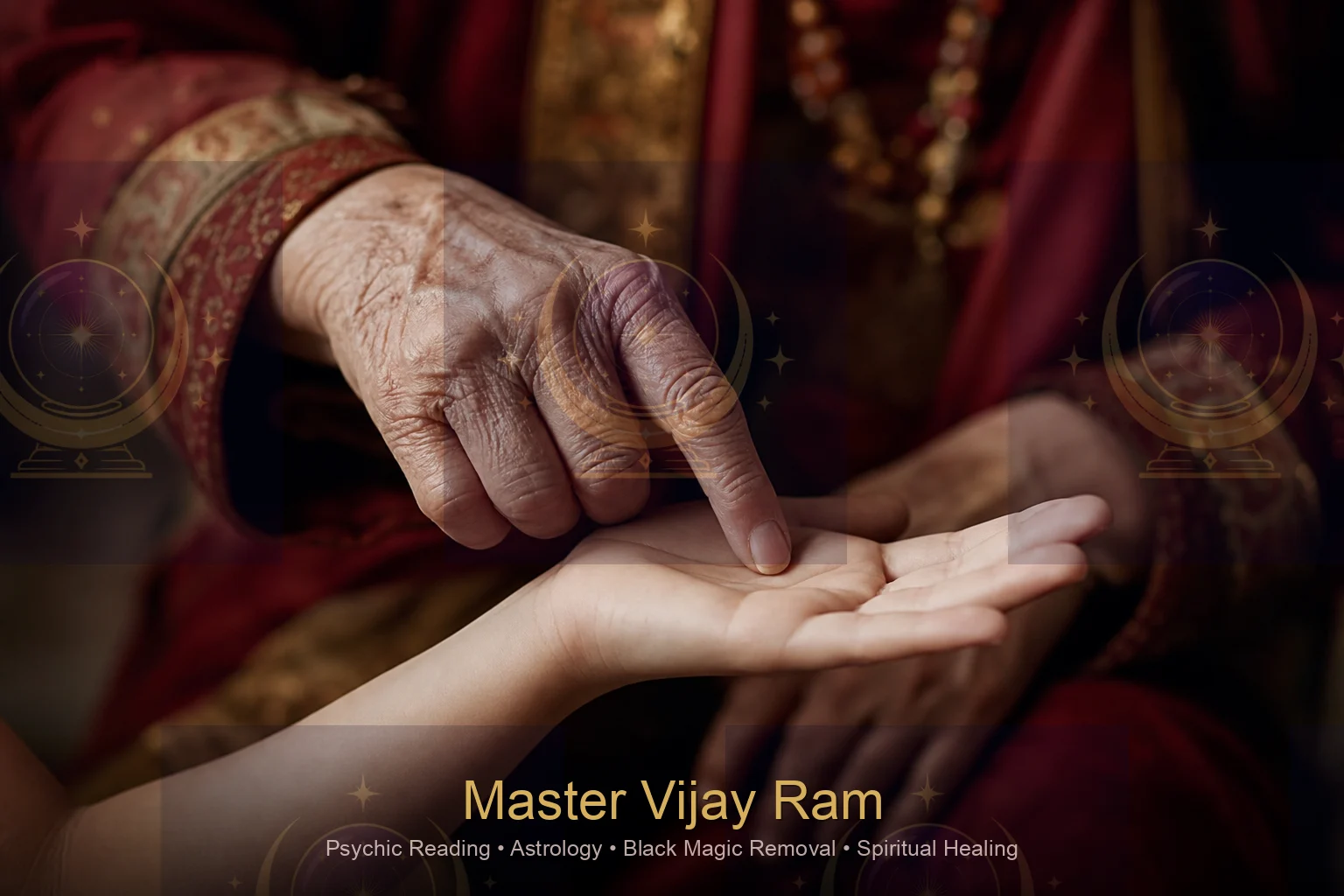
This is why an in-person, guided palm reading tends to offer more than a quick photo-based guess. Master Vijay Ram examines the whole hand, including minor lines and mounts, before offering any interpretation. First-time visitors sometimes feel unsure what to expect; our article on questions to ask before your first reading applies well to palm sessions too, helping clients prepare thoughtful questions.


Serving nearby: Kitchener · Waterloo · Cambridge · Guelph · Brantford · London · Hamilton
Key takeaways
- The four major palmistry lines are the life, heart, head, and fate lines, each read for different life themes
- The life line reflects vitality and change, not literal lifespan
- The heart and head lines are read together for emotional and mental patterns
- A missing or faint fate line is common and not considered a bad sign
- Lines are always interpreted together, and no reading guarantees specific outcomes
In closing
Your palm carries a unique pattern of lines, and understanding the life, heart, head, and fate lines is only the beginning of what a trained eye can offer. If you would like a deeper, personal explanation of what your hand may reveal, consider booking a private and completely confidential consultation with Master Vijay Ram. Visit our services page or reach out through our contact page to arrange a session at a time that suits you.