Quick answer. A reconciliation sadhana is a disciplined period of prayer, mantra and observance prescribed to your specific chart. It is undertaken by you, over a set number of days, to steady your mind and support a hoped-for reconciliation. It works on your own clarity and patience rather than on another person's choices.
What a sadhana is, and what it is not
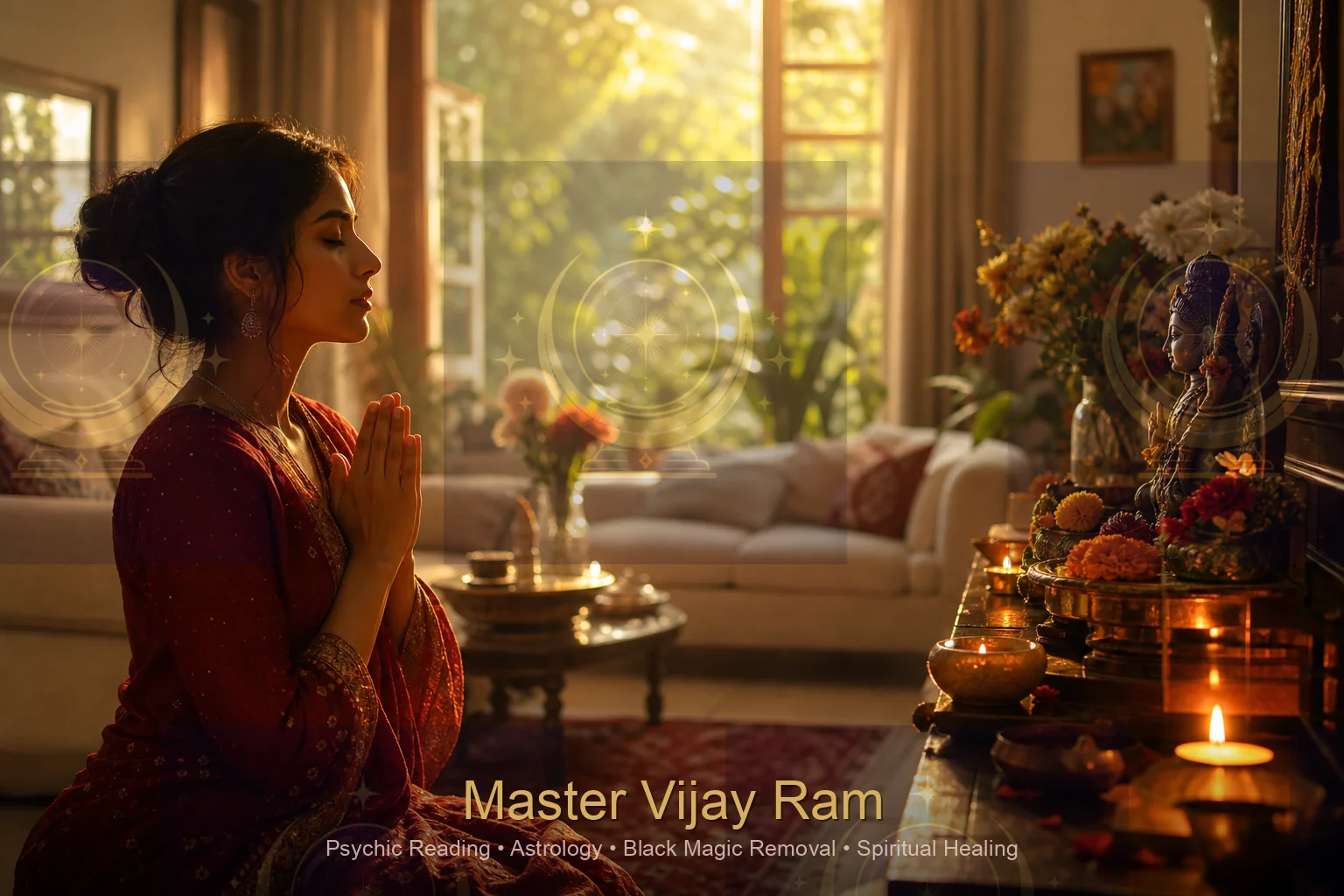
A sadhana is a committed practice held for a fixed period — commonly eleven, twenty-one or forty days — with a particular mantra, a daily time, and observances around food and conduct. It is old, ordinary devotional discipline rather than anything exotic, and its first effect is almost always on the person performing it.
That matters for reconciliation specifically. The weeks after a separation are when people do the most damage: the late message, the third call, the conversation held in anger. A sadhana gives those weeks a structure. Clients frequently report that the discipline itself — a fixed hour, a fixed practice — was what stopped them acting on impulse.
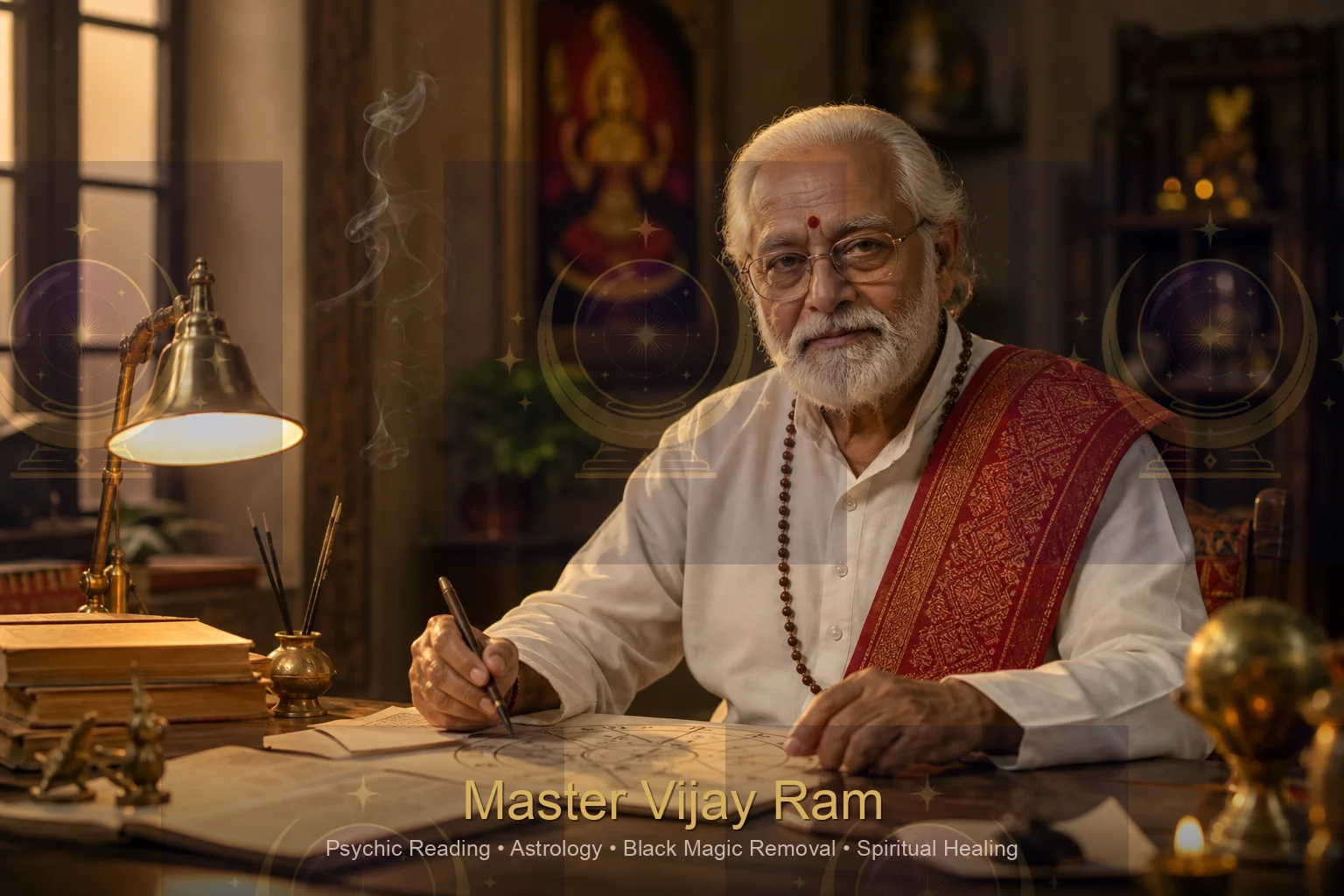
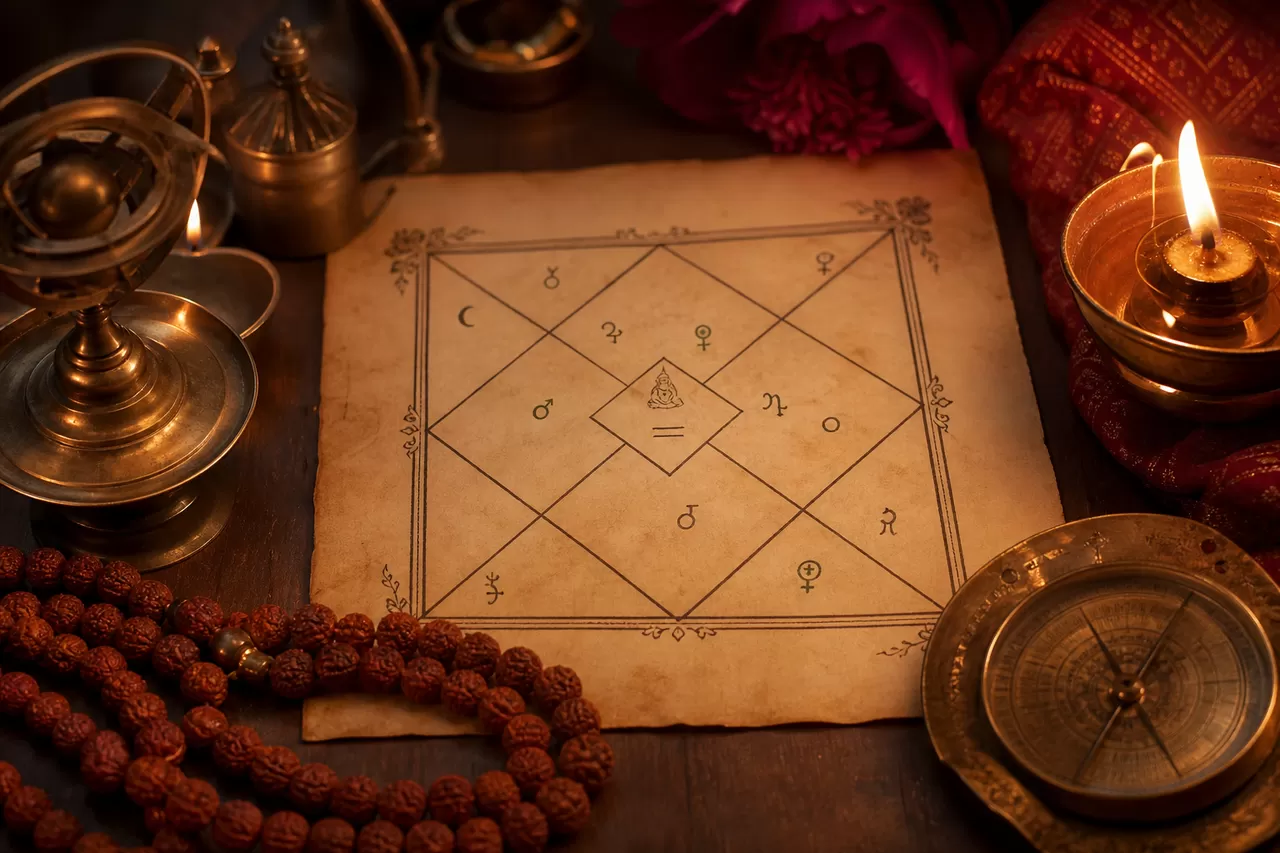
Master Vijay Ram prescribes the practice from your chart rather than from a standard list. Which deity, which mantra, how many repetitions and which days to observe all depend on the condition of Venus, the Moon and the fifth and seventh houses in your kundli. A sadhana suited to someone else's chart is simply effort spent in the wrong direction.
It should be said plainly that a sadhana is not a mechanism for controlling another person, and this practice does not offer one. It supports your own steadiness, and in the view of this tradition, opens the way for a reconciliation that is genuinely meant to happen.
A clear, caring path
How a sadhana is set and supported
A sadhana is prescribed only after the chart is read, then set as a specific practice over a defined number of days, with contact maintained throughout. It is undertaken by you, and its purpose is to steady your own mind as much as to support a hoped-for reconciliation.
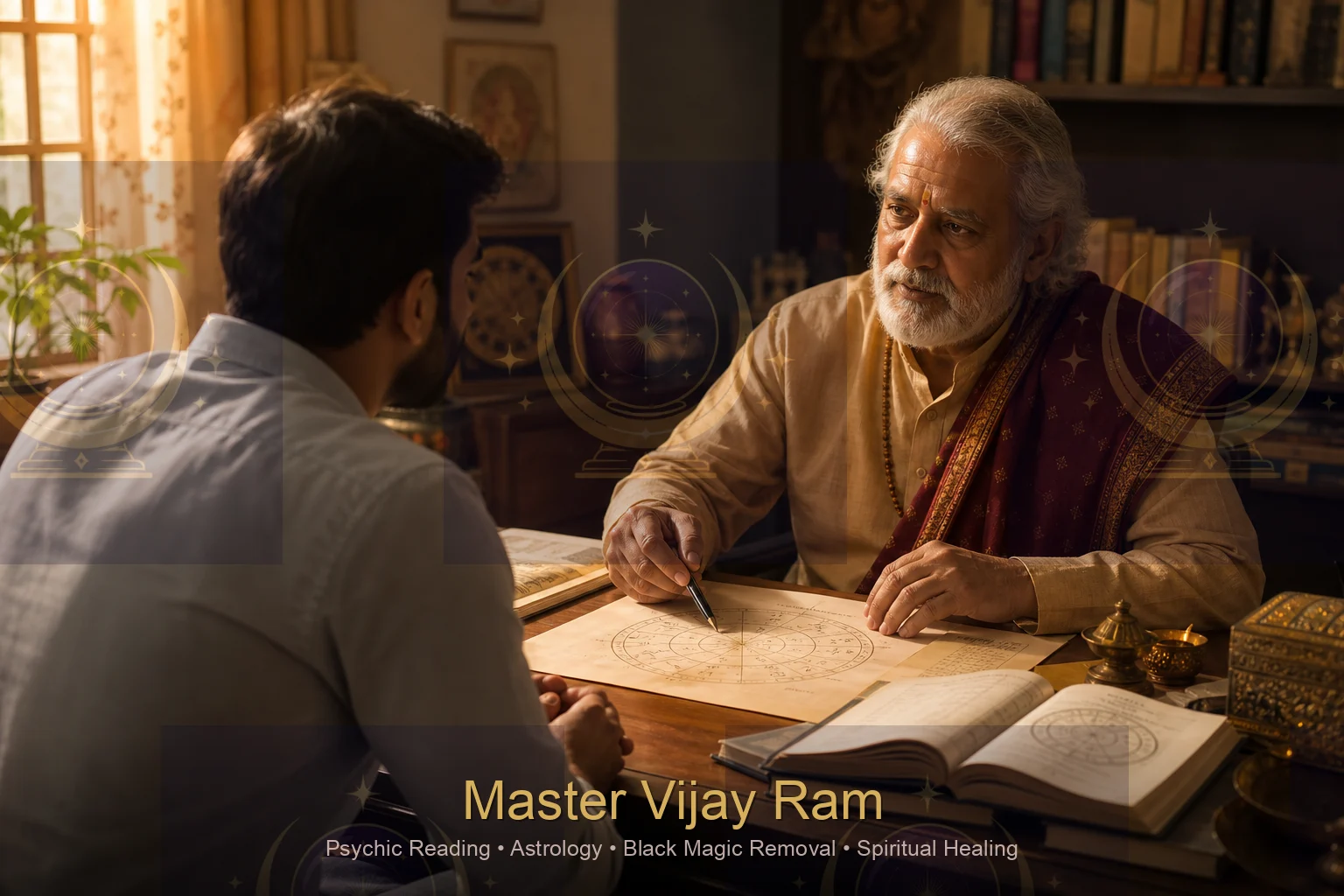
Read the chart first
Your kundli is examined for the planets governing love and emotional steadiness, so the practice prescribed suits your chart rather than being a general-purpose ritual.
Set the practice and the period
You are given the mantra, the daily timing, the count, the observances to keep and the length of the sadhana — commonly eleven, twenty-one or forty days depending on what the chart indicates.
Stay in contact through it
Sadhanas are easiest to abandon in the second week. Master Vijay Ram remains reachable by phone or WhatsApp throughout, both to correct the practice and to talk through what surfaces during it.
Do any of these sound familiar?
When a sadhana is usually recommended
It suits people who want something to do with the waiting, rather than a quick fix.
- You have been told to wait and cannot bear waiting passively
- You keep breaking your own no-contact resolutions
- A chart reading has shown a difficult period that must simply be passed through
- You want a devotional practice rather than only advice
- Grief from the separation is affecting sleep and work
- You have completed a consultation and want a structured next step
Your questions, answered
Love Reconciliation Sadhana — your questions answered
No. It is a practice you undertake for your own steadiness and prayer, and it does not act on another person's will. Any practitioner offering a ritual that overrides someone's choice is offering something this practice does not.
Most prescribed sadhanas take between twenty and forty minutes daily, held at a consistent time. The consistency matters more than the length, and the practice is adjusted to fit a working schedule rather than the other way round.
It happens, and it is not a catastrophe. Depending on the practice you may resume, extend by a day, or in some cases restart. Master Vijay Ram will tell you which applies to yours, which is one reason he stays reachable throughout.
No. A sadhana is performed by you, wherever you are, so it is set and supported by phone, video or WhatsApp. Clients across Ontario and further afield undertake one without ever travelling.
The materials are ordinary — a lamp, incense, sometimes a specific offering — and are deliberately kept inexpensive and easy to obtain locally. Consultation fees are confirmed before anything begins.
Trusted remedies from Master Vijay Ram