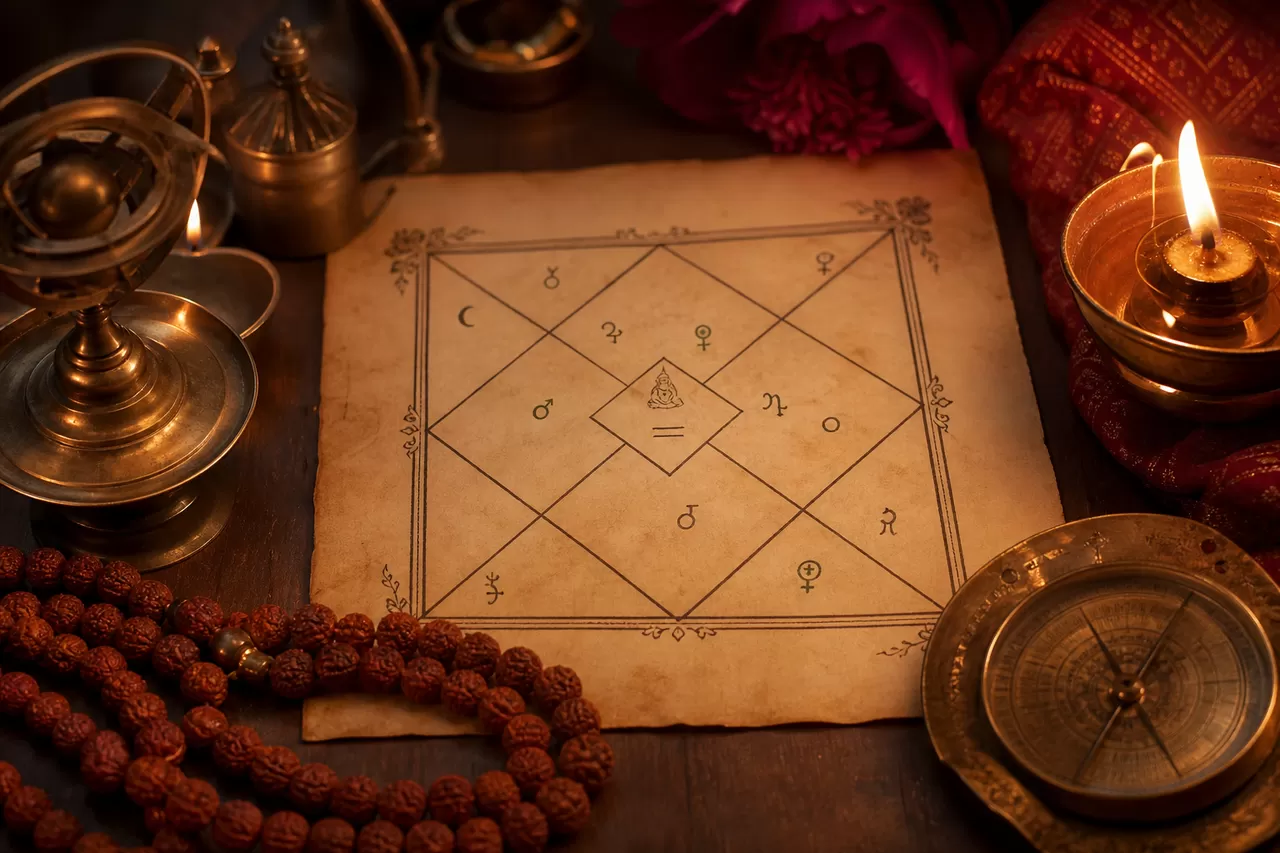


Quick answer. Muhurta is the selection of an auspicious date and time to begin something significant — a wedding, a house move, a business opening, a ceremony. It works from the panchang alongside your own chart, so the moment chosen suits the people involved and not merely the calendar.
How an auspicious time is chosen
Muhurta rests on a simple principle: what begins at a favourable moment carries that quality forward. It is among the most practically used branches of Vedic astrology, and in many families it is the only branch consulted — a date for the wedding, a morning for the griha pravesh, an hour to open the shop.
The calculation works through the five limbs of the panchang — tithi, vara, nakshatra, yoga and karana — for any candidate date. Certain combinations are favourable for particular undertakings and certain are avoided outright. Alongside these sit the inauspicious windows such as rahu kaal, which are excluded, and the position of Jupiter and the Moon, which matter for most beginnings.
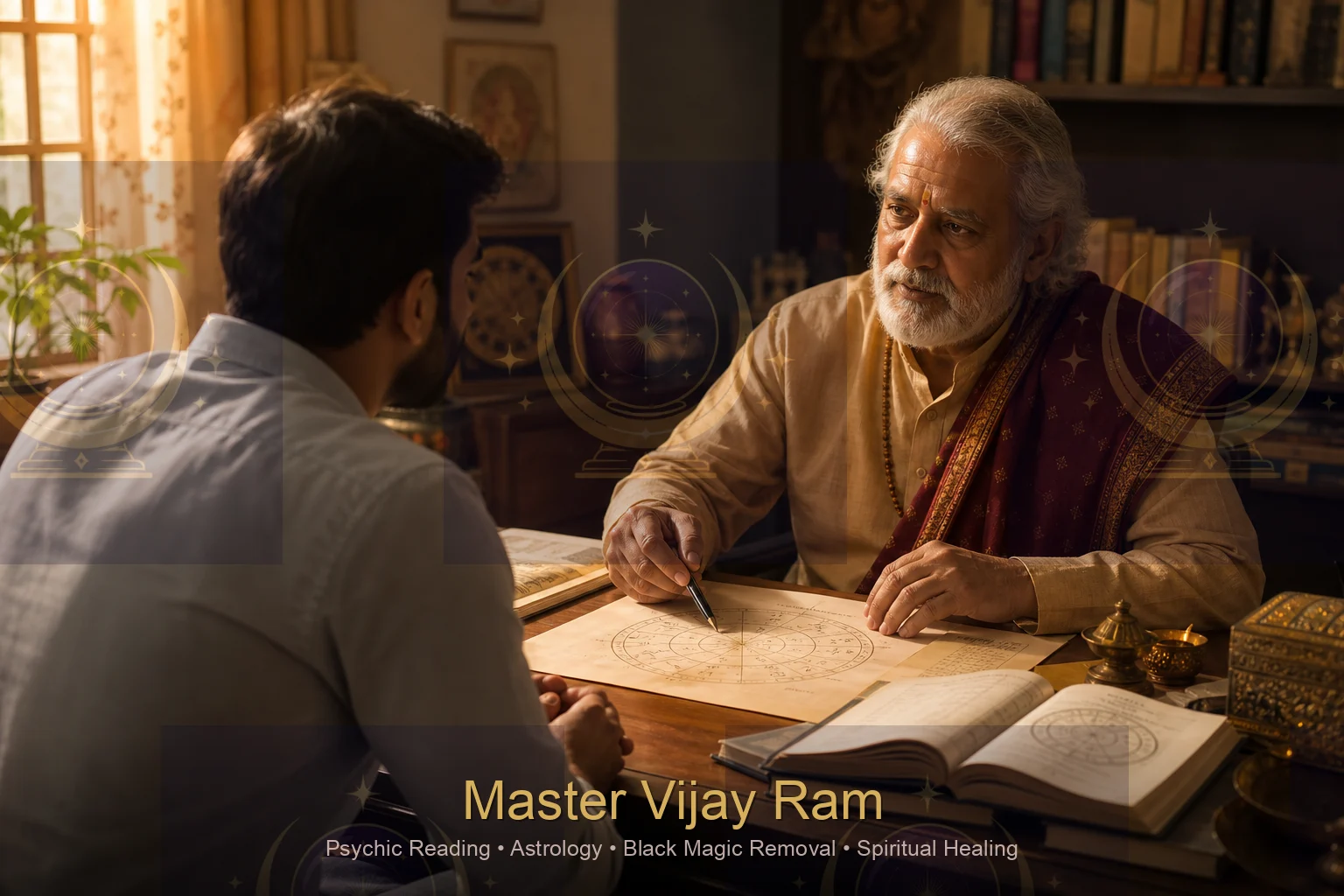
What separates a proper muhurta from a printed calendar is that the chart of the person acting is taken into account. A date can be excellent in general and poor for you specifically, because it falls in a difficult dasha or activates an afflicted house in your chart. For weddings both charts are considered, which is why a family cannot simply lift a date from an almanac.
In practice Master Vijay Ram is usually given a window — a month, a season, sometimes a fixed weekend around which relatives have already booked flights — and asked to find the best moment within it. That is normal, and workable. Where the window contains nothing suitable, he says so and explains what the alternatives are.
A clear, caring path
How a muhurta is calculated
A muhurta establishes what is being undertaken and the window available, works the panchang across every candidate date in that window, then checks the surviving options against the personal charts of those involved. The result is a specific date and time, with reasoning.
Establish the undertaking and window
What is being started and within what range of dates. Different undertakings have different requirements, and a wedding is assessed quite differently from a business opening.
Work the panchang across candidates
Tithi, vara, nakshatra, yoga and karana are examined for each candidate date, with rahu kaal and other inauspicious windows excluded.
Check against the personal charts
Candidate dates are tested against the charts of those involved, so the moment chosen suits the people acting rather than only the calendar.
Do any of these sound familiar?
What people ask muhurta for
Give as much notice as you can; short windows limit the options.
- A wedding date needs setting and both families want it done properly
- You are moving into a new home and want a griha pravesh time
- A business or shop is opening and you want an auspicious hour
- A vehicle is being bought and you want the right day to take delivery
- A puja or havan is planned and needs scheduling
- You are starting a new job or venture and want the timing checked
Your questions, answered
Muhurta — your questions answered
A panchang gives generally auspicious periods, which is genuinely useful. What it cannot do is account for your own chart, and a date that is broadly favourable can be poor for a specific person in a difficult dasha. For weddings and house moves in particular, the personal check is the part that matters.
As far as possible — a few months is comfortable. The longer the window, the better the moment that can be found within it. Short-notice requests are still worked on, with the honest caveat that the options may be limited.
You will be told, along with the least unfavourable option and what specifically is wrong with it. Many families have fixed constraints — venue bookings, relatives travelling — and the practical answer is usually the best available date plus a remedy, rather than moving the wedding.
As much as you can give. Several weeks allows a genuine choice across a window; a few days narrows it to whatever the panchang permits. Weddings are best asked about months ahead.
Yes. The panchang is calculated for the place the event will actually happen, so a wedding in India or elsewhere is worked to that location's timings, not to Kitchener's.
Trusted remedies from Master Vijay Ram